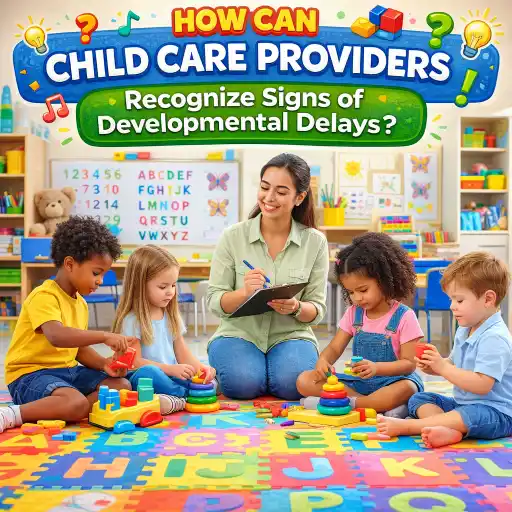
Every day you watch children grow. Small moments — a child pointing, stacking blocks, or asking for help — tell a big story about their #development. This short guide helps you spot warning signs, write them down, talk with parents kindly, and connect families to help. Use easy tools and steps you can do in your program. For extra reading and checklists see ChildCareEd’s milestones guide and the CDC’s Milestones pages.
Why this matters:
1) Early spotting gives children a better chance to learn and catch up. 2) Families trust you as their partner. 3) Good notes and timely action make referrals smoother. When in doubt, acting early is kinder than waiting. Remember: state requirements vary - check your state licensing agency.
What signs should I watch for every day?
- Language and communication
- Does the child make sounds, point, or use words for needs? (See CDC milestones and the Milestone Checklists.)
- Cognitive and thinking
- Does the child solve small problems (stack blocks, find hidden toys)?
- Movement and motor skills
- Is the child sitting, crawling, walking, or using hands for small tasks as expected?
- Social-emotional
- Does the child play with others, respond to comfort, and show simple feelings?
- Self-help and routines
- Can the child eat, sleep, and follow simple routines for their age?
Watch for important red flags like losing skills, not making any sounds by a set age, or not responding to their name. Resources like Help Me Grow’s red flags and ChildCareEd’s spotting guide list age-based warnings you can follow.
How do I document and share concerns with families?
- Collect observations
- 📅 Note date, setting, and exact behavior (short sentences). Example: "4/5 during snack, did not reach for cup when offered."
- Use checklists & examples
- 📋 Complete an age checklist from CDC or use ChildCareEd tips to compare skills.
- Prepare for a meeting
- 🙂 Start with strengths (what the child does well).
- 🔎 Show your notes and the checklist — facts, not labels. See Help Me Grow’s guide on talking with parents and CDC training on family talks.
- Agree next steps
- 1) Monitor together and check back, 2) try classroom strategies, or 3) recommend a pediatric visit or screening.
Keep communication respectful and brief. Don’t diagnose — share observations and encourage a health check. Offer to help parents call or find local services.
When should I refer for screening or early intervention?
If you see red flags, loss of skills, or several concerns in different areas, it’s time to act. The American Academy of Pediatrics and CDC recommend formal developmental screening at 9, 18, and 30 months and autism checks at 18 and 24 months — read more at the CDC’s page on developmental monitoring and screening.
- Clear reasons to refer now
- 🔴 Loss of skills the child had before.
- 🔴 Not reaching many milestones for age or several red flags at once.
- 🔴 Very limited interaction, movement, or speech compared with peers.
- How to help the family make the referral
- 1) Give the family your written notes and checklists, 2) suggest calling their pediatrician, and 3) offer local early intervention contacts. For state programs see resources like Florida Early Steps or the federal ChildCareEd course on early intervention Buy Now $25.00.
- Remember referrals are steps, not labels
- Early help often improves outcomes. If a family wants support, encourage them to call their state early intervention program. Also remember: state requirements vary - check your state licensing agency.
How can I avoid common mistakes and support families with kindness?
Common mistakes can make families worry or shut down. Here’s how to avoid them:
- Jumping to labels
- ✅ Do this instead: Share facts and examples. Use checklists from CDC or ChildCareEd as neutral tools.
- Waiting too long
- ✅ Do this instead: Track changes for 2–4 weeks and then share notes. If you see red flags, don’t wait to suggest screening.
- Using scary language
- ✅ Do this instead: Start with strengths, use calm words, and offer choices (monitor, try classroom supports, or refer).
- Talking in public or at pick-up
- ✅ Do this instead: Schedule a private meeting and give a short written summary to the family.
Why kindness matters: families may feel scared or embarrassed. Your calm, factual approach helps them take steps. You are a trusted partner in a child’s early life — your observations can change a child’s future for the better.
Quick action plan (do this week):
- 📋 Start or update a milestone checklist for each child.
- 📷 Collect 3 short observation notes or photos over 2 weeks.
- 🤝 Arrange a calm meeting with families to share strengths and one concern if needed.
FAQs (short)
- Q: Should I screen every child? A: Monitor every child; ask the pediatrician or program to screen at recommended ages (9, 18, 30 months). See CDC screening guidance.
- Q: Can I make a referral? A: Yes — you can encourage families to contact early intervention or the pediatrician; some programs allow staff to refer directly.
- Q: What if parents disagree? A: Listen, share facts, offer to follow up, and provide written notes to bring to the doctor.
- Q: Where to learn more? A: ChildCareEd courses and CDC’s Milestone Tracker are great next steps.
You do important work. Keep watching, writing facts, and sharing with families. Small, calm steps help children get the supports they need. For more tools and training, explore ChildCareEd and CDC resources linked above. #milestones #earlyintervention #families #documentation
Good #documentation helps families and doctors. Follow simple steps so conversations are calm and helpful. Use a checklist or the CDC Milestone Tracker app to collect facts: Milestone Tracker app.Look at five big areas: how children play, learn, talk, act, and move.- Watch Me Grow: School Age Development ONLINE
- Anxiety: Signs & Strategies
- Identifying ADHD in Child Care
- FAS in Early Childhood
- CDA Bridge Bundle: Family Child Care without Portfolio Review
- CDA Bridge Bundle: Infant/Toddler without Portfolio Review
- Texas Director Credential
- Typical & Atypical Development in ECE
- Childhood Neglect
- Identifying Developmental Milestones in Children
- Proporciones de Cuidado Infantil y Tamaños de Grupo por Edad en Maryland (Guía Rápida para Centros y Hogares)
- Proporciones de Cuidado Infantil y Tamaños de Grupo por Edad en Virginia (Guía Rápida para Centros y Hogares)
- Cómo Ayudar a Niños con Retraso del Habla en el Cuidado Infantil
- Apoyo en Preescolar para Retrasos del Habla: Estrategias Simples que Ayudan
- Retraso del Habla en la Guardería: Cómo Pueden Ayudar los Proveedores
- What Signs of Developmental Delays Should Michigan Childcare Workers Watch For?
- How Can North Dakota Caregivers Help Toddlers with Speech Delays?
- How Can Child Care Providers Recognize Signs of Developmental Delays?
- Supporting Children Who Learn and Grow Differently in School
- How Can Child Care Providers Understand Typical and Atypical Child Development?
- What should providers expect at different ages and when should they recommend further evaluation?
- How Can Child Care Providers Recognize and Report Signs of Abuse?
- How can child care providers recognize early signs of developmental delays?
- Early Intervention Strategies: What Can Teachers Do While a Child Is Waiting for Services?
- Special Needs Training for Early Childhood Educators: Which Course Should You Take?
- How Can Child Care Providers Recognize and Support Developmental Delays?
- How Can Providers Teach Children to Notice When a Friend Needs Space?
- Developmental Delay vs. Developmental Difference: What’s the Difference?
