Young children can become enthusiastic environmental stewards when they are given simple, meaningful opportunities to care for the world around them. This practical guide helps child care providers and directors introduce #sustainability through joyful, developmentally appropriate routines that fit naturally into the day. Low-cost activities such as sorting recyclables, conserving water, tending a garden, composting food scraps, reusing classroom materials, and exploring nature can build responsibility while supporting cognitive, social-emotional, language, and motor development. The strategies are designed to be manageable for staff, engaging for children, and easy for families to continue at home.
To strengthen nature-based and environmental learning, explore ChildCareEd’s self-paced online course Creating the Natural Outdoor Classroom  Buy Now $16.00. The course helps educators create outdoor spaces where children can connect with nature through sensory exploration and meaningful learning experiences. Providers can use these ideas to make environmental responsibility part of everyday classroom life rather than limiting it to Earth Day or a single seasonal activity.
1) What simple, developmentally appropriate activities build environmental habits?
Use short, repeatable tasks so children practice sustainability often. Prioritize concrete actions they can do each day.
- 🌱 Plant and care for container gardens (herbs, fast-growing lettuce) — children observe growth and responsibility; see Green Activities for Kids.
- ♻️ Recycling sorting game: rotate materials and make it a 5–10 minute small-group station (paper, plastic, metal).
- 🪱 Simple compost jar or countertop compost: small teams empty food-scrap pail into a class bin and track changes weekly — adapt from compost ideas in Growing Green.
- 📚 Story + pledge: read a short earth-themed book, then have each child draw one small promise they can keep.
- 🎨 Recycled-art invitations: set out clean recyclables for open-ended art projects (caps, tubes, boxes) — see Preschoolers Against Plastic.
Tip: Keep activities 10–30 minutes for preschool-aged children and repeat them weekly so skills and interest deepen over time.
2) How can we use nature as a daily classroom to teach sustainability?
Nature-rich routines convert curiosity into curriculum. Move familiar activities outside, create a nature exploration corner, and let seasonal change become a teaching tool.
Montessori approaches that emphasize real-world, nature-based experiences offer concrete strategies for structuring outdoor routines and materials so children can engage in purposeful, developmentally appropriate work.
- 📖 Outdoor storytime and sensory baskets: bring books and natural materials—leaves, pinecones, seeds—for hands-on vocabulary building (see What Are Creative Ways to Use Nature as Your Classroom?).
- 🔬 Short, repeatable investigations: seed germination in clear cups, sink/float with natural objects, or a daily weather chart for measurement practice.
- 🌿 Loose-parts nature play: provide buckets, magnifiers, and a rotating “loose parts” bin (sticks, stones) so children invent and test ideas outdoors.
- 🎒 Nature-on-the-go: short walks with clipboards for drawing observations—excellent for linking literacy and science.
Why it works: Outdoor learning improves attention, regulation, and observational skills while giving authentic contexts for sustainability concepts; guidance and examples are available at ChildCareEd.
3) How do gardens, compost, and recycling fit into daily routines and licensing expectations?
Turn projects into predictable micro-routines so staff can sustain them without extra planning time. Start small, document, and build systems.
- 🥣 Start-up steps (1–2):
- Choose one small project: a pot of herbs, a countertop compost jar, or a recycling station.
- Assign a rotating daily helper roster and a simple checklist (water, sort, empty) to keep responsibility shared.
- 📋 Documentation and assessment:
- Take one photo per week, record one child quote, and track the helper chart to show learning progress.
- Use photos and notes for family communication and licensing records.
- ⚖️ Safety & compliance: state requirements vary - check your state licensing agency. Use child-safe tools, account for allergies, and follow sanitation guidance for food-related projects (see Green Activities).
Evidence-based resources and ready-made curricula (e.g., Growing Green and the PLT activity guides) supply templates and lesson plans that reduce prep time.
4) How can we involve families and turn one-off events into lasting habits?
Family partnerships amplify program impact. Make participation practical, optional, and visible so home and program habits align.
- 📣 Communication: send brief, action-focused notes: “This week we planted lettuce—ask your child to show you the helper chart.” Include photos and a one-line home activity.
- 📦 Take-home kits and micro-tasks:
- 🌱 Seed packet + watering checklist for weekend planting.
- ♻️ A small recycling-sorting checklist families can try at home.
- 🤝 Low-barrier volunteering:
- Invite families to donate clean recyclables or seeds rather than require time commitments.
- Host a short community clean-up or garden workday and celebrate with a sharing snack from the garden—see family engagement tips in Green Activities.
Small, consistent actions (weekly watering team, monthly recycling challenge) create identity: children become the classroom’s #preschoolers who care, and families see tangible outcomes.
5) What common mistakes do programs make, and how do we avoid them?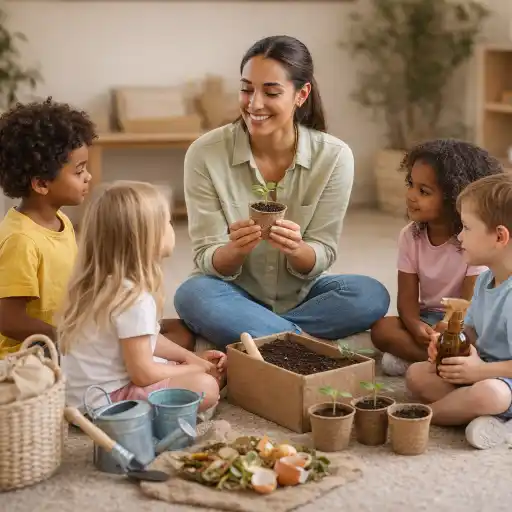
Anticipate predictable pitfalls so projects survive staff turnover, seasons, and busy weeks.
- ❌ Mistake: Starting too big. ✅ Fix: Begin with one pot, one compost jar, or one recycling bin and scale after routines stick.
- ❌ Mistake: No clear roles. ✅ Fix: Use a simple rotation sheet and a 30‑second handoff at shift change to preserve continuity.
- ❌ Mistake: Poor documentation. ✅ Fix: Weekly photo + one child quote = quick evidence for families and licensors.
- ❌ Mistake: Forgetting accessibility and inclusion. ✅ Fix: Offer alternate tasks (watering, drawing, counting) so all children participate—see inclusion suggestions at Earth Day Every Day.
FAQ (brief):
- Q: How long are activities? A: 10–30 minutes for preschoolers; longer for school-age groups.
- Q: Can infants join? A: Yes—use sensory-safe observations (smelling herbs, listening to birds) with close supervision.
- Q: Where to get materials on a small budget? A: Recycled containers, local nursery seed giveaways, family donations, and free guides from ChildCareEd.
- Q: What about safety/license rules? A: State requirements vary - check your state licensing agency and document consent for tastings or garden food.
Conclusion
Start where you are: pick one small project, make it routine, and document growth. Use play-based, sensory-rich experiences to teach children about #gardening, #recycling, and caring for #nature—then invite families to reinforce the behaviors at home. Helpful, program-ready resources include ChildCareEd activity pages like 15 Earth Day Activities, Earth Day Every Day, and curricula such as Growing Green to reduce planning time.
- 45 Hour Child Growth and Development
- 45 Hour Preschool Methods and Materials
- Children at the Wheel: Emergent Curriculum
- CDA Bridge Bundle: Family Child Care without Portfolio Review
- CDA Bridge Bundle: Infant/Toddler without Portfolio Review
- CDA Bridge Bundle: Preschool without Portfolio Review
- Sensitive Periods in Montessori: Guiding Natural Learning
- Texas Director Credential
- Montessori Cultural Activities: Exploring the World Through Play and Learning
- Today Is Earth Day!
- CDA Certification en Español: Recursos y Consejos para Educadores Bilingües
- 🔍 ¿Qué ves cuando observas a un niño aprender?
- Normas de Licenciamiento de Cuidado Infantil en Virginia para Centros Diurnos Infantiles y Hogares Diurnos Familiares
- Proporciones de Cuidado Infantil y Tamaños de Grupo por Edad en Nueva Jersey (Guía Rápida para Centros y Hogares)
- Proporciones de Cuidado Infantil y Tamaños de Grupo por Edad en Virginia (Guía Rápida para Centros y Hogares)
- Cómo Trabajar en el Cuidado Infantil en California: Requisitos y Pasos
- Canciones, juegos y preguntas de círculo para niños
- How Can DC Early Educators Turn Pay Equity Debate into Provider Pride, Family Trust, and Strong Advocacy?
- What Do D.C.'s 2026 Minimum Salary Rules and the Pay Equity Fund Mean for Providers and Staff?
- How Can We Support Social-Emotional Learning in Early Childhood?
- How Can Child Care Programs Teach Sustainability Simply to Young Children?
- How Can Early Childhood Programs Implement Practical Sustainability Practices?
- How Can We Teach Young Children to Care for the Environment?
- How Can Early Childhood Programs Prepare Now for Future Workforce Needs?
- How Can Child Care Programs Create Inclusive Programs for Rural Communities?
- How Can Daycare Providers Find Grants That Are Still Open in 2026?
- How to Become a Kindergarten Teacher in Texas: Which Certification Path Should You Choose?
- How Can Child Care Providers Use Positive Discipline to Teach, Connect, and Guide Young Children?
- How Can Recycled Materials Create Engaging Learning Centers?
