Small sorting moments can become meaningful lessons in science, responsibility, and care for the environment. The Basic Science in Early Childhood Buy Now $25.00 course can help you strengthen these experiences with intentional questions and investigations while adding a focused two-hour professional learning opportunity to your training plan.
For a practical activity children can use immediately, pair this approach with ChildCareEd’s Recycle or Trash Sort resource. The goal is not to make young children responsible for solving environmental problems; it is to help them notice materials, make thoughtful choices, and experience themselves as capable members of a caring community.
Why do simple sorting activities matter in early childhood?
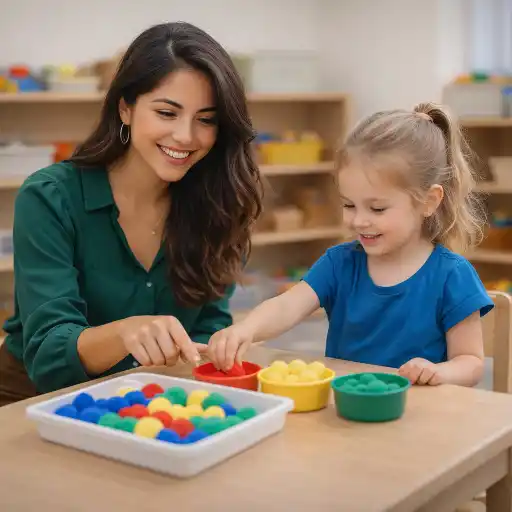
Sorting is a deceptively rich form of play. When children compare a cardboard tube with a food wrapper, decide whether two objects belong together, and explain their reasoning, they are practicing classification, observation, language, and early scientific thinking. Research and professional guidance describe sorting as a foundation for recognizing similarities and differences, organizing information, and developing early mathematical concepts.
A recycling sort adds an authentic purpose. Children are not merely grouping objects by color or shape; they are considering material, use, and what may happen next. This creates a bridge between classroom learning and daily life. A bin near the snack table, a reusable-materials shelf, or a brief cleanup routine can make sustainability visible throughout the day.
These experiences also support social-emotional development. Children take turns, negotiate uncertainty, help classmates, and feel proud when their actions contribute to the group. As emphasized in ChildCareEd’s guidance on teaching environmental care, developmentally appropriate goals include noticing, nurturing, and acting through small, repeated routines.
How can providers prepare a safe Recycle or Trash Sort?
Begin with a small collection of clean, familiar items. For preschoolers, two categories are often enough: Recycle and Trash. Later, you can add Reuse, Compost, or material categories such as paper, plastic, metal, and glass. Because local systems differ, present recycling as an inquiry rather than a universal rule: “Let’s check what our community accepts.”
- Use empty, clean, dry containers; cardboard; paper; and large, intact packaging.
- Remove sharp edges, residue, staples, loose components, batteries, magnets, and small pieces.
- Use picture labels and real photographs alongside words to support emerging readers and multilingual learners.
- Keep potentially dangerous, dirty, or confusing objects as teacher-held examples or replace them with picture cards.
- Provide close supervision and adapt materials to children’s ages and developmental abilities.
Children under three should not handle small items because of choking hazards. Programs should also follow sanitation procedures and local guidance. State requirements vary - check your state licensing agency before adding materials, composting, food-related activities, or new storage systems.
Preparation communicates a valuable message: sustainability and safety belong together. A well-designed station is inviting without being cluttered, accessible without compromising supervision, and flexible enough for children with different motor, sensory, communication, and attention needs.
What is a developmentally appropriate way to introduce the activity?
Start with a short provocation rather than a long explanation. Hold up one item and invite children to observe: “What do you notice? What is it made of? Where might it go?” Model thinking aloud, including uncertainty: “I am not sure about this container, so I will check our classroom guide.” This normalizes investigation and prevents children from feeling embarrassed when they need help.
For a basic Recycle or Trash Sort, place two labeled containers on the floor or table. Offer one item at a time and let children decide where it belongs. After each choice, ask an open-ended question:
- “What helped you make that choice?”
- “How are these two objects alike or different?”
- “What could we do with this item before throwing it away?”
- “What should we do when we are unsure?”
Keep the experience brief, especially for younger children. A five- to ten-minute small-group station may be more productive than a long whole-group lesson. Repeat the activity during snack cleanup, dramatic play, or a classroom scavenger hunt. Repetition builds confidence and turns an isolated lesson into a routine.
Use language that is accurate but hopeful. Rather than presenting sustainability as a frightening crisis, emphasize agency: “We can make careful choices,” “We can use some things again,” and “We can ask questions.” ChildCareEd’s sustainability guidance similarly recommends short, concrete activities that recur across the week. A discussion of National Skip the Straw Day can extend this learning by helping children consider how choosing reusable or straw-free options reduces plastic waste.
How can one sorting game become a science investigation?
The sort becomes stronger when children move beyond naming the correct bin and begin investigating materials. Invite them to predict, test, compare, and revise. For example, children might examine whether paper changes when wet, whether a cardboard box can be reused as a ramp, or whether different containers have similar textures and weights.
Use a simple inquiry cycle:
- Notice: Children look closely, touch safe objects, and describe what they observe.
- Predict: They decide where an item might belong and explain why.
- Test: They compare the item with classroom examples or consult a local recycling guide.
- Reflect: They discuss whether their thinking changed.
- Apply: They use the same reasoning during real cleanup routines.
This approach supports #science without turning the activity into a worksheet. It also creates opportunities for counting, graphing, and vocabulary. Children can count how many items were sorted, create a simple picture graph, compare heavier and lighter objects, or classify materials by texture, flexibility, and purpose. Add words such as material, reuse, reduce, recycle, compost, landfill, compare, and predict.
For infants and toddlers, the science is sensory and relational: looking at a box, hearing a paper crinkle, touching a clean fabric scrap, or watching an adult place an item in a bin. For preschoolers, classification and explanation become more prominent. School-age children can investigate local collection rules, conduct a classroom waste audit, or design clearer bin labels.
How can directors and teachers sustain the habit?
Sustainable habits last when they are embedded in systems rather than dependent on one enthusiastic adult. Directors can create a shared materials policy, identify approved collection items, assign responsibility for checking stations, and include sustainability routines in staff orientation. Teachers can use a rotating helper role, a visual checklist, and a predictable phrase such as, “If we are not sure, we check.”
Documentation should be efficient and purposeful. Once a week, capture one photograph, one child quote, and one observation connected to learning. A note such as “Jordan compared the wrapper with the cardboard box and explained that they were made of different materials” documents language, reasoning, and environmental awareness without creating excessive paperwork.
Families can extend the habit through low-pressure communication. Share a photo of the classroom sort and suggest one home conversation: “Ask your child what belongs in your recycling container.” Avoid assuming that every household has the same disposal system, resources, or time. Invite families to share local knowledge, home languages, or safe reusable materials rather than requiring donations.
Use the Beautiful Junk: Using Recycled Materials in the Classroom  Buy Now $16.00 course to explore how recycled objects can become open-ended learning tools. For programs developing broader nature-based experiences, Creating the Natural Outdoor Classroom Buy Now $16.00 offers additional professional learning focused on connecting children with natural environments.
What common mistakes should programs avoid?
Even a simple sorting activity can become frustrating when expectations are unclear or materials are poorly selected. The most common issue is treating recycling rules as universal. Collection policies differ by community, and some items accepted in one location are rejected in another. Use local guidance and explain that checking is part of responsible decision-making.
- ❌ Too many categories at once: Begin with two bins and add complexity gradually.
- ❌ Dirty or unsafe materials: Use clean substitutes, photos, or teacher demonstrations.
- ❌ Correcting without discussion: Ask children to explain their thinking before offering information.
- ❌ Using shame or fear: Focus on capability, care, and practical choices.
- ❌ Ignoring accessibility: Add large handles, visual cues, seated options, peer support, and nonverbal response choices.
- ❌ Making the activity a one-day event: Connect sorting to snack, cleanup, art, and classroom maintenance.
Safety deserves special attention. Do not invite children to handle batteries, broken glass, unknown containers, medication packaging, electronic waste, or food-contaminated materials. Keep the instructional goal—classification and stewardship—separate from risky objects. For broader environmental safety planning, the Creating Safe & Healthy Child Care Environments Buy Now $55.00 course can help providers review hazard identification, supervision, and environmental safety practices.
Finally, remember that an incorrect sort is not a failure. It is useful evidence of what the child notices and what concept needs more experience. Respond with curiosity: “Let’s look again together.”
Conclusion: How can simple sorting activities build sustainable habits?
Simple sorting activities build sustainable habits when they are concrete, repeated, safe, and connected to children’s real experiences. The Recycle or Trash Sort resource provides an accessible starting point, but the deeper value comes from how educators facilitate the experience: asking thoughtful questions, accepting uncertainty, encouraging investigation, and linking the activity to classroom routines.
Effective practice includes:
- Starting with familiar items and only two categories.
- Using local disposal guidance because state and community systems vary.
- Embedding sorting in daily cleanup, snack, art, and dramatic play.
- Connecting classification to science, math, language, motor, and social-emotional learning.
- Making participation inclusive and avoiding shame.
- Documenting brief evidence of children’s reasoning and growth.
When children repeatedly ask, “Where does this go?” they are showing more than bin knowledge. They are practicing #responsibility, #curiosity, and #sustainability through meaningful action. A small classroom routine can become a lasting foundation for caring relationships with materials, people, and the world children share.
Frequently asked questions
Can infants participate?
Yes. Offer supervised visual and sensory experiences with safe, large materials. Narrate actions such as, “This box can be used again.”
Should every item be labeled recyclable or trash?
No. Local rules differ, and some items require special collection. Teach children to check a trusted local guide when the answer is uncertain.
How long should the activity last?
Five to ten minutes works well for a small preschool group. Short, repeated experiences are generally more effective than one lengthy lesson.
How can I include children with disabilities?
Offer accessible containers, picture symbols, adapted tongs, seated participation, partner roles, and options to point, gesture, draw, or verbally explain a decision.
What should directors document?
Maintain a concise safety procedure, materials checklist, helper rotation, and occasional learning observations. State requirements vary - check your state licensing agency.
- Basic Health & Safety and Breastfeeding Awareness
- Building Early Science Foundations
- 24 Hour Texas Pre-Service
- Creating Environments that Nurture Growth and Community
- Texas Director Credential
- Building Vocabulary
- Building Bridges for Dual Language Learners
- Wellness in Action: Teaching Healthy Habits to Children
- Montessori Cultural Activities: Exploring the World Through Play and Learning
- Rooted in History: Early Childhood
- CDA Certification en Español: Recursos y Consejos para Educadores Bilingües
- 👶 ¿Cuáles son las proporciones y grupos requeridos en Dakota del Norte? 🏫
- Cómo Abrir Una Quardería En Casa Sin Dinero?
- Recursos en Español sobre el Sueño Seguro del Bebé
- 10 Ejemplos de Cómo la Cultura Influye en el Desarrollo Infantil
- Cómo Celebrar el Día Nacional del Kindergarten
- Retraso del Habla en la Guardería: Cómo Pueden Ayudar los Proveedores
- Cómo Trabajar en el Cuidado Infantil en Carolina del Norte: Requisitos y Pasos
- Cómo Ser Maestra de Preescolar en Illinois
- Cómo Ser Maestra de Preescolar en Maryland
- How can we bring a farmers market and fresh fruit activities to preschoolers in California?
- Capacitación CDA gratuita en Illinois
- Cómo simplificar la capacitación para sus empleados de daycare
- How Can Michigan Providers Prevent Summer Learning Loss in Young Children?
- How can preschool programs intentionally support early math skills every day?
- How Can We Teach Young Children to Care for the Environment?
- STEM for Preschoolers: Fun Activities That Encourage Curiosity
- What No-Prep Activities Can Busy Early Childhood Teachers Use Tomorrow?
- How Can Simple Sorting Activities Build Sustainable Habits in Early Childhood?
