Administering medication in a child care setting is a routine responsibility with serious health and safety implications. Clear written policies, accurate authorization forms, trained staff, secure storage, careful dose verification, and immediate documentation help prevent errors and protect children. This practical guide gives directors and providers strategies for establishing consistent medication procedures, communicating with families, preparing for emergency medications, and responding appropriately when a dose is missed or an error occurs. Strong systems help medication support children’s health without creating unnecessary risk for families, employees, or the program. State requirements vary, so always check with your state licensing agency.
To strengthen staff knowledge, explore ChildCareEd’s self-paced online course Administration of Medicine  Buy Now $16.00, which addresses medication administration in child care settings, including the importance of parental consent. Providers can also take Allergies and Medication in Childcare Buy Now $16.00, which covers authorization forms, documentation, medication storage, staff training, emergency situations, and related resources. This online course does not satisfy Maryland’s separate in-person Medication Administration Training requirement.
Why this matters:
1. Strong systems protect children and build family trust—good #medication practice reduces mistakes and supports inclusion.
2. Clear policy, routine checks, and documented competency protect staff and programs from legal and emotional fallout. See ChildCareEd’s policy templates and MAT training offerings for implementation tools: Medication Administration Template and 6 Hour MAT Buy Now $89.00.
What written policies and legal steps should my program have?
- 📋 Policy elements to include:
- Who may accept, store, and administer medicines (authorized titles and delegation rules).
- Consent requirements: parent/guardian signature and prescriber orders where required.
- Storage and labeling rules: original pharmacy container, refrigeration as needed, locked storage.
- Documentation expectations: Medication Administration Record (MAR), intake and return logs.
- Emergency notification and reporting procedures.
- 🔒 Legal steps:
- Confirm state licensing rules and nurse delegation statutes (examples: Minnesota guidance).
- Document staff training and delegated competencies—keep certificates in personnel files.
- Update policies annually and after incidents.
What are the "rights" and how do we turn them into daily routines?
- 🔎 Right checks before giving meds:
- Right child: confirm identity (ask child to state name or check photo).
- Right medication: original labeled container and matching permission form.
- Right dose & route: use pharmacy measuring devices, not kitchen spoons (CDC guidance).
- Right time: allow approved time window; document scheduled vs. PRN conditions.
- Right documentation: sign MAR immediately after administration.
- 🧰 Daily routine (post this as a shelf checklist):
- Accept: record when medication is dropped off.
- Verify: match label to permission and expiry date.
- Prepare: use syringe/cup and required PPE (gloves when indicated).
- Give: follow Six Rights and engage the child respectfully.
- Document: MAR entry, note reactions or refusals.
- Tip: Use permanent ink, correct errors with a single line and initials, and keep a visible MAR audit sheet. ChildCareEd's documentation guidance is practical: Documentation Dos and Don'ts.
Who needs training, what should it include, and how do we maintain competency?
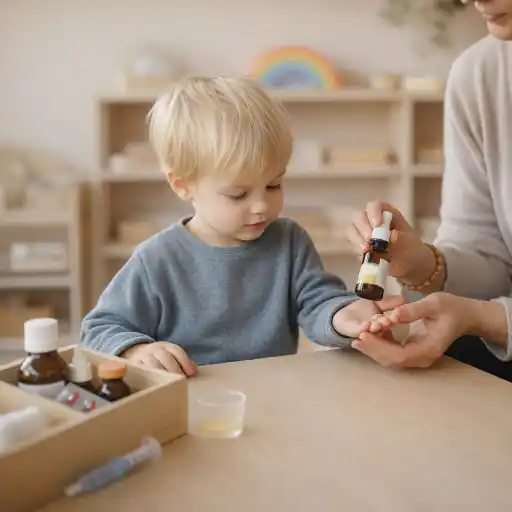
Training is required for any staff who accept, store, or administer medicines. Make training enumerated, hands-on, and repeatable.
- 📚 Who: all staff who might handle meds—teachers, float staff, substitutes, directors. Ensure at least two trained staff per shift.
- 💉 Core content (use this as a curriculum checklist):
- Six Rights and MAR completion.
- Measuring and administration skills: oral syringes, inhaler technique, EpiPen trainers.
- Infection control and safe storage (double lock when required).
- Recognizing adverse events and emergency response (when to call 911).
- Legal/ethical: consent, confidentiality, documentation standards.
- 🔁 Competency maintenance:
- Initial: at hire; skills check with a trainer or nurse.
- Refresher: annually or when policies/medications change.
- Supervision: periodic MAR audits and on‑shift spot checks.
- Why training matters: systematic reviews show schools rely on unlicensed personnel and that clear training + delegation protocols reduce risk and improve emergency responses (systematic review).
How do we plan for emergencies, special meds, and inclusion?
Plan proactively for chronic conditions and emergencies so children with health needs can participate safely. For practical guidance on recognizing and responding to seizures in the classroom, see how to handle seizures and medical emergencies in early childhood settings.
- 🚨 Individualized Health Plans (IHPs):
- Require provider-signed action plans for asthma, anaphylaxis, diabetes, seizures.
- Include specific signs, medications, and when to call 911.
- 📦 Emergency meds:
- Store EpiPens, inhalers, glucagon per state rules; label and keep accessible to trained staff.
- Consider stock epinephrine policies where allowed—check state standing orders and guidance (see ChildCareEd and state pages).
- 🧭 Field trips & off-site care:
- Carry original labeled meds and copies of IHPs.
- Assign trained staff and document off-site administrations on MAR or trip log.
- ⚖️ Inclusion & ADA: reasonable accommodations (trained staff + written orders) let you include children with special health needs; document accommodations and staff assignments.
- 🔐 Poisoning prevention & storage: follow CDC Up and Away materials to keep medicines out of children’s reach and sight (CDC Up and Away).
What common mistakes happen and how can we avoid them?
Most errors reflect system failures rather than individual negligence. Use numbered fixes and teach them often.
- ⚠️ Common mistake: signing the MAR before giving the dose.
- Fix: policy that prohibits signing until after administration and periodic supervisory audits.
- ⚠️ Mistake: accepting unlabeled or mismatched medication.
- Fix: refuse meds without matching pharmacy label and current permission; document refusal to accept.
- ⚠️ Mistake: using household spoons or uncalibrated tools.
- Fix: require pharmacy syringes or calibrated cups and store dosing tools with meds.
- ⚠️ Mistake: poor error handling (erasing entries or hiding mistakes).
- Fix: clear error protocol—document, notify parent, call poison control if indicated, and file an incident report. See ChildCareEd documentation guidance: Documentation Dos and Don'ts.
- 🔁 How to avoid pitfalls (quick checklist):
- Keep a posted checklist at medication storage.
- Cross-train staff and require substitutes to review basic MAT rules.
- Run quarterly short drills for anaphylaxis/asthma.
FAQ (quick answers for busy leaders)
- Q: Can programs accept over-the-counter creams and sunscreen? A: Yes—only with written parent permission and program policy that allows topical meds; document each application (ChildCareEd).
- Q: Who must sign the MAR? A: The staff member who administers the dose must sign immediately after giving it.
- Q: What if a child vomits after taking medicine? A: Document the event, notify the parent, follow incident protocol, and consult poison control if needed.
- Q: Are stock EpiPens allowed? A: Some states permit them with standing orders—check state guidance and document training/storage (ChildCareEd).
- Q: Where to get training? A: State-approved MAT courses (for example, ChildCareEd’s 6‑hour MAT), local health departments, or accredited nursing programs.
Conclusion: What can you implement this week?
- 📋 Update or adopt a written medication policy—start with ChildCareEd’s template: Medication Administration Template.
- 🎓 Check staff files and schedule MAT or refresher training for staff who accept or give meds (6-Hour MAT Buy Now $89.00).
- 🧾 Post a simple five-step checklist by medication storage: permission on file, label match, expiration ok, measuring tool available, MAR ready.
Strong #documentation, consistent #training, and clear policies improve #safety for the #children in your care. State requirements vary - check your state licensing agency. For practical templates and courses, prioritize ChildCareEd resources and national guidance from the CDC and state health departments (CDC Medication Safety; MN Dept. of Health).
Every program needs concise, accessible written policy plus step-by-step procedures. Use numbered items so staff can follow them when busy. Translate the Six (or Five) Rights into an easy checklist staff can follow every time. Make the routine visible where meds are stored.
- 6 Hour Medication Administration Training (MAT)
- How To Keep A Healthy Class: Six Tips for Germ Control
- Basic Health & Safety and Breastfeeding Awareness
- Medication Administration and the Prevention of and Response to Food and Other Allergies in the Child Care Environment
- Allergies and Medication in Childcare
- Medication Administration and the Prevention of and Response to Food and Other Allergies in the Child Care Environment
- Texas Director Credential
- Everyday Safety: Creating Healthy Environments
- Medication Adminstration Training and EPI Pens Shortage Update
- CDA Certification en Español: Recursos y Consejos para Educadores Bilingües
- Recursos en Español sobre el Sueño Seguro del Bebé
- Capacitación en Salud y Seguridad Preventiva en Línea para Proveedores de Cuidado Infantil
- Normas de Licenciamiento de Cuidado Infantil en Virginia para Centros Diurnos Infantiles y Hogares Diurnos Familiares
- Proporciones de Cuidado Infantil y Tamaños de Grupo por Edad en Virginia (Guía Rápida para Centros y Hogares)
- Daycare Jobs in California: How Old Do You Have to Be?
- What should North Dakota child care providers know about first aid for bites and stings?
- Cómo simplificar la capacitación para sus empleados de daycare
- How can child care programs safely administer medication?
- How do we build a health care plan for children who need daily medication?
- How can childcare providers safely and confidently administer medication?
- How can child care programs build effective food allergy awareness and emergency response plans?
- How can childcare programs make transportation safe, inclusive, and compliant?
- How Can Child Care Programs Safely Administer Medication?
- Online Babysitting Classes: Learn the Skills to Care for Children Safely
- How Can Child Care Programs Build Safer Medication Practices?
- What Should Parents and Providers Ask Before a Child Returns to Child Care After Illness?
- What Health Supplies Should Family Child Care Providers Keep Stocked?
- How Can Child Care Programs Keep Medication Handoffs and Records Consistent?
