Giving medicine at child care is a big responsibility. This short guide helps directors and providers make clear, practical choices for safe #medication work. You will find easy steps for rules, storage, recording, training, and emergency plans. Remember: state requirements vary - check your state licensing agency.
Why this matters:
1) Children depend on us to follow directions and keep them safe. Accurate #documentation and good routines lower mistakes. 2) Trained staff feel confident and can respond fast in an emergency. See ChildCareEd for ready-to-use policies and training ideas like the Rules, Records, and Training and the Medication Administration Template.
What basic rules should our program follow?
1. Know your state’s laws and written program policy. State rules differ — state requirements vary - check your state licensing agency. Useful starting points include ChildCareEd's summaries like The Ultimate Guide to Medication Administration Training.
2. Always require written parental consent and labeled containers:
- 📄 Written consent with dates, dose, times, and reason.
- 🧴 Medication in original labeled container from pharmacy or manufacturer.
- 🔒 Secure storage with limited access and clear sign-out when parents pick up meds.
- ✍️ Maintain a Medication Administration Record (MAR) for every child.
3. Use simple written policies that say who can give meds, which meds are allowed (OTC vs. prescription), storage rules, and how to handle expired meds. ChildCareEd offers a ready Medication Administration Template you can customize.
Who needs training and what should it include?
1. Who: Any staff who accepts, stores, or gives medication needs training. That often includes teachers, substitutes, float staff, and directors.
2. What training should cover (basic list):
- 😊 Types of meds and label reading (prescription vs. OTC).
- 💉 The Six Rights (right #child, #medication, dose, route, time, and #documentation) — see Documentation Dos and Don'ts.
- 🧪 Proper measuring tools (syringes, calibrated cups) — avoid household spoons.
- 🚑 Emergency response: recognizing allergic reactions, asthma attacks, seizures, and when to call 911.
- 📋 MAR completion and filing rules; practice with forms like ChildCareEd’s MAR or downloadable MAR templates.
3. Where to get training: Look for state-approved Medication Administration Training (MAT) like ChildCareEd’s 6 Hour MAT Buy Now $89.00, local health departments, or short courses for EpiPen/inhaler from trusted partners (for example, Red Cross anaphylaxis training Anaphylaxis and Epinephrine Auto-Injector).
How do we give, store, and document medication safely?
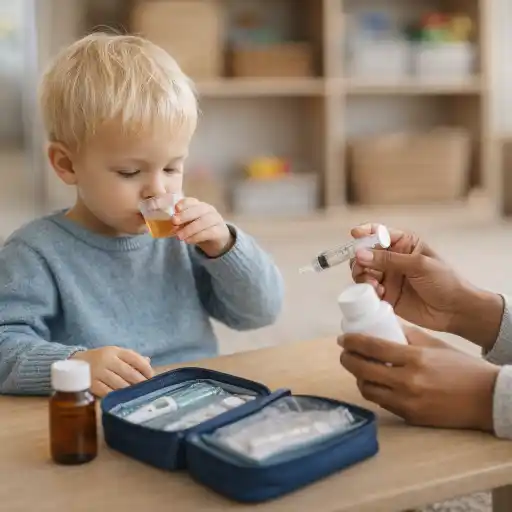
1. Follow clear steps every time. ChildCareEd lists practical steps in Rules, Records, and Training and the Documentation Dos and Don'ts.
2. A simple six-step dose routine:
- 🔎 Read label and parent permission.
- 🧾 Check the Six Rights (#children #medication #documentation).
- 💉 Use correct measuring device.
- ✍️ Give medication, then immediately sign the MAR with full name and time.
- 📣 Watch for side effects and note any observations on the MAR.
- 🔁 Return unused or expired meds to the parent and document receipt/return.
3. Documentation tips (quick list):
- Use a dedicated MAR — no scraps of paper.
- Write in permanent ink; don’t erase—draw a line, correct, and initial.
- Never sign before giving the dose.
- Keep MARs secure but accessible to supervisors and inspectors.
Common mistakes to avoid:
- ⚠️ Signing before giving medicine.
- ⚠️ Using household spoons instead of dosing tools.
- ⚠️ Leaving meds where children can reach them.
What should we do for emergencies and children with special health needs?
1. Plan ahead with action plans. Every child with asthma, severe allergies, diabetes, or seizures should have a written health action plan from their health provider and parent. ChildCareEd has allergy and action plan resources in Medication & Allergy Resources. For more detailed guidance on recognizing triggers, writing individualized asthma and allergy action plans, and staff training to safely include children with these conditions, see Caring for Children with Asthma and Allergies in Child Care Facilities.
2. Emergency meds: stock and access.
- 🚨 Keep emergency meds (EpiPens, inhalers, glucagon) labeled, secure, and where trained staff can reach them quickly.
- 📞 Have clear steps: recognize signs, give emergency med per plan, call 911 if needed, then notify parents and document.
- 🔐 Check stock epinephrine rules in your state and follow standing order requirements; Minnesota guidance is one example of good practice (MN Guidelines).
3. Inclusion and legal protections: Follow ADA and Section 504 when accommodating children with health needs. Train staff so your program can safely include more children. If you lack a nurse on-site, create clear delegation and supervision rules; studies show many programs use trained unlicensed staff with nurse supervision (Medication Administration Practices review).
FAQ (short):
- Q: Can staff give OTC creams? A: Yes, only with written parent permission and your program policy; document every application.
- Q: Who signs the MAR? A: The staff who gave the medication must sign immediately after giving it.
- Q: What if a child refuses? A: Document refusal, notify the parent, and follow your incident policy.
- Q: Where to get help? A: Your state licensing agency, local health department, and ChildCareEd resources.
Conclusion
1) Start small: update your written policy, use a MAR, and schedule staff for MAT or short refreshers. 2) Practice emergency steps with trainers and EpiPen trainers. 3) Use ChildCareEd tools like the Medication Administration Template and the 6 Hour MAT Buy Now $89.00 to build confidence. Keep #safety, careful #documentation, and regular #training at the center of your work to protect the #children in your care.
- Medication Adminstration Training and EPI Pens Shortage Update
- CDA Certification en Español: Recursos y Consejos para Educadores Bilingües
- Recursos en Español sobre el Sueño Seguro del Bebé
- Capacitación en Salud y Seguridad Preventiva en Línea para Proveedores de Cuidado Infantil
- Normas de Licenciamiento de Cuidado Infantil en Virginia para Centros Diurnos Infantiles y Hogares Diurnos Familiares
- Proporciones de Cuidado Infantil y Tamaños de Grupo por Edad en Virginia (Guía Rápida para Centros y Hogares)
- Daycare Jobs in California: How Old Do You Have to Be?
- What should North Dakota child care providers know about first aid for bites and stings?
- Cómo simplificar la capacitación para sus empleados de daycare
- How can child care programs safely administer medication?
- How do we build a health care plan for children who need daily medication?
- How can childcare providers safely and confidently administer medication?
- How can child care programs build effective food allergy awareness and emergency response plans?
- How can childcare programs make transportation safe, inclusive, and compliant?
- How Can Child Care Programs Safely Administer Medication?
- Online Babysitting Classes: Learn the Skills to Care for Children Safely
- How Can Child Care Programs Build Safer Medication Practices?
- What Should Parents and Providers Ask Before a Child Returns to Child Care After Illness?
- What Health Supplies Should Family Child Care Providers Keep Stocked?
- How Can Child Care Programs Keep Medication Handoffs and Records Consistent?
