As child care leaders you want every child to be safe. Keep your #children healthy with clear rules for #medication, smart #safety steps, careful #documentation, and regular #training. This article explains easy steps you can use today. Remember: state requirements vary - check your state licensing agency.
Why it matters: When staff give medicine the right way, children stay well and families trust your program. Good practices lower mistakes, protect staff, and help your program follow licensing rules. A few clear routines make a big difference.
What basic steps keep medication safe in child care?
Short answer: follow the Six Rights, use proper storage, and keep written permissions.
- Read labels and permission forms every time. Check name, dose, time, route, and instructions. This is part of the Six Rights described in ChildCareEd's guide.
- Store meds in original containers and lock them. Keep emergency meds (like epinephrine or inhalers) where staff can reach them quickly but safely, and label them clearly. See Medication Administration Template Buy Now $0.00 for storage ideas.
- Use the right measuring tools. Never use household spoons — use oral syringes or calibrated cups as the CDC recommends (CDC Medication Safety).
- Have a plan for field trips. Bring meds in a labeled bag and a copy of the child’s permission form. Make sure trained staff travel with meds.
- Keep parents informed. Tell them when medicine was given, any reactions, and when supplies are low.
Who needs training and where can we get it?
All staff who accept, store, or give medicine should be trained. That includes teachers, float staff, and substitutes who might give meds. Many states require a special Medication Administration Training (MAT).
- ✅ Take a state-approved MAT course. ChildCareEd offers a 6-hour in-person Medication Administration Training Buy Now $89.00 that covers hands-on skills and documentation.
- 📚 Use local resources. Your health department or community college often has approved courses. Minnesota guidance shows good training topics like the Six Rights and emergency plans (MN Guidelines).
- 🩺 Practice skills during training. Use EpiPen trainers and inhaler practice devices so staff feel ready to act. ChildCareEd and Red Cross classes offer practical sessions (see Red Cross).
- 🔁 Refresh yearly. Keep skills current and document competency. The Minnesota training page explains ongoing education needs (Education and Training).
How do we document medicine and follow rules?
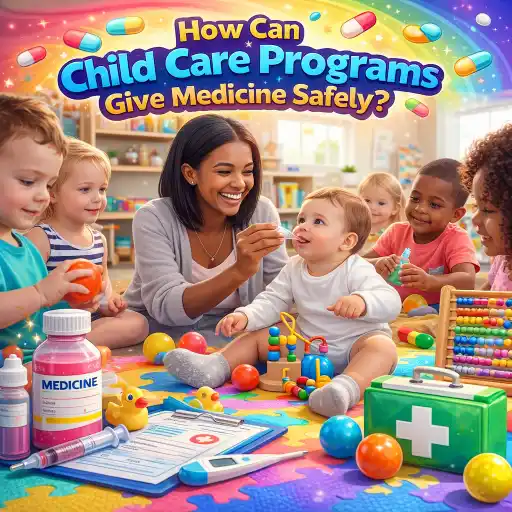
Good records protect children and your program. Use a clear Medication Administration Record (MAR) and keep signed parent permission on file.
- ✍️ Use a MAR every time you give medicine. Include child name, med name, dose, time, route, and staff signature. ChildCareEd explains documentation best practices in Documentation Dos and Don'ts.
- 📥 Keep original containers and the prescriber’s orders when required. Note when medication was dropped off and when it goes home. Templates are available at ChildCareEd forms Buy Now $0.00 and other form sites like SimplyDaycare.
- ⚖️ Correct errors the right way: draw a single line through mistakes, write the correction, and initial it. Never erase or use white-out. This is key for licensing reviews.
- 📋 Know your laws. Each state sets rules about who can give meds and what paperwork is needed. For legal overviews see FindLaw. Remember: state requirements vary - check your state licensing agency.
What common mistakes should we avoid and how do we handle emergencies?
Common mistakes happen when staff rush or don’t follow policy. Avoid these pitfalls to keep kids safe.
- ⚠️ Signing before giving medicine. Always give the dose first, then sign the MAR.
- ⚠️ Using unmeasured spoons. Use oral syringes or dosing cups only. The CDC warns that dosing errors cause many emergency visits (CDC).
- ⚠️ Missing consent or outdated orders. Keep signed permission forms current. For templates and policy help see ChildCareEd Buy Now $0.00.
- 🚨 For emergencies: 1) Recognize signs (trouble breathing, swelling, severe drowsiness). 2) Call 911 if needed. 3) Give emergency meds per orders (only trained staff). 4) Notify parents and document everything. Minnesota offers clear emergency guidance for schools and child care (MN Guidelines).
- 🧯 Practice drills. Run quick drills for anaphylaxis or asthma so staff act fast and calm.
Common mistakes can be fixed by simple routines, checklists, and regular training.
Conclusion and quick next steps
- 🔎 Review your written medication policy and update forms. Use the ChildCareEd template Buy Now $0.00.
- 📅 Check staff training. Schedule MAT or refresher classes like ChildCareEd's 6 Hour MAT Buy Now $89.00.
- 🧾 Post a simple checklist by your medication area: permission, label match, unexpired, MAR ready, trained staff available.
FAQ
- Q: Can we give over-the-counter creams? A: Only with current written parent permission and your program policy. Document every application.
- Q: Who signs the MAR? A: The staff person who gave the medicine signs immediately after administration.
- Q: What if a child refuses medicine? A: Document the refusal, notify the parent, and follow your incident policy.
- Q: Where to get help? A: Your state licensing agency, local health department, and ChildCareEd resources (see Ultimate Guide).
You are doing important work. Small systems—good forms, steady training, and calm plans—help you give safe care every day.
- 45 Hour Child Growth and Development
- Basic Health & Safety and Breastfeeding Awareness
- 45 Hours Director-Administration ONLINE
- Easy Steps to Resume and Interview Success
- Legal & Ethical Essentials in Child Care
- CDA Family Child Care Credential with Portfolio Review
- CDA Bridge Bundle: Family Child Care
- Texas Director Credential Renewal
- Texas Director Credential
- CDA Certification en Español: Recursos y Consejos para Educadores Bilingües
- Recursos en Español sobre el Sueño Seguro del Bebé
- Capacitación en Salud y Seguridad Preventiva en Línea para Proveedores de Cuidado Infantil
- Cómo Empezar una Guardería en Casa: Requisitos y Pasos
- Normas de Licenciamiento de Cuidado Infantil en Virginia para Centros Diurnos Infantiles y Hogares Diurnos Familiares
- Proporciones de Cuidado Infantil y Tamaños de Grupo por Edad en Virginia (Guía Rápida para Centros y Hogares)
- How can childcare centers use simple health and safety best practices every day?
- How can child care providers use simple health and safety best practices every day?
- Child Care Medication Administration: Rules, Records, and Training
- What is Medication Administration Training and why does my child care program need it?
- How can child care programs give medicine safely?
- Cómo simplificar la capacitación para sus empleados de daycare
- How Child Care Providers Can Promote Safety and Well-Being
- Medication Records in Daycare: Parent Consent, Dosage, and Timing
- What Does North Dakota Require for Medication Administration Training?
- What health and safety training do child care programs need?
- How can child care programs safely administer medication?
- How can child care programs safely handle medication administration?
- How should Minnesota child care programs handle allergies and special diets?
- How do we build a health care plan for children who need daily medication?
