Summer offers an ideal opportunity to combine cooling, open-ended play with intentional learning goals. This practical guide helps child care providers and directors create low-prep, inclusive activities that promote #summer fun, #sensory exploration, and child-centered learning while prioritizing #safety and active supervision. Readers will find quick station recipes, planning checklists, and adaptation strategies for offering rotating small-group activities, brief whole-group demonstrations, or calming sensory invitations in cozy areas. Educators can strengthen these experiences through ChildCareEd’s Creating the Natural Outdoor Classroom  Buy Now $16.00, which explores sensory experiences and outdoor learning for children of different ages, and Active Supervision: A Strategy That Works Buy Now $35.00, which provides practical strategies for monitoring children and preventing injuries during active play. Together, purposeful planning, age-appropriate adaptations, and attentive supervision can make summer sensory activities safe, engaging, and developmentally meaningful for every child. State requirements vary, so always check with your state licensing agency.
Why does summer sensory play matter?
Sensory setups invite choice and repetition—two powerful ingredients for learning. With simple materials (water, sand, ice, textured paint), children explore cause/effect and vocabulary while staying cool. For no-cost options and rapid set-ups, see No-Cost Sensory Activities for Toddlers.
What sensory activities work best for each age group this #summer?
- 🍼 Use texture scarves, a taped discovery bag, or a hand-held sensory mirror. See infant-safe setups at Sensory Play for Infants.
- 🧊 Try tiny, adult-held ice exploration (adult controls temperature and access).
1) Toddlers (12–36 months): sensory bins with larger, taste-safe fillers and adult guidance.
- 💧 Shallow water trays with scoops; supervised within arm’s reach. See no-cost and taste-safe ideas at ChildCareEd and lists of safe fillers from resources like Speech Room News.
- 🟠 Ice cube painting, sponge toss, and edible finger paints for younger toddlers.
2) Preschoolers (3–5 years): multi-station invitations that combine art, simple science, and small-world play.
- 🎨 Ice painting, water-pistol painting, kinetic sand sculpting, or color-changing flowers. See activity ideas in Summer Crafts and Activities and Summer Preschool Activities.
- 🔬 Add short science demos (milk-and-soap swirls, sink/float exploration) for wonder and repeatable investigation.
3) Mixed-age groups: offer parallel stations and clearly labeled choices so each child selects an appropriate challenge. For sensory-bin design and tool choices, see How to Create a Sensory Bin.
How do we keep summer sensory and #water play safe and license‑compliant?
- 🚨 Supervision system: assign a named “water watcher” for every water station; remove distractions (phones, paperwork).
- 💧 Keep water shallow: a few inches for tables/tubs; empty tubs immediately after use. See ChildCareEd tips in Summer Preschool Activities.
- 🩺 Ensure staff have current CPR/first aid and run brief drills for water incidents and heat illness.
- ⛱️ Schedule: avoid midday heat; use shade, hats, and frequent water breaks. CDC recommends timing and hydration checks in hot weather.
- 📋 Documentation: post supervision assignments, count sheets at gates, and a quick pre‑outside huddle checklist. Again: state requirements vary - check your state licensing agency.
How can we plan low‑prep stations, rotate materials, and keep teams efficient?
Use simple planning templates so any staff member can set up a station in minutes. Prioritize stations that are reusable, portable, and age-adaptable.
- 🗂️ Station design (3–5 minute set-up):
- 1) Base: tray or shallow tub + drop cloth.
- 2) Filler: water, rice, sand, or kinetic sand (see sensory bin guide).
- 3) Props: scoops, cups, small-world toys, droppers, or funnels.
- 🎒 Rotation system:
- 1) Label kits and store in clear bins (rotate one kit per week).
- 2) Use a 10–20 minute station rhythm for preschoolers; 5–10 minutes for toddlers.
- 3) Designate one adult per 4–6 children at messy or water stations.
- ✨ Low-prep favorites to mix in:
- • Sensory bottles — step-by-step at How to Make Your Own Sensory Bottles.
- • Ice painting, water walls, and recycled-material collage — see Summer Smiles.
- 📦 Quick clean & store: scoop reusable fillers into sealable bags, wash tools, rotate kits. For non-food filler lists and storage ideas,s see resources such as You Clever Monkey.
How do we adapt activities for children with sensory differences or special needs?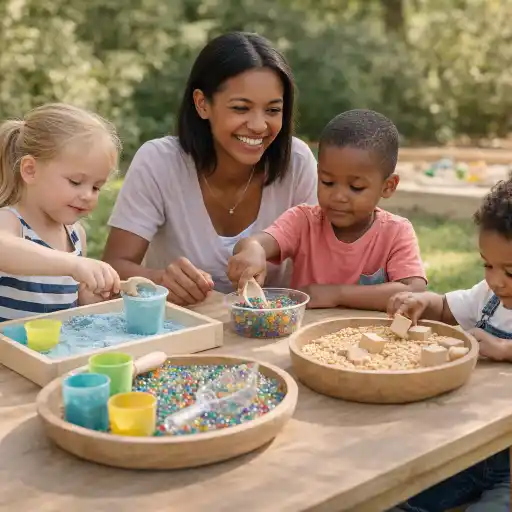
Start with observation and simple documentation. Use objective notes and look for patterns (covering ears, seeking heavy pressure, avoiding textures). ChildCareEd’s article on what to watch for with sensory needs is a strong practical reference: What Should Child Care Providers Watch For With Sensory Needs?.
- 🤝 Partner with families: ask what works at home and share brief observational notes.
- 🛋️ Make a cozy/calm corner: soft light, sensory bottle, small rug, and a visual cue for rejoining the group.
- 💪 Offer heavy work and movement choices before group time: carrying bins, pushing carts, short wall pushes to help regulation.
- 🎧 Reduce sensory load: provide noise-reducing headphones, dim lights, or a quieter station away from high-traffic centers.
- 📚 When to refer: patterns of interference across settings that don't respond to classroom adjustments are a cue to suggest OT or pediatric follow-up. For play-based strategies for children with autism, see ChildCareEd’s course Play with Purpose Buy Now $55.00.
How do we measure learning, avoid common mistakes, and build routines?
Why it matters: documenting one observed skill per child during sensory play helps translate playful moments into programmatic learning. Use short, weekly notes linked to a single learning goal (fine motor, language, self-regulation, or math).
- 📝 Observation routine (1–2 minutes):
- 1) Pick one child per day.
- 2) Note setting, target skill, and next step.
- 3) File weekly lesson notes and share with families.
- ⚠️ Common mistakes and fixes:
- ❌ Too many small parts. ✅ Use larger props for group bins (see ChildCareEd).
- ❌ One distracted staffer at water play. ✅ Assign a named water watcher and remove phones.
- ❌ No heat check. ✅ Add Heat Index to opening routine (see ChildCareEd heat-safety resource in Resources).
- 📈 Small assessment ideas:
- • Fine motor: track the number of successful pincer grasps or pours with a tool.
- • Language: list new words a child uses to describe textures or actions.
FAQ — quick answers for busy teams
- Q: How deep can preschool water play be? A: A few inches at most for tubs/tables; constant supervision required. See CDC guidance.
- Q: Can we use food in sensory bins? A: Yes, if supervised and allowed by policy — otherwise use non-food alternatives (see taste-safe lists in Speech Room News).
- Q: How long should stations run? A: 5–10 minutes for toddlers; 10–20 minutes for preschoolers.
- Q: What about allergies? A: Check forms, provide non-food options, and record allergies clearly before sensory days.
Conclusion
1) Quick next steps for your team:
- 🔹 Choose 3 simple activities this week: one craft, one sensory bin, one shaded outdoor game.
- 🔹 Run a 60‑second staff huddle before outside time and assign named watchers.
- 🔹 Note one child’s learning target per session and rotate kits weekly.
2) Resources to keep close: ChildCareEd’s activity banks and guides for Summer Smiles, How to Create a Sensory Bin, and The Water Table. For public-health guidance,e see the CDC outdoor play page.
Keep it simple, choose reusable materials, and pivot when a child’s sensory signals say “too much.” Your thoughtful planning turns messy, cooling play into memorable learning. Enjoy a creative, safe #summer of #sensory play with your #preschoolers — and keep extra towels handy!
- 45 Hour Child Growth and Development
- From Play to Planning: Building Culturally Competent, Child-Centered Curriculum
- The ABCs of Behavior: Turning Challenges into Learning Opportunities
- 45 Hour School Age Methods and Materials
- Effective Approaches for Autism and Inclusion
- Play with Purpose: Supporting Children with Autism
- Texas Director Credential
- Chef's in the Classroom
- Planning Summer Fun: Texas Child Care Providers
- Get Ready for Summer!
- ¿Cuáles son las mejores actividades del Día de la Tierra para niños en casa o en el aula?
- Proporciones de Cuidado Infantil y Tamaños de Grupo por Edad en Virginia (Guía Rápida para Centros y Hogares)
- How to Celebrate National Ice Cream Day in Your Center
- How can I plan peach-themed summer activities for preschoolers in Georgia?
- How can we run safe water play and heat-safe summer activities for preschoolers in Texas?
- How can I use beach and ocean-themed summer activities in my California early childhood classroom?
- Summer Field Trips for Daycares in Wisconsin
- Summer Field Trips for Daycares in California
- Cool Summer Fun: National Ice Cream Day Activities for Kids
- What indoor activities help New York child care programs stay safe and happy during a heat wave?
- Easy Pool Noodle Sea Creatures for Ocean Theme Activities
- How can Michigan home-based providers plan engaging and safe summer programming?
- How can we build a Minnesota summer program that keeps school-agers engaged?
- Summer Preschool Activities for Art, Science, and Sensory Play
- How can Minnesota child care providers celebrate National Ice Cream Day safely and with fun activities?
- How can Florida child care providers celebrate National Ice Cream Day safely and with learning fun?
- How can Alabama child care providers celebrate National Ice Cream Day safely and with learning?
- How can we explore sand, space, and science with young children in preschool settings?
