Every day you care for little ones. You keep them fed, learning, and loved. Teaching and planning can also help stop harm before it happens. Below are clear steps and friendly reminders for child care leaders and providers. This article uses plain words and quick lists you can use in staff meetings and training.
Why this matters:
1) Children who grow up in safe, stable, and loving places learn better and feel calmer. The CDC explains that safe, stable, nurturing relationships and environments help prevent child abuse and neglect. See CDC prevention guidance for ideas.
2) Your program is part of a community safety net. Small changes in routines, supervision, and support for families lower risk and build trust. For free tools and course ideas, visit ChildCareEd resources.
How can child care programs reduce risk and prevent abuse?
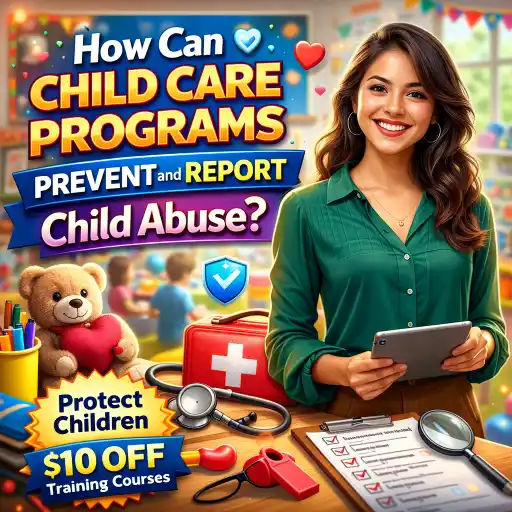
Prevention starts with planning and caring. Use these steps:
- Make clear rules and safety policies for staff, families, and visitors. Put them in writing and review often.
- Hire and screen safely:
- Run background checks and check references.
- Use written applications and interviews.
- Train staff on signs of abuse and on being a #mandatedreporter. ChildCareEd offers courses like Mandated Reporters
 Buy Now $16.00 and 1-Hour Abuse & Neglect Buy Now $10.00. For a clear, plain-language overview of who is a mandated reporter and the steps to take when abuse is suspected, see our Mandated Reporters guide.
 - Build strong family supports: connect families to local help, parent groups, and community services. The CDC suggests programs like home visiting and parent training to reduce stress and build skills (CDC).
- Use safe supervision: set ratios, rotate caregivers, and keep doors/cores visible. Keep records like sign-in sheets and incident logs.
Prevention means everyone in your program knows their role. Encourage staff to share concerns and offer help before problems grow.
What should a mandated reporter do when they suspect abuse?
- 📋 Stay calm and listen to the child. Do not press for details. Let them use their words.
- 📝 Document what you saw or heard: date, time, words the child used, location, and who else was present. Keep facts, not opinions.
- 📞 Report right away to your local child protective services or law enforcement. Many states have hotlines and guidance; see examples at Illinois DCFS and New Jersey reporting.
- 🔒 Protect privacy but follow agency instructions. The HHS says HIPAA does not block reporting to child protection agencies (HHS FAQ).
- 🧭 Follow your workplace policy and tell your supervisor as required. If your program has an internal reporting flow, use it after you call authorities.
Legal help pages explain mandated reporting duties and protections. See a plain overview at FindLaw on mandatory reporting. Remember: if you report in good faith you usually have immunity from civil or criminal liability.
How can staff support a child after a disclosure using trauma-informed care?
- 🙂 Be present and honest.
- Say you believe them. Use short, simple words.
- Tell them you must tell someone who can keep them safe.
- 🛋 Create a calm space: lower noise, stay at their level, and offer a quiet activity like drawing or a soft toy.
- 🔁 Keep routines: predictable schedules make children feel safer. The CDC and ACEs guidance stress safe, stable, nurturing environments as prevention and healing (see CDC on ACEs).
- 🤝 Use consistent caregiving: assign trusted staff who know the child and can keep consistent interactions.
- 📚 Connect to help: refer families to counseling and services. The National Child Traumatic Stress Network shares tools and training ideas (NCTSN).
Also train staff in trauma-informed care. ChildCareEd has materials on trauma-informed approaches and courses that help providers change the question from “What’s wrong?” to “What happened?” (see ChildCareEd training).
What common mistakes happen and how do we avoid them?
Here are pitfalls and how to prevent them:
- ❌ Mistake: Waiting to report because you want proof.
✅ Fix: Report when you have reasonable cause or concern. Call your hotline or supervisor immediately. Do not wait for proof. - ❌ Mistake: Asking leading questions to the child.
✅ Fix: Use open listening. Let the child speak in their own words. Record only what the child said. - ❌ Mistake: Sharing details widely with staff or parents.
✅ Fix: Share only with those who need to know (your supervisor and the agency). Protect confidentiality. - ❌ Mistake: Not documenting events clearly.
✅ Fix: Write facts, dates, and times. Keep reports in a secure file. - ❌ Mistake: Forgetting to check state rules.
✅ Fix: Keep a copy of your state’s mandated reporter rules in the office and review them yearly.
FAQ (quick answers):
- Q: Who must report? A: Many staff are required by law. Check your state list and your program policy.
- Q: Can I be sued for reporting? A: Good faith reporters usually have legal protection.
- Q: What if the parent is the reporter? A: Report and let authorities investigate.
- Q: Should I call 911? A: Yes if a child is in immediate danger.
Conclusion
Your program can make a big difference. Use clear policies, regular training, good hiring checks, and caring routines to protect #children and promote #safety. When you suspect harm, act quickly and follow your duty as a #mandatedreporter. Support healing with #trauma-informed care and keep focus on #prevention. For training and free resources, visit ChildCareEd: childcareed.com and review CDC guidance at cdc.gov. If your program is located in Georgia, see our Georgia Child Abuse & Neglect Awareness page for state-specific resources, statistics, and training courses.
State rules differ — state requirements vary - check your state licensing agency. Still, most reports follow the same steps. Use this checklist when you suspect harm:When a child tells you about hurt, they need safety, calm, and trust. Use trauma-informed steps that put the child first.- 45 Hour Child Growth and Development
- 45 Hours Director-Administration ONLINE
- 45 Hour Preschool Methods and Materials
- 45 Hour Infant and Toddler Methods and Materials
- 45 Hour School Age Methods and Materials
- 45-Hour Infant and Toddler Curriculum
- Texas Director Credential
- 45 hour Growth and Development Birth-age 12 ONLINE
- Childhood Neglect
- CDA Certification en Español: Recursos y Consejos para Educadores Bilingües
- Capacitación en Salud y Seguridad Preventiva en Línea para Proveedores de Cuidado Infantil
- Cómo Trabajar en el Cuidado Infantil en California: Requisitos y Pasos
- Cómo Trabajar en el Cuidado Infantil en Wisconsin: Requisitos y Pasos
- Capacitación Previa al Servicio para Proveedores de Cuidado Infantil en California
- Capacitación Previa al Servicio para Proveedores de Cuidado Infantil en Nevada
- How can Michigan infant caregivers prevent Shaken Baby Syndrome?
- How can child care programs prevent and report child abuse?
- What must Minnesota child care providers know about mandated reporting?
- How can Minnesota child care programs prevent and report child abuse?
- Cómo simplificar la capacitación para sus empleados de daycare
- Why is Child Abuse and Neglect Training Important for Child Care Providers?
- What should child care staff learn in Child Abuse and Neglect Training?
- How Can Michigan Child Care Providers Recognize and Report Child Abuse?
- How should child care providers recognize and report child abuse and neglect?
- How Should Childcare Providers Recognize and Report Child Abuse and Neglect?
- How Do You Know Whether Your Child Abuse Training Is Still Valid?
- Who Needs Child Abuse and Neglect Training—and How Often Do You Have to Take It?
- How Can Child Care Providers Recognize and Report Suspected Child Abuse and Neglect?
