When a child is injured, clear, factual documentation helps families, staff, and licensing understand what happened and how your program responded. ChildCareEd’s Balancing Act: Record Keeping & Supervision course supports administrators in managing recordkeeping, communication, and staff-support responsibilities alongside daily program demands.
Why does clear documentation matter?
1. It builds trust with families.
2. It helps your program find and fix safety problems.
For plain-language tips and templates, see Injury Reporting in Child Care: Simple Steps for Staying Compliant on ChildCareEd. Good records also follow the rules in Minnesota. For legal record-keeping guidance, see the Minnesota Department of Health Documentation and Record Keeping.
What must we record right after an incident?
- 📝 Child details: full name, age, classroom.
- ⏰ Date and exact times: when it happened and when help arrived.
- 📍 Location: room, playground, field trip site.
- 👀 People present: staff names and witnesses.
- 🔍 What happened: step-by-step facts (what you saw/heard), not opinions.
- 💊 Care given: first aid, who provided it, and the time.
- 📞 Communications: who you called (family, 911), time and result.
- ✍️ Signature: who completed the report, and when.
Use short sentences and quote the child’s exact words when possible (for example, "My knee hurts"). For a helpful checklist and sample wording, see Incident Reports After Medical Emergencies.
When and where do we report in Minnesota?
- 📲 If you suspect abuse or neglect, report right away. Minnesota lists mandated reporting guidance at the MN Dept. of Health Mandated Reporting.
- 📣 Mandated reporter training: To make sure all staff are confident recognizing signs of abuse or neglect and following Minnesota's mandatory reporting timelines, ChildCareEd's Mandated Reporters
 Buy Now $16.00 is a 2-hour online course covering how to identify warning signs, document observations objectively, and follow the correct reporting procedures — directly supporting the mandated reporting steps, MDH notification timelines, and privacy protection practices outlined in this guide.
 - ☎️ For vulnerable adults use MAARC at (844) 880-1574. See Mandated Reporting of Maltreatment.
- 🕒 Licensed facilities often must notify MDH within 24 hours for certain events.
- 📄 Family child care and centers must use state forms for serious injuries and deaths (examples: DHS-7774 and the Child Care Center Serious Injury & Death form). You can find sample forms and fillable copies online, such as the DHS-7774 sample: DHS-7774 Serious Injury Reporting Form and a center form sample: Child Care Center Serious Injury & Death Reporting Form.
- 🔎 Keep a copy of any MDH electronic confirmation or tracking number in your files.
Always follow your licensing packet and the rule that applies to your program. And again: rules require that apply vary - check your state licensing agency for exact forms and timelines.
How do we write clear, factual reports and protect privacy?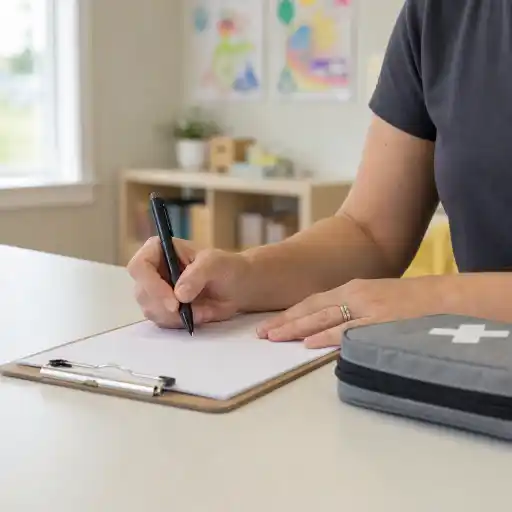
Good reports are simple and factual. Follow this step-by-step style:
- 📸 Think like a camera: write only what you saw or heard, in order.
- ✂️ Keep sentences short. Use plain words: "fell," "scrape," "bleeding."
- 💬 Quote the child’s exact words when they tell you something.
- ⏱️ Put times for each important action (example: 10:12 a.m. fell; 10:15 a.m. bandaged).
- 🧾 List witnesses and staff actions (who stayed with the group, who cared for the child).
- 🔐 Store reports securely and share only with those who must know (director, licensing, investigators).
Privacy rules like HIPAA may apply in some cases. For what HIPAA covers, see HHS: Your Rights Under HIPAA. Minnesota school and health records guidance is at the MDH record-keeping page: Documentation and Record Keeping. For practical tips and common report wording, ChildCareEd has clear examples: What Should We Document and Injury Reporting in Child Care.
Common mistakes & how to avoid them
- ✖️ Waiting too long to write the report — write same day.
- ✖️ Using opinions or guesses — stick to facts.
- ✖️ Leaving out times and witnesses — include both every time.
- ✖️ Sharing reports widely — keep them locked and private.
How do incident reports help your program improve safety?
Reports are not just paperwork. Use them to learn and prevent future harm. Steps to use reports well:
- 📊 Review reports regularly (monthly or quarterly) to spot patterns.
- 🗂️ Record keeping and supervision: For staff who want to build stronger daily documentation habits around incidents and safety reviews, ChildCareEd's Balancing Act: Record Keeping & Supervision Buy Now $16.00 is a 2-hour online course covering how to write clear, factual notes, organize incident files, and balance documentation with active supervision — a direct match for the same-day report writing, witness logging, privacy rules, and monthly trend review steps described throughout this article.
- 🔁 Use simple trend lists: where, when, what activity, injury type.
- 🛠️ Fix hazards (move equipment, change supervision plans, adjust transitions).
- 👩🏫 Train staff on the changes and practice emergency drills.
- 📣 Tell families what changed and why (keep messages short and kind).
National guidance supports using reports for prevention. See CDC safety tips for early care and the national standards in CDC: Safety, Health, and Injury Prevention and Caring for Our Children. For a practical template and training ideas, use ChildCareEd resources like the Injury-Accident Report for Child Day Centers Buy Now $0.00. For a broader suite of safety, health, and nutrition courses aimed at preventing injuries and promoting healthy environments, see Childcare Safety First.
Quick FAQ
- Q: When should I call 911? — A: For trouble breathing, heavy bleeding, loss of consciousness, seizures, or life-threatening signs. See ChildCareEd emergency guidance: Incident Reports After Medical Emergencies.
- Q: Do I always tell families? — A: Tell family right away for serious injuries or EMS calls. For minor bumps follow your policy and consider same-day notice.
- Q: When is an incident a mandated report? — A: If you suspect abuse or neglect, report per Minnesota rules at MN Dept. of Health Mandated Reporting.
- Q: How long keep reports? — A: Follow your program’s record retention policy and Minnesota statutes; store them securely. See MDH record guidance: Documentation and Record Keeping.
Summary
1. Act fast to care for the child and call 911 if it’s an emergency.
2. Write a same-day, fact-only report with times, witnesses, and actions.
3. Follow Minnesota reporting rules for maltreatment and serious injuries and keep confirmation numbers.
4. Store reports securely and use them to prevent future incidents. For plain-language templates and training, ChildCareEd has helpful tools: ChildCareEd resources. Use your reports to keep children safer and your team confident. #documentation #injuries #reporting #safety
- CDA Preschool Credential with Portfolio Review
- CDA Family Child Care Credential with Portfolio Review
- CDA Bridge Bundle: Preschool
- Pediatric RSV First Aid & CPR/AED
- CDA Infant/Toddler Credential with Portfolio Review
- CDA Bridge Bundle: Family Child Care
- CDA Bridge Bundle: Infant/Toddler
- Texas Director Credential Renewal
- Texas Director Credential
- Cómo Abrir Una Quardería En Casa Sin Dinero?
- Cómo ser director de cuidado infantil en Maryland
- ¿Cuáles son los pasos, requisitos y opciones en línea para la certificación de 90 horas en cuidado de Infantes/Toddlers en Maryland?
- Capacitación en Salud y Seguridad Preventiva en Línea para Proveedores de Cuidado Infantil
- ¿Cómo solicito la licencia para una guardería en California?
- Regulaciones de Licenciamiento de Cuidado Infantil en California para Centros y Hogares de Cuidado Infantil Familiar
- Lista para Abrir una Guardería en Casa en Dakota del Norte: Cómo Empezar
- Lista para Guardería en Casa en Illinois: Cómo Iniciar una Guardería en el Hogar
- Lista para Guardería en Casa en Texas: Cómo Iniciar una Guardería en el Hogar
- Por Qué la Supervisión Activa Es Clave para la Seguridad en el Cuidado Infantil
- Consejos de Supervisión Activa para Salones de Preescolar y el Juego al Aire Libre
- Retraso del Habla en la Guardería: Cómo Pueden Ayudar los Proveedores
- Cómo Trabajar en el Cuidado Infantil en California: Requisitos y Pasos
- Cómo Ser Maestra de Preescolar en Maryland
- Capacitación Previa al Servicio para Proveedores de Cuidado Infantil en Dakota del Norte
- Capacitación Previa al Servicio para Proveedores de Cuidado Infantil en Nevada
- What must Minnesota child care providers know about mandated reporting?
- Cómo simplificar la capacitación para sus empleados de daycare
- How do we document incidents and injuries the right way in Minnesota child care?
- Reglas y regulaciones de guarderías en Minnesota 2026: Requisitos actuales y próximos cambios
