Slippery walkways, crowded parking areas, bulky coats, and hurried handoffs can turn winter arrival and dismissal into high-risk moments. A clear plan helps staff protect children without making families feel blamed or rushed; ChildCareEd’s Active Supervision: A Strategy That Works Buy Now $35.00 offers focused training in watching, listening, interacting, and preventing problems—skills staff can apply during busy transitions. Read on for practical routines your team can adapt, and explore the course as a next step for strengthening everyday supervision.
Why do winter transitions deserve special attention?
Arrival and pickup compress many moving parts into a short period: children are leaving or entering vehicles, adults are exchanging information, and staff are monitoring a changing group. In winter, wet leaves, slush, ice, darkness, and cold can add hazards exactly where families and children are moving. Young children may not recognize a slick patch or understand why they need to wait beside an adult.
These moments also carry emotional weight. A child may be tired, reluctant to separate, excited to see a caregiver, or distressed by cold hands and damp clothing. A calm, predictable routine supports both physical safety and a sense of security. It also gives staff a reliable structure when the doorway is busy and attention is divided.
Think of the entire arrival path—not only the entrance—as part of the care environment. Review the route from parking and drop-off points to the building, including curb cuts, ramps, stairs, crossings, and the area where families wait. Check it before peak arrival and again if conditions change. The National Weather Service’s winter hazards resources emphasize taking ice and snow seriously and adapting behavior to conditions.
- Notice patterns: shaded sidewalks, recurring puddles, icy thresholds, or congestion at a particular door.
- Include staff, children, families, and people using mobility aids in your assessment of the route.
- Use a calm, consistent approach; safety procedures should feel supportive, not punitive.
Attending to these details before the rush helps the team focus on welcoming children rather than improvising around preventable hazards.
How can programs prepare the site and manage traffic?
Preparation begins before the first family arrives. Assign responsibility for checking walkways, entrances, parking areas, and drop-off zones. Remove snow and ice according to facility procedures, use appropriate traction treatments, and keep routes clear of equipment, bags, and snow piles that block sight lines. Pay special attention to transitions between surfaces—such as pavement to curb, a ramp to a doorway, or a wet mat to a smooth floor.
Make vehicle and pedestrian movement easy to understand. Mark the designated drop-off and pickup area, separate pedestrian paths from vehicle lanes where possible, and keep crosswalks, accessible routes, and emergency access clear. Staff should never encourage a child to cross a traffic lane alone or approach a moving vehicle. Where congestion is a recurring problem, consider staggered arrival windows or age-group scheduling that fits families’ needs.
A brief opening checklist can make preparation repeatable:
- Inspect the full route and address visible snow, ice, standing water, and trip hazards.
- Confirm signs and barriers are visible and have not been displaced by weather.
- Ensure lighting is adequate during dark mornings and late-afternoon pickup.
- Identify a safer alternate entrance or waiting area if the usual route becomes hazardous.
- Arrange for a staff member to monitor traffic and help guide movement during peak periods.
Do not assume a surface is safe simply because it looks wet rather than icy. Recheck during thaw-and-freeze cycles and after vehicles track slush across a cleared path. State requirements vary - check your state licensing agency, and align the site plan with local rules and your facility’s procedures.
What supervision routines keep children safe during handoffs?
Active supervision means staff position themselves to see and hear children, scan the environment, anticipate movement, and respond promptly. During winter arrival and pickup, it helps to assign roles instead of expecting one person to greet families, manage attendance, exchange messages, and watch every child at once. The exact staffing arrangement will depend on enrollment, room layout, and applicable ratios, but responsibilities should be explicit.
Use a consistent handoff: the family brings the child to the designated staff member, staff acknowledge receipt, and the child is guided into the supervised area. At pickup, verify that the person is authorized under the program’s release policy before the child leaves. Keep attendance records current and document each child’s arrival and departure using the program’s established method.
- Position staff so children cannot slip through an open doorway or reach the parking area unnoticed.
- Keep the group away from vehicle paths while adults check in or gather belongings.
- Use name-and-face checks when moving a group between areas, and repeat counts at transition points.
- Give children simple cues such as “stop at the blue mat” or “hold my hand until we are inside.”
- Keep sign-in materials and family messages from pulling the supervising adult’s attention away from children.
🧤 If a child’s mittens or boots are wet, have a designated adult help the child move to a safe, supervised spot before handling clothing or belongings.
These routines protect children while preserving the warmth of the welcome. Predictability can also make separation easier, especially for infants and toddlers who rely on familiar caregivers and repeated cues.
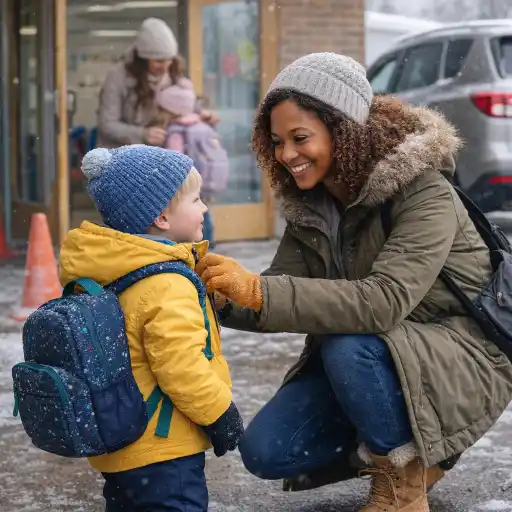
How should staff handle winter clothing and cold-weather concerns?
Winter clothing can make movement harder: boots may be oversized, snow pants may limit a toddler’s steps, and wet mittens can make a child uncomfortable. Give families clear, practical guidance before the season: label items, send spare socks and mittens when feasible, and choose footwear that fits securely. Keep a small supply of spare items when possible, and discuss clothing needs with families in a respectful, problem-solving way.
Help children remove or manage wet outerwear in a designated area so water does not spread across walking surfaces. Store coats and bags where they will not obstruct exits or supervision. Observe children for discomfort and cold stress, particularly when they have been outdoors or are waiting at a chilly entrance. If a child is wet or unusually cold, move them to a warm, protected area and follow your program’s health and emergency procedures.
For vehicle transitions, families and staff should remember that bulky coats can interfere with a snug car-seat harness. Head Start’s cold weather safety guidance recommends placing the coat or a blanket over a child after the harness is securely fastened, rather than under the straps. Follow the car-seat manufacturer’s instructions and applicable program transportation policies.
- Keep scarves tucked in and avoid loose items that can create hazards.
- Use dry layers and a blanket over a correctly fastened harness when appropriate.
- Do not leave children unattended in a vehicle or in an unsupervised waiting area.
- Bring children inside and seek appropriate help if there are signs of serious cold exposure.
For additional learning about restraint use, supervision, and transport planning, consider ChildCareEd’s Appropriate Precautions in Transportation of Children  Buy Now $10.00.
How can programs prepare for delays and communicate with families?
Weather can change quickly, and pickup may be delayed by poor roads, closures, power interruptions, or a sudden deterioration in site conditions. A written winter plan should specify who monitors alerts and site conditions, who can pause or change the arrival process, how families will be notified, and where children will wait safely. Make sure the plan covers staff responsibilities and backup communication methods, not just closure decisions.
Communicate procedures before difficult weather arrives. Tell families which entrance to use, where to park, how to approach the drop-off zone, and how the program will share updates about delays or closures. Use concise, direct messages during a disruption: what has changed, where children are supervised, what families should do, and when to expect another update. If the normal path is unsafe, close it and direct people to the alternate route rather than relying on verbal warnings alone.
Keep emergency contacts accessible and review them routinely. Programs should also know how they will maintain supervision if families cannot arrive on time. Head Start’s winter emergency planning guidance recommends planning for communication, warmth, supplies, and alternate arrangements during winter emergencies.
- Document weather-related changes, incidents, and near misses.
- Share the revised routine with every staff member, including substitutes.
- After a difficult morning, ask staff and families which steps were clear and which need adjustment.
Good communication reduces uncertainty and supports a partnership with families. It also gives staff permission to slow down when conditions call for caution rather than trying to maintain a normal schedule at any cost.
What common mistakes can programs prevent?
Winter transition problems often develop when familiar routines are treated as automatically safe. Ice can form after an early inspection; a cleared path can become slick with tracked-in slush; and a busy check-in can draw staff attention away from a child near the door. The answer is not to expect staff to remember everything under pressure. It is to build visible, repeatable steps into the routine.
- Checking only once: Reinspect after precipitation, temperature shifts, or a change in foot and vehicle traffic.
- Rushing to keep the line moving: Allow extra time and pause the process when surfaces or visibility are unsafe.
- Leaving roles unclear: Decide in advance who greets, records attendance, watches the doorway, and manages outdoor traffic.
- Assuming children will wait: Give clear cues and maintain close supervision; young children may move suddenly.
- Overlooking the vehicle area: Keep children in a supervised waiting zone away from moving cars and never ask them to cross traffic alone.
- Communicating only during a crisis: Share the regular winter procedure and alternate plans with families ahead of time.
Use a short seasonal staff refresher to walk the route, practice roles, and discuss realistic scenarios: a parent arrives at the wrong door, a child slips, a path freezes during pickup, or an authorized pickup person is not immediately recognized. Include children who need mobility, sensory, communication, or health-related accommodations in the planning conversation. Adjust the routine to the children and families you serve.
Learning from near misses is a strength, not a failure. Review what happened, identify the underlying condition or gap, and update the checklist or staffing plan so the team is better prepared next time.
Conclusion: What makes winter drop-off and pickup safer?
Safer winter transitions depend on three connected practices: prepare the route, actively supervise children, and communicate clear expectations. Inspect sidewalks and traffic zones before families arrive and as conditions change; designate staff roles and maintain a secure handoff; and use consistent procedures for wet clothing, vehicle movement, delays, and pickup authorization.
These steps do not require a perfect winter day or a perfectly quiet entrance. They require a team that can slow down, notice changing conditions, and respond together. Begin with a brief site walk and checklist, share the plan with families and staff, and review it after weather-related incidents or near misses. State requirements vary - check your state licensing agency for applicable supervision, facility, and transportation rules. With preparation and attentive care, programs can make busy winter arrival and dismissal more predictable, welcoming, and safe for children.
For deeper professional learning, explore the ChildCareEd courses Active Supervision: A Strategy That Works Buy Now $35.00, Appropriate Precautions in Transportation of Children Buy Now $10.00, Building and Physical Premises Safety Buy Now $10.00, Transportation and Field Trip Safety Buy Now $25.00, and Stay Alert! Steps for Emergency Prep Buy Now $25.00.
- CDA Certification en Español: Recursos y Consejos para Educadores Bilingües
- Preventing Injuries in Child Care Classrooms
- Recursos en Español sobre el Sueño Seguro del Bebé
- Capacitación en Salud y Seguridad Preventiva en Línea para Proveedores de Cuidado Infantil
- Proporciones de Cuidado Infantil y Tamaños de Grupo por Edad en Virginia (Guía Rápida para Centros y Hogares)
- How can Washington, D.C. child care providers keep children safe during transitions, drop-off, and pick-up?
- How Can California Early Childhood Educators Keep Classrooms Safe During Earthquake Drills and Daily Routines?
- Canciones, juegos y preguntas de círculo para niños
- Cómo simplificar la capacitación para sus empleados de daycare
- How Can Child Care Programs Prepare Safe Transportation Routines for Wet and Icy Weather?
- When Should a Sick Child Stay Home? A Childcare Provider’s Guide to Winter Illness Policies
- Why Can Bulky Winter Coats Put Children at Risk in Car Seats?
- Winter Emergency Preparedness: What Does Every Childcare Center Need Before the First Snowstorm?
- How Can Child Care Teams Manage Winter Clothing and Family Handoffs Without Rushing?
- When Should a Sick Child Stay Home from Child Care During Winter Illness Season?
- How Can Your Childcare Center Prepare for Snowstorms, Power Outages, and Winter Emergencies?
- How Can Child Care Programs Make Winter Drop-Off and Pickup Safer?
- What Should a Childcare Center’s Winter Emergency Closure Policy Include?
