Rain, slush, and ice can complicate arrival, pickup, and vehicle trips, making clear staff responsibilities and familiar routines especially valuable. Use the School Bus Safety: Safe or Unsafe Choices Sort Buy Now $0.49 to begin age-appropriate conversations about travel behavior, then practice the routines children will follow with adult support. Pair that learning with your program’s weather-related transportation procedures. For focused professional learning on supervision, restraints, vehicle operation, and trip planning, explore Appropriate Precautions in Transportation of Children  Buy Now $10.00. Read on for ways to prepare your team and adapt transportation routines to wet and icy conditions.
Why do wet- and icy-weather transportation routines matter?
Children depend on adults to manage hazards they may not recognize: slick walkways, poor visibility, wet clothing, cold vehicle interiors, and changing road conditions. These risks do not begin only when a vehicle moves. Loading, unloading, walking between a building and a vehicle, and reunifying with families are all parts of transportation that require active #supervision.
Weather disruptions can also create pressure to keep to a schedule. A written plan gives staff permission and direction to slow down, postpone a trip, or cancel transportation when conditions are unsafe. It also helps families understand what to expect, reducing hurried decisions at the door or curb.
Develop the plan before the forecast turns difficult. Define who checks conditions, who makes operational decisions, how changes are communicated, and where children wait while staff reassess. State requirements vary - check your state licensing agency, and align program policies with applicable local road, vehicle, and licensing rules.
How should a program decide whether to travel?
Use a consistent decision process rather than relying on a single person’s impression or a routine departure time. A designated lead should review current forecasts and alerts, road reports when available, and conditions at the program’s entrance, sidewalks, parking area, and loading zone. Recheck when weather changes; rain can freeze, and temperatures can fall during a route.
- Set written thresholds for delaying, rerouting, shortening, or canceling trips. Consider ice, flooding, visibility, road closures, and the ability to safely load and unload children.
- Identify who has authority to pause or cancel transportation and who informs families, staff, and any receiving site.
- Allow extra time so staff are not encouraged to rush through transitions or drive faster to recover a delayed schedule.
- Keep an alternate plan for children already at the program if pickup or transport is delayed.
- 🚗 If conditions are beyond the program’s safe operating limits, postpone or cancel rather than attempting to “make it work.”
Use official weather alerts and trusted local transportation information. The Red Cross winter storm guidance notes that winter storms can disrupt transportation, communication, heat, and power. Build those possibilities into the plan, including a process for notifying families and keeping children supervised in a warm, safe location.
What should staff do before children board or walk to a vehicle?
Begin with a short, repeatable pre-departure check. Staff should inspect the route from the exit to the vehicle for standing water, slippery leaves, slush, black ice, and obstacles. Use an alternate entrance or loading area if it is safer, and arrange for snow and ice to be cleared or treated according to facility procedures. Do not assume a surface is safe because it looks merely wet.
Prepare children for the transition before opening the door. Check that outerwear is appropriate, footwear is secure, and wet or soaked items can be replaced. Keep a supply of dry socks, mittens, and spare clothing where staff can access it promptly. Communicate clothing expectations to families in advance and approach missing gear supportively; a backup supply can prevent a child from being left uncomfortable or unsafe.
- Review the roster, authorized release information, health plans, emergency contacts, and any required permissions.
- Assign clear roles: one adult leads the group, another monitors the loading area or conducts counts, as staffing permits.
- Use the same count-and-check points every time: before leaving the room, after boarding, and after unloading.
- Keep bags and supplies secured so they do not block aisles, doors, or emergency exits.
- Check the vehicle, tires, lights, wipers, defroster, fuel or charge level, and child restraints before departure; follow the manufacturer’s guidance and program inspection procedures.
Good preparation protects children and reduces the cognitive load on staff. A visible checklist at the exit can help seasonal, substitute, and newly hired staff follow the same routine, even when weather changes the usual flow.
How can staff manage loading, unloading, and child restraints safely?
Wet and icy surfaces make transitions slower, and that is appropriate. Keep the group together in a supervised waiting area while one adult checks the immediate path. Move children in small, manageable groups when needed; avoid letting children run ahead, gather near moving vehicles, or stand where drivers may not see them. Staff should maintain clear sight lines and communicate before a vehicle moves.
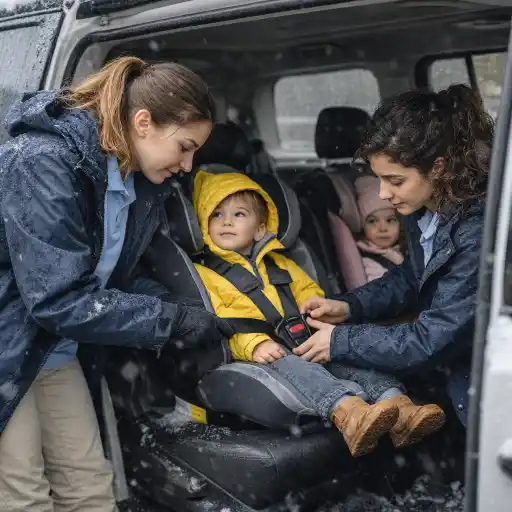
For vehicle travel, use an appropriate child restraint for each child’s age, height, and weight, installed and used according to the restraint and vehicle instructions. Never substitute a quick visual glance for a proper harness check. Bulky winter coats can compress in a crash and create slack under the harness.
Count children by name and face at each transition, not only by total. At the destination, confirm every child is with the assigned adult before moving away from the vehicle. After the trip, conduct a full vehicle sweep, including seats and floor areas, and document completion. The CFOC vehicle temperature guidance advises maintaining a comfortable interior temperature, using face-to-name counts before and after transport, and never leaving a child unattended in a vehicle.
What should the program prepare for delays, emergencies, and wet clothing?
A weather plan should cover more than driving. A vehicle may be delayed, a route may close, or a building may lose power. Keep an emergency kit accessible and check it regularly. Supplies can include a first-aid kit, charged phone or power bank, flashlight, blankets, water, essential contact information, and spare dry clothing appropriate to the children served. Store and manage medication in accordance with each child’s plan and program procedures.
If a child becomes wet or cold, bring them to a warm, protected place, remove wet clothing, and use dry layers or blankets. Watch for concerning cold-related symptoms, including persistent shivering, unusual drowsiness, confusion, or impaired coordination. Follow emergency procedures and seek urgent medical help when warranted; staff should not delay emergency response while trying to resolve transportation logistics.
Prepare families for delays with plain-language messages: whether transportation is paused, where children are being supervised, what pickup arrangements apply, and when the next update will come. Keep a written backup contact method in case phone service is disrupted. Document decisions, incidents, and near misses, then review them with staff to improve the plan. For structured professional learning on transport procedures, providers may also explore Transportation Safety Buy Now $16.00, Transportation and Field Trip Safety Buy Now $25.00, Responding to Emergencies Buy Now $16.00, and Engaging Indoor Activities for Inclement Weather Buy Now $24.00.
What common mistakes can programs prevent?
Many transportation problems arise from routine drift: staff assume someone else checked the conditions, a count is skipped during a hurried transition, or a familiar route is treated as safe despite changing surfaces. The solution is not to expect perfect memory; it is to design a process that makes important actions visible, assigned, and repeatable.
- Rushing to stay on schedule: Build in weather-related time and empower staff to delay or cancel when necessary.
- Checking only the forecast: Inspect actual surfaces and the loading zone, and reassess when conditions shift.
- Counting only at departure: Conduct face-to-name checks at each transition and a documented vehicle sweep at the end.
- Using bulky coats under harnesses: Use thin layers for buckling and place a removable coat or blanket over the fastened harness.
- Keeping no backup supplies: Maintain dry clothing and emergency items, and assign someone to check stock and expiration dates.
- Leaving decisions informal: Write down authority, family communication steps, alternate arrangements, and emergency contacts.
Short seasonal refreshers and practice scenarios help staff apply the written plan when the real day is busy. Invite staff to identify confusing steps and adapt procedures for infants, children with mobility or health needs, and children who need additional transition support. When children experience predictable cues and patient adults, winter transitions can feel calmer as well as safer.
Conclusion: How can a program make its winter transportation routine reliable?
Safe transportation in wet and icy weather depends on preparation, sound judgment, and consistent supervision—not on trying to maintain a normal schedule at all costs. Check local conditions before travel and as they change; define clear authority to delay or cancel; prepare paths, vehicles, clothing, and supplies; use correct restraints; and count children by name at every transition. Plan ahead for delays and emergencies, communicate clearly with families, and review incidents and near misses to strengthen practice.
Start with one practical step this week: review the weather policy with staff, walk the loading route, and rehearse the count-and-sweep routine. Then use a checklist to make those steps part of daily operations. For additional learning, the linked transportation courses provide focused study of passenger safety, supervision, and trip planning; confirm any training-hour or licensing requirements with your state agency.
- Appropriate Precautions in Transportation of Children
- Transportation and Field Trip Safety
- Basic Health & Safety and Breastfeeding Awareness
- Transportation and Field Trip Safety in the Early Childhood Environment
- 45-Hour Infant and Toddler Curriculum
- Key Elements of an After School Program
- Texas Director Credential
- Everyday Safety: Creating Healthy Environments
- Transportation Safety
- CDA Certification en Español: Recursos y Consejos para Educadores Bilingües
- Recursos en Español sobre el Sueño Seguro del Bebé
- ¿Qué Calificaciones Necesitas para Trabajar en Cuidado Infantil?
- Capacitación en Salud y Seguridad Preventiva en Línea para Proveedores de Cuidado Infantil
- Cómo Iniciar el Proceso de Obtención de la Licencia de Cuidado Infantil
- Normas de Licenciamiento de Cuidado Infantil en Virginia para Centros Diurnos Infantiles y Hogares Diurnos Familiares
- Proporciones de Cuidado Infantil y Tamaños de Grupo por Edad en Maryland (Guía Rápida para Centros y Hogares)
- Proporciones de Cuidado Infantil y Tamaños de Grupo por Edad en Nueva Jersey (Guía Rápida para Centros y Hogares)
- Proporciones de Cuidado Infantil y Tamaños de Grupo por Edad en Virginia (Guía Rápida para Centros y Hogares)
- Lista para Guardería en Casa en Illinois: Cómo Iniciar una Guardería en el Hogar
- Consejos de Supervisión Activa para Salones de Preescolar y el Juego al Aire Libre
- Cómo Trabajar en el Cuidado Infantil en Wisconsin: Requisitos y Pasos
- Capacitación Previa al Servicio para Proveedores de Cuidado Infantil en Nevada
- Las Mejores Ideas de Excursiones para Guarderías en Texas
- Cómo simplificar la capacitación para sus empleados de daycare
- How Can Child Care Programs Keep Young Children Safe in Cold Weather?
- How Child Care Programs Can Keep Children Safe During Extreme Weather
- Cómo Planificar Actividades al Aire Libre Seguras Durante el Calor y la Mala Calidad del Aire
- Daycare Outdoor Weather Safety: Temperature, Heat Index, and Playtime
- How Can Child Care Programs Prepare Safe Transportation Routines for Wet and Icy Weather?
