During an evacuation, staff need quick access to essential health, contact, and support information while protecting family privacy. Use the Allergy & Emergency Information Form Buy Now $1.49 as part of your program’s portable emergency records, alongside individual care plans, and establish who keeps them current, carries them, and accesses them during an emergency. For focused professional learning on evacuation procedures, emergency kits, communication, and children’s medical or support needs, explore Stay Alert! Steps for Emergency Prep Buy Now $25.00. Read on for ways to make care information easy for authorized staff to find and use when your program must leave the building.
Why does accessible care information matter during an evacuation?
Evacuation can disrupt ordinary routines in seconds. A familiar teacher may be helping children move, a substitute may be supervising an unfamiliar group, and a director may be coordinating with emergency responders. Staff still need to know who is present, which children have urgent health needs, where emergency medication is stored, and how to contact families.
Information that is difficult to find can delay decisions and increase confusion. Yet making every record openly visible creates a different risk: private health or family details may be disclosed to people who do not need them. The goal is not simply to make records available; it is to provide the right #information to the right people, in a format they can use under pressure.
Preparedness guidance from the Emergency Preparedness Manual for Early Childhood Programs treats readiness as an ongoing process that includes planning, response, and recovery. Portable child information belongs within that larger process—not as an isolated filing task.
For directors, this is also a practical way to support staff confidence. When everyone knows where the current summary is and what they are authorized to do with it, staff can focus on supervising children and following the evacuation plan rather than searching for paperwork. State requirements vary - check your state licensing agency.
What information should travel with the group?
Carry a concise emergency summary for each child or group, designed to support immediate care and family reunification. It should not be a duplicate of the child’s entire file. Keep detailed records secured, and include only the information needed for the evacuation and the next steps.
Depending on program policy, applicable rules, and each child’s needs, a portable summary may include:
- Child’s full name, classroom, and a recent photo when appropriate and permitted.
- Parent or guardian names and current phone numbers, plus backup emergency contacts.
- Critical health alerts, such as serious allergies or conditions requiring immediate attention.
- Relevant medication information, including where authorized medication is stored and which current care plan staff must follow.
- Communication, mobility, sensory, feeding, or other support needs that affect safe movement and supervision.
- Authorized pickup information and clear instructions for identity checks and reunification.
Separate emergency contacts from authorized pickup permissions. Someone listed to be contacted is not automatically authorized to take a child. Keep directions brief and actionable, but do not invent or summarize clinical instructions in a way that could alter an individualized plan. A summary should point staff to the correct current plan when more detail is needed.
ChildCareEd’s guidance on what to include on a child care emergency form likewise emphasizes health needs, contacts, pickup permissions, and medical consent. The portable version should be easy to scan and limited to what the evacuation team needs.
How can programs make information portable and secure?
A layered system helps balance quick retrieval with confidentiality. Store the master record in secure administrative storage, while keeping a current, concise copy with the group’s attendance materials and emergency supplies. A digital backup can add resilience, but it should not be the only option: phones may lose power, internet may fail, or staff may not have appropriate access.
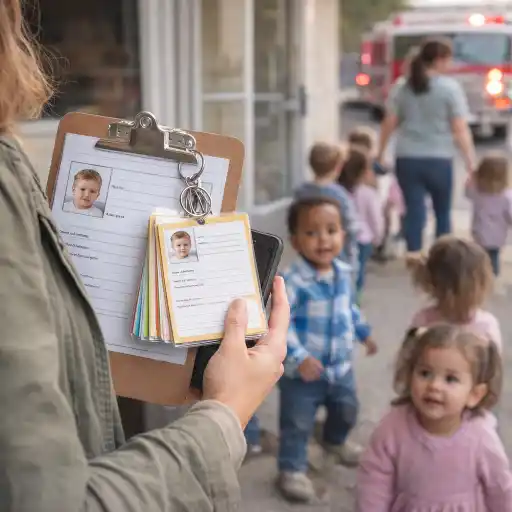
- 📁 Keep current printed summaries in a clearly labeled classroom binder or evacuation bag, protected from public view.
- Pair the daily attendance roster with the relevant child information so the group can be accounted for as a unit.
- Use secure digital records with individual accounts and role-appropriate permissions where feasible.
- Identify who is responsible for carrying the records and who serves as backup if that person is absent.
- After use, return paper records to secure storage and follow program procedures for handling copies or notes.
Make critical details visible through headings, short fields, plain language, and legible print. Do not rely on color alone; labels such as “SEVERE ALLERGY—SEE CURRENT ACTION PLAN” remain meaningful in a black-and-white copy. Avoid posting diagnoses, custody details, or contact numbers on public-facing boards.
Information should support each child’s actual access needs. Plan for infants and toddlers, children who use mobility or communication supports, and children who need medication, feeding supplies, or sensory accommodations. The ACF child care emergency preparedness checklist identifies accommodation for infants, toddlers, children with disabilities, and children with chronic medical conditions as a planning consideration.
How should staff use the information during evacuation and reunification?
Information access works best when responsibilities are assigned in advance. The evacuation lead should know who brings the attendance roster and emergency summaries, who supports children with additional needs, and who communicates with families. Staff should follow the program’s established emergency procedures and instructions from appropriate authorities; the information sheet supports those procedures but does not replace them.
At the assembly or relocation point, staff can use the roster and summaries to confirm who is present, identify immediate care needs, and keep children supervised. If a child needs urgent assistance, share relevant information with emergency responders according to the emergency plan and applicable rules. Give responders what is needed for the situation rather than handing over an entire file by default.
Reunification requires careful verification as well as prompt communication. Staff should know the approved pickup process, where families should report, and how to record each child’s release. Child Care Aware® of America’s reunification resource recommends having identifying details, current contact numbers, and program information available. The CDC notes that separation during emergencies can affect children and that planning can help families reunite more quickly; see its guidance on reunification after an emergency.
Keep family messages brief, factual, and consistent. Share the safe location, what families should do, and when the next update is expected. A designated communicator can reduce confusion while other staff maintain supervision.
How can directors keep records current and staff ready?
Even a well-designed summary can become unreliable when a phone number changes, a medication plan is revised, or a child’s support needs shift. Build review into ordinary operations: confirm details at enrollment, set a routine review schedule, and update records promptly when families report a change. Record the review date so staff can tell which version is current.
Use a repeatable check that covers:
- Emergency contacts and authorized pickup permissions.
- Health alerts, medication locations, consent, and current individualized plans.
- Communication, mobility, feeding, and other accommodations needed during movement or a possible relocation.
- Copies in classrooms, attendance materials, evacuation bags, and secure digital systems.
- Staff roles, backup assignments, and procedures for substitutes or floaters.
Practice retrieval during drills. Ask a staff member who does not regularly work in the classroom to locate the current summary, bring it to the designated assembly point, and explain how it will be protected afterward. A brief scenario can reveal whether the information is legible, appropriately concise, and actually accessible. Treat any difficulty as feedback about the system—not as a personal failing.
Common pitfalls include relying only on an office file or mobile app, keeping several conflicting versions, leaving sensitive details in public view, and assuming emergency contacts are approved pickup adults. Correct these through clear role-based access, one controlled update process, portable paper backups, and practice. For additional professional learning, explore Responding to Emergencies  Buy Now $16.00, Creating an Emergency and Disaster Preparedness Plan Buy Now $16.00, Administration of Medicine Buy Now $16.00, and Prevention of and Response to Allergic Reactions Buy Now $8.00. Check course details and confirm whether training meets your local requirements.
Conclusion: How can programs keep care information ready when evacuating?
Keep a concise, current, and secure emergency summary with the children it supports. Include only practical details staff need for safe supervision, urgent care, and reunification; make the summary readable and portable; and ensure staff understand who may access it and how to protect it.
Most importantly, connect the information system to the evacuation plan. Assign people to carry and use records, keep paper backups for technology disruptions, review updates with families, and rehearse retrieval in drills. Thoughtful preparation helps staff act with clarity while respecting each child’s needs and each family’s trust.
- Ensure the Health and Safety of Young Children
- D.C. Emergency Preparedness Training
- CDA Certification en Español: Recursos y Consejos para Educadores Bilingües
- MN Daycare Rules and Regulations 2026: Current Requirements and Upcoming Changes
- Texas Form 7263 Checklist: What to Complete Before Your Licensing Inspection
- What Does Illinois DCFS Check Most Often During a Day Care Center Licensing Visit?
- Including Every Child: What Child Care Providers Should Know About the ADA
- Emergency Form for Child Care: Could a Substitute Find What They Need in 30 Seconds?
- Evacuate, Shelter, or Lock Down? How to Respond to Different Child Care Emergencies
- How Can Childcare Programs Create Clear Policies That Families Understand and Trust?
- How Can Child Care Programs Build Effective Emergency Preparedness?
- After a Child Care Drill, What Questions Reveal Gaps in the Plan?
- Who Needs Access to a Child’s Emergency Information?
- What Should Be Included in a Child Care Emergency Preparedness Plan?
- How Can You Set Up an Infant Room So Substitutes Can Find What They Need?
- How Can Infant Care Staff Prepare to Support a Baby with an Ongoing Health Condition?
- How Can Child Care Programs Update Emergency Contacts While Protecting Family Privacy?
- Field Trip Emergencies: What Changes When You Are Away from the Center?
- How Can Child Care Programs Update Emergency Contacts Before Holiday Travel?
- How Can Child Care Programs Keep Children’s Care Information Accessible During an Evacuation?
