Medication can help a child feel better — but giving it in a child care setting must be done carefully. This short guide explains what Medication Administration Training (MAT) is, who needs it, and how to build safe routines your staff can use today. This article is for child care providers and directors who want practical steps and tools to keep children healthy and programs compliant. Remember: state requirements vary - check your state licensing agency. This guide focuses on #training #medication #documentation #safety #children.
1) What is Medication Administration Training and who needs it?
Medication Administration Training (MAT) teaches staff how to accept, store, document, and give medicines safely. Many states require MAT or a similar course for anyone who will give medicine in a child care program. ChildCareEd offers clear, state-approved courses like the 6 Hour Medication Administration Training (MAT) Buy Now $89.00 and helpful articles like Medication Administration Training for Child Care Providers.
Key points:
- 📝 Who needs training: any staff who will accept, store, or give medicines at your site.
- 📚 What training covers: types of meds, dosage measurement, emergency meds (EpiPens, inhalers), and documentation.
- 👩⚕️ Who can teach it: approved trainers or health professionals; many programs use state-approved MAT instructors.
Why it matters: trained staff follow the Six Rights (right child, med, dose, time, route and documentation). For more background and tools, see ChildCareEd’s Ultimate Guide to Medication Administration Training.
2) What should MAT teach and why does it matter?
Good MAT teaches hands-on skills and simple rules. It makes staff confident and helps prevent mistakes. Typical topics are:
- 🔎 Understanding medicines: prescription vs. OTC, side effects, reasons to give.
- 💉 Safe giving techniques: oral, topical, inhaler, and emergency injections (when allowed).
- ✍️ Documentation and records: how to use a Medication Administration Record (MAR).
- 🔒 Storage and security: locked boxes, refrigerated meds, labeling.
- 🚨 Emergency steps: recognizing anaphylaxis and using an auto‑injector.
Examples and resources: ChildCareEd’s course materials include a Medication Administration handbook and templates to use in your program. See the Medication Administration Template Buy Now $0.00 and the Documentation Dos and Don'ts for clear record rules.
Why it matters: good training reduces errors, protects children’s health, builds parent trust, and helps your program meet licensing rules. For emergency med training like EpiPen use, free and low-cost courses (for example, the Red Cross anaphylaxis class) reinforce hands-on practice. Always check your local rules and include state guidance when you plan training.
3) How do we set up safe medication procedures in our program?
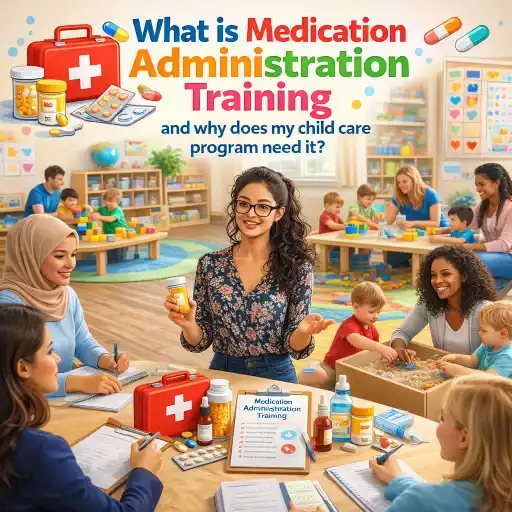
Use clear written steps and tools so everyone does the same thing every time. Follow this simple plan:
- 📄 Create a written medication policy and keep it in the staff and parent handbooks. Use the ChildCareEd Medication Administration Template Buy Now $0.00 to customize your rules.
- 🔁 Use a routine when meds arrive: check label, match to permission form, confirm expiration date, and store properly.
- 🗂️ Keep a Medication Administration Record (MAR). Always document right after giving a dose. ChildCareEd explains documentation best practices in Documentation Dos and Don'ts.
- 🔐 Store meds locked and labeled; use a separate bin per child and a locked refrigerator for cold meds.
- 🧪 Practice emergency drills for allergies, asthma, and seizures. Have written care plans for children with chronic conditions.
Tips for daily use (quick checklist):
- ✅ Permission form is on file.
- ✅ Label on original container matches form.
- ✅ You used the right measuring tool (no kitchen spoons).
- ✅ You signed the MAR after giving the dose.
State rules can be different. For example, Minnesota and other states publish specific guidance providers can use. Always note: state requirements vary - check your state licensing agency.
4) What common mistakes happen and how can we avoid them? (plus FAQ)
Common mistakes and how to avoid them:
- ⚠️ Signing the MAR before giving the medicine — fix: sign only after the child has taken the dose.
- ⚠️ Using unmarked containers or household spoons — fix: require original containers and pharmacy-provided measuring devices.
- ⚠️ Keeping meds within children's reach — fix: store locked and out of sight.
- ⚠️ Missing training for substitutes — fix: include medication rules in substitute orientation and require trained staff present.
FAQ (quick answers):
- Q: Can staff give over-the-counter creams? A: Only with written parent permission and your program policy. Document each application.
- Q: Who signs the MAR? A: The person who actually gave the medication must sign immediately after administration.
- Q: What if a child refuses a medicine? A: Document the refusal, call the parent, and follow your incident policy.
- Q: Do I need special training for EpiPens or inhalers? A: Yes — staff should have hands-on practice; see courses like ChildCareEd’s MAT and Red Cross anaphylaxis training.
Extra help: ChildCareEd has a full list of MAT resources, sample forms, and training options. See the 6 Hour MAT resource page and the article Child Care Medication Administration: Rules, Records, and Training.
Conclusion
Medication Administration Training protects children and programs. Do these three simple next steps:
- 📋 Review and update your written medication policy using the ChildCareEd template.
- 🎓 Check staff training and schedule MAT or refresher classes.
- 🧰 Put a clear checklist by your medication storage area: permission on file, label matches form, expiration check, MAR ready, and trained staff on shift.
Good routines, clear documentation, and regular #training help your team stay calm and safe when medicine is needed. For tools and classes to get started, visit ChildCareEd’s training pages and resources linked above.
- 6 Hour Medication Administration Training (MAT)
- EIP Scholarships Info Session
- Pediatric RSV First Aid & CPR/AED
- CDA Bridge Bundle: Family Child Care
- CDA Bridge Bundle: Family Child Care without Portfolio Review
- CDA Bridge Bundle: Infant/Toddler without Portfolio Review
- CDA Bridge Bundle: Preschool without Portfolio Review
- Allergies and Medication in Childcare
- Texas Director Credential
- Frequently Asked Questions
- ChildCareEd is now an EIP Training Organization!
- Focus on Health and Safety Training
- Capacitación en Salud y Seguridad Preventiva en Línea para Proveedores de Cuidado Infantil
- Regulaciones de Licenciamiento de Cuidado Infantil en California para Centros y Hogares de Cuidado Infantil Familiar
- Normas de Licenciamiento de Cuidado Infantil en Virginia para Centros Diurnos Infantiles y Hogares Diurnos Familiares
- Lista para Abrir una Guardería en Casa en Virginia: Cómo Empezar
- Capacitación Previa al Servicio para Proveedores de Cuidado Infantil en Dakota del Norte
- Capacitación Previa al Servicio para Proveedores de Cuidado Infantil en Virginia
- How do I use the Nevada Registry for child care training?
- Nevada Child Care Center Director: Requirements and Training
- How can I run strong child care administration that keeps kids safe and staff supported?
- What is Medication Administration Training and why does my child care program need it?
- How can Nevada child care providers stay inspection-ready under the 2026 regulations?
- Cómo simplificar la capacitación para sus empleados de daycare
- How Can North Dakota Providers Best Prepare for a Licensing Visit?
- How can child care programs build effective food allergy awareness and emergency response plans?
- How Can Your Program Best Prepare for Accreditation?
- What Certifications Do I Need to Open a Child Care Center? Owner vs. Director Requirements Explained
- What Health and Safety Training Is Required for Child Care Providers?
