Looking for a practical, research-aligned strategy to build both gross motor skills and emotional regulation in your classroom? Dance and structured movement activities are versatile, low-cost ways to help #preschoolers practice balance, self‑control, social interaction, and expressive language—plus they fit neatly into daily routines. For a hands-on next step, explore Mind's Medicine: Music in Early Childhood  Buy Now $16.00 to learn how to plan intentional music-and-dance moments, and check out Balancing Active Play in Child Care Buy Now $16.00 for scheduling and safety strategies you can apply right away.
Why does intentional dance practice matter for young children's development?
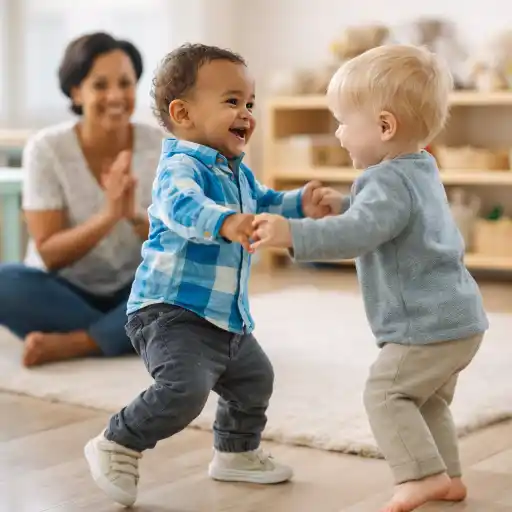
Dance is more than a fun break: it links sensory, motor, cognitive, and social systems in developmentally meaningful ways. Movement sequences give children repeated, timed challenges that strengthen coordination, bilateral integration, and rhythmic timing—skills tied to later tasks such as handwriting and reading. Emotionally, dance provides nonverbal ways to name and release feelings and to practice regulation strategies (tempo changes, breath work, slow-down cues). From a pragmatic standpoint, short, scaffolded dance activities support transitions and reduce classroom friction if they are predictable, repeated, and inclusive.
Why it matters: programs that embed regular, purposeful movement report improvements in attention, cooperative play, and self-efficacy. For directors, adding dance helps meet multiple goals—physical activity targets, social‑emotional learning (#SEL), and family engagement—without a large materials budget. State requirements vary - check your state licensing agency when you adapt routines or change schedules.
How can dance activities be designed to build specific #motor and coordination skills?
Design activities with clear, observable objectives: balance, crossing midline, rhythm matching, or motor planning. Use simple progressions: demonstrate, scaffold (cue sets and visual supports), and fade prompts as children gain skill. Incorporate props to modify difficulty—scarves for wide-arm movement, taped floor paths for spatial planning, and low balance beams or cushions for graded balance practice.
- Start with warm-ups: marching, heel-toe walks, and animal walks to activate large muscle groups.
- Use rhythmic phrases: four-beat movement patterns that repeat; children learn timing by echoing.
- Pair movement with concept play: stepping on color mats, moving to letter-names, or tracing shapes with the body.
- Measure progress with simple, classroom-friendly checks: can the child complete a sequence of 3 moves without prompts?
- 🔁 Adapt by offering choices—hop or step, fast or slow—so every child can succeed.
For curriculum links and lesson-ready ideas, see ChildCareEd's movement lesson packs and consider CDA Subject Area 2 Buy Now $80.00 for coursework that ties physical activities to intellectual development.
How does dance promote emotional expression, regulation, and social skills?
Dance offers a safe, embodied language for feelings. When a child moves “angry stomps” or “slow, sleepy sways,” they externalize affect and gain adult-led coaching opportunities to reflect and name emotions. Group dances and call-and-response games also scaffold turn-taking, perspective‑taking, and synchrony—social experiences that build trust and peer connection.
Practical tactics to promote regulation:
- Use tempo shifts (fast → slow) to teach up- and down-regulation.
- Include brief debrief routines: 1–2 child reflections after a dance (What did you feel? What did your body do?).
- Teach short breath cues or “reset” movements (hands on belly + 3 deep breaths) you practice in calm moments and use during escalations.
- 😊 Model and praise body-aware language: “I see you used a slow arm. That helped you feel calm.”
For a deeper dive into music's role in emotional and language development, revisit Mind's Medicine Buy Now $16.00—the course shows how to pair songs, rhythm, and movement with SEL objectives.
How do I make dance activities safe, inclusive, and classroom-ready?
Safety and inclusion are non-negotiable and straightforward with a planning checklist: clear the space; mark boundaries; choose age-appropriate music and volume; provide alternate roles (seated movement, instrument player, or rhythm leader); and offer visual cues for children who need them. Document adaptations in lesson notes so staff can replicate successful strategies. Remember: state requirements vary - check your state licensing agency when introducing new equipment or moving outdoors.
Key inclusion steps:
- Provide multi-modal response options: move, point, sign, or play an instrument.
- Offer seating choices and noise-reduction (headphones) for sensory needs.
- Use peer buddies for modeling and social support.
- 🧑🏫 Train staff with short, focused coaching and one live modelled session rather than long single workshops.
To align safety and program policies with active play goals, explore Creating Safe & Healthy Child Care Environments Buy Now $55.00 and the course Balancing Active Play in Child Care Buy Now $16.00 for scheduling and supervision guidance.
How can I measure impact, avoid common mistakes, and sustain a dance program?
Quick measures: track short-term, observable indicators such as: fewer transition disruptions after a daily dance, increase in 3-step motor sequences completed independently, or more instances of verbal labeling of feelings after movement. Use brief staff observation checklists and short video samples for reflective team meetings.
Common mistakes and fixes:
- Too-long sessions → keep preschool dance 5–10 minutes; toddlers 1–3 minutes per burst.
- One-size-fits-all activities → offer 2–3 ways to participate.
- Overstimulating volume or props → choose softer instruments and smaller groups.
- Lack of follow-up → schedule brief reflection and embed movement into daily transitions.
For skill-building across your team and curriculum integration, consider adding formal coursework such as CDA Subject Area 2 Buy Now $80.00 or using course bundles (e.g., early childhood credentials) that include physical development content to sustain practice across staff transitions.
Summary: Regular, intentional dance—planned with safety and inclusion in mind—yields practical benefits for #motor skills, #movement coordination, and children's social-emotional growth. Start small: one song, one prop, one observation today.
FAQ
- How often should I include dance? Daily short bursts (1–10 minutes) work best; add a longer 10–15 minute group dance 2–3 times per week for preschoolers.
- What if my classroom is tiny? Use taped floor spots for personal space, seated dance options, or take movement outdoors when possible.
- How do I include children with mobility limits? Offer handheld instruments, seated rhythm games, or turn-based leadership roles so every child contributes.
- Do I need special training? Short courses and on-the-job coaching are effective—try Mind's Medicine Buy Now $16.00 and Balancing Active Play Buy Now $16.00 for immediate tools.
Related ChildCareEd courses to explore: Mind's Medicine: Music in Early Childhood Buy Now $16.00, Balancing Active Play in Child Care Buy Now $16.00, CDA Subject Area 2 Buy Now $80.00, Creating Safe & Healthy Child Care Environments Buy Now $55.00, and 45 Hour Growth and Development (Online) Buy Now $399.00$275.00.
- CDA Home Visitor Subject Area 3 Part 3 Birth to 5
- Balancing Physically Active Play in Child Care
- Growing the Whole Child: Health, Emotions & Early Learning
- CDA Bridge Bundle: Family Child Care without Portfolio Review
- CDA Bridge Bundle: Infant/Toddler without Portfolio Review
- CDA Bridge Bundle: Preschool without Portfolio Review
- Brighter Futures: Social Emotional Development
- Balancing Active Play in Child Care
- Environments That Inspire Independence and Exploration
- Tiny Hands, Big Dreams: Fostering Creativity in Preschoolers
- Exploring the Cognitive Benefits of Movement in Early Childhood Classrooms
- Mental Health for Tiny Elves: Supporting Kids Through Winter Blues
- How motor skills shape child development and creative ways educators can foster them.
- CDA Certification en Español: Recursos y Consejos para Educadores Bilingües
- Why Health, Emotions & Learning Are Inseparable in Early Childhood
- 🔍 ¿Qué ves cuando observas a un niño aprender?
- How can music and movement strengthen early childhood programs in North Dakota?
- Canciones, juegos y preguntas de círculo para niños
- How Can New York Providers Support Health, Family, and Learning Together?
- Can Screen-Free Board and Movement Games Help Young Children Learn and Stay Calm?
- Can Dance Support Young Children's Physical and Emotional Development?
- What Should a School-Age Curriculum Include? A Guide for After-School Programs
- How Can Child Care Providers Support Gross Motor Development in Every Child?
- How Can Child Care Providers Support Young Children’s Attention Span?
- How Can Child Care Providers Support Preschool Development Across the Whole Child?
- How Can Preschool Movement Build Stronger, More Inclusive Learning?
- What Gross Motor Skills Should Children Develop at Each Age?
