A new skill noticed at home can become a meaningful classroom opportunity when educators listen, observe, and respond without rushing the child. Use the All About My Toddler: Family Information Form Buy Now $1.49 to begin a conversation about the child’s routines and interests, then ask how the new skill appeared and what support helped. Offer familiar opportunities to try it at child care, allowing the toddler to participate at their own pace. For practical grounding in observation and individualized support, explore the CDA Infants/Toddlers: Individualized Learning and Inclusion course  Buy Now $16.00. Read on for ways to connect family insights with thoughtful classroom planning.
Why should a skill learned at home matter in the classroom?
A toddler’s new ability—perhaps using a spoon, naming a family member, putting on a shoe, or climbing onto a low step—offers useful information about what the child is practicing and beginning to manage independently. Families see children in familiar routines across many moments of the day, while educators see them among peers, materials, and classroom routines. Each perspective adds context; neither alone tells the whole story.
Taking family reports seriously strengthens trust and helps educators recognize learning that may not yet appear in the classroom. Head Start’s guidance on individualizing care for infants and toddlers describes how family input and observation can inform responsive planning. The aim is not to stage a performance or test the child, but to make room for the child to use an emerging skill naturally.
This matters because development is uneven and contextual. A toddler may confidently feed a doll at home but hesitate at lunch in a busy group. That difference is not evidence that the family’s report is wrong; it may reflect comfort, timing, materials, or the child’s need for a trusted adult. A responsive #classroom treats home knowledge as a starting point for curiosity, not a fixed expectation.
- Recognize the family as a knowledgeable partner and thank them for sharing.
- Consider how the skill connects to the child’s interests, routines, and growing independence.
- Protect the child’s dignity: avoid public demonstrations or comparisons with peers.
How can educators learn what the new skill means to the child?
Start by asking a few open, nonjudgmental questions. “When have you noticed your child doing this?” “What seems to help?” and “Does your child enjoy practicing, or is it still a little tricky?” invite useful details without turning a casual conversation into an evaluation. Ask permission before recording or sharing family information, and respect families’ preferred language and communication style.
Then observe the child in ordinary classroom life. Note what happened immediately before the skill, what the child did, what support was offered, and how the child responded. Record descriptive details rather than judgments: “held the cup with two hands and took three sips” is more useful than “is advanced.”
Children communicate through movement, gesture, facial expression, play, and words. Give the toddler time to initiate; offer a calm invitation rather than repeated prompts. A family’s account and classroom observations can complement each other, while differences between settings prompt further inquiry instead of pressure.
- Write brief, objective notes soon after the observation.
- Notice whether the child repeats, modifies, or avoids the skill across days.
- Look for the child’s comfort and interest, not just whether a skill appears on cue.
What classroom response supports practice without pressure?
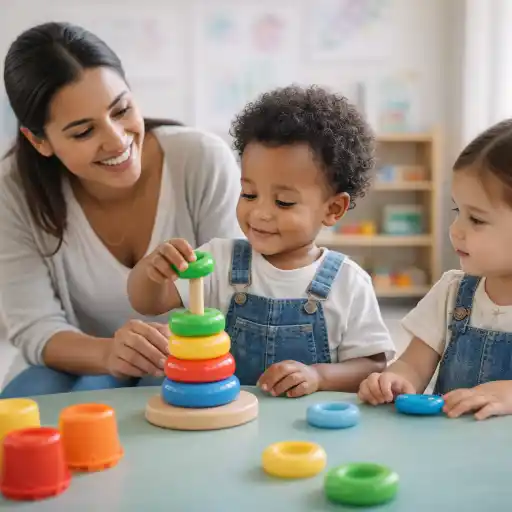
Use the new skill as a gentle planning clue. If a toddler has begun pouring water at home, you might offer a small, manageable pitcher during supervised sensory play or snack preparation. If the child is using new words, make space for conversation, familiar books, and songs without insisting that the child repeat phrases for adults. Hands-on play and responsive interaction allow toddlers to explore at their own pace, as NAEYC notes in its overview of high-quality toddler programs.
Make the activity safe and developmentally appropriate. Choose materials suited to the child’s abilities, keep close supervision, and adapt the challenge so the child can participate meaningfully. For a self-help skill, offer enough time during routines instead of taking over because the group is moving quickly. If the child declines, accept that cue and revisit the opportunity later.
Educators can model language without turning practice into a lesson drill: “You’re tipping the pitcher. The water is going into the cup.” Then pause to let the child act, communicate, or change direction. This kind of responsive support values the toddler’s #agency and effort. The goal is not to accelerate milestones but to nurture confidence, exploration, and participation.
- Offer a simple, safe material that makes practice possible.
- Break the action into manageable steps only when helpful.
- Allow repetition, pauses, and the option to stop or choose something else.
How can educators and families work together over time?
Share a specific classroom observation back with the family and invite their perspective: “You mentioned that she is trying to put on her shoes. Today she pulled the strap forward and asked me for help. What words or routine do you use at home?” This two-way exchange turns family communication into practical collaboration. NAEYC’s principles of effective family engagement reinforce the value of respectful relationships and shared understanding.
Families should not be asked to provide special equipment, teach a skill at home on demand, or attend a meeting simply because a toddler is practicing something new. Offer flexible ways to communicate: a brief conversation, a note, a secure app, or a scheduled check-in. If language access is needed, arrange appropriate support rather than asking a child to interpret. Keep documentation confidential and follow program policy.
Agree on a small shared focus if it is useful—for example, offering the child time to try a coat zipper during transitions. Keep the plan flexible and revisit it as the child’s interests and abilities change. Family partnership is not about making home and care identical; it is about creating continuity and mutual respect. A family may also appreciate a short celebration of the child’s effort, shared with permission and without overstating what one observation proves.
- Ask families what they hope the child can practice, if they have a goal.
- Communicate what you observe, including the supports that seem helpful.
- Use accessible, culturally respectful communication and protect privacy.
What common missteps should teams avoid?
One common misstep is treating a family’s report as a demand that the child perform the skill on arrival. Toddlers may be tired, uncertain, or focused elsewhere; a skill may appear only in a familiar routine. Another is comparing children or labeling one as “behind” or “ahead” based on a single moment. Developmental checklists can support awareness but are guides, not diagnoses; CLI Engage reminds educators that children develop individually in its infant and toddler developmental checklists.
It is also easy to overcorrect: providing too much adult help can take away a child’s chance to try, while expecting complete independence can create frustration. Notice the child’s cues and provide only the assistance needed. Avoid assuming that a family’s approach is incorrect because it differs from classroom routines. Ask questions with genuine curiosity and discuss safety or policy concerns respectfully.
If families or staff have a persistent developmental concern, document observations across contexts and follow program procedures for discussing next steps. Avoid diagnosing or offering certainty outside your role. Partner with the family and consult appropriate developmental professionals or local early intervention resources when warranted. State requirements vary - check your state licensing agency for rules that apply to assessment, records, and referrals.
- Don’t quiz, pressure, compare, or publicly showcase the toddler.
- Don’t treat one report or observation as a full developmental assessment.
- Do respond with curiosity, objective documentation, and a flexible plan.
- 🌱 Celebrate the child’s effort and willingness to explore, not only a finished performance.
Conclusion: How should the classroom respond to a skill learned at home?
When a family shares a toddler’s new skill, educators can respond by listening with respect, observing without pressure, and offering safe, meaningful chances to explore. Family knowledge and classroom observations together give a fuller picture of the child’s strengths, interests, and supports. The educator’s role is to make the environment responsive—not to demand a demonstration or accelerate development.
In practice, ask what the family has noticed, document what the child does in everyday routines, adapt materials or timing, and share back what you learn. Stay attentive to the child’s cues and welcome different rates of progress. These small, thoughtful steps strengthen relationships and make the classroom a place where new learning can be practiced with confidence and care.
For educators seeking structured learning in observation and individualized practice, the CDA Infants/Toddlers: Individualized Learning and Inclusion course Buy Now $16.00 is a relevant next step. Remember the central question: when a toddler learns a new skill at home, how should the classroom respond? With partnership, observation, and responsive opportunities that honor the child’s pace.
- 45 Hour Infant and Toddler Methods and Materials
- Pediatric RSV First Aid & CPR/AED
- CDA Bridge Bundle: Family Child Care without Portfolio Review
- CDA Bridge Bundle: Infant/Toddler without Portfolio Review
- CDA Bridge Bundle: Preschool without Portfolio Review
- CDA Bridge Bundle: Infant/Toddler
- 45-Hour Infant and Toddler Curriculum
- Texas Director Credential
- Save Lives With Skill: CPR Training
- CDA Certification en Español: Recursos y Consejos para Educadores Bilingües
- Learner to Classroom Leader: Maximizing Your ECE Certificate
- 😫🧸 ¿Qué hacer cuando un bebé no quiere dormir la siesta en el aula?
- Recursos en Español sobre el Sueño Seguro del Bebé
- Proceso CDA: Entrenamiento, Portafolio, Examen y Visita de Verificació
- ¿Cuáles son los pasos, requisitos y opciones en línea para la certificación de 90 horas en cuidado de Infantes/Toddlers en Maryland?
- ¿Cómo solicito la licencia para una guardería en California?
- Lista para Abrir una Guardería en Casa en Dakota del Norte: Cómo Empezar
- Lista para Guardería en Casa en California: Cómo Iniciar una Guardería en el Hogar
- Retraso del Habla en la Guardería: Cómo Pueden Ayudar los Proveedores
- How Can Positive Guidance Transform Early Childhood Classrooms?
- Why Do Toddlers Push Other Children? What Should Providers Know?
- How Can Coloring Pages Spark Meaningful Historical Conversations About Juneteenth?
- How Can Families Help Interpret a Child’s Classroom Discovery?
- A Toddler Learned a New Skill at Home: How Should the Classroom Respond?
- How Can Child Care Providers Teach Replacement Behaviors Instead of Simply Saying “No”?
- How Can You Show Families Their Child’s Progress in Classroom Participation?
- How Can You Share Field Trip Learning with Families Who Could Not Attend?
- Why Does a Preschooler Show a Skill with Only One Adult?
