A child who cries throughout the daycare day is communicating distress, not causing trouble—and your response can help transform overwhelm into connection. Use the strategies below to investigate possible causes, provide responsive care, partner with families, and decide when additional support may be needed. For deeper guidance on recognizing anxiety and responding supportively, explore Anxiety: Signs & Strategies  Buy Now $16.00, a practical course that can strengthen classroom practice and contribute to professional learning hours where accepted.
Why does all-day crying matter, and what might it mean?
Persistent crying can be exhausting for the child, peers, family, and teaching team. It may also challenge a provider’s confidence, especially when several calming attempts seem unsuccessful. Start with a compassionate reframe: crying is a form of communication. Infants may cry because of hunger, discomfort, fatigue, illness, sensory needs, or a need for proximity. Toddlers and preschoolers may also be expressing separation distress, frustration, fear, limited language, or difficulty coping with transitions.
Separation anxiety is developmentally common, particularly when a child is new to care or has experienced a change in classroom, teacher, schedule, or family circumstances. However, crying that is unusually intense, sudden, persistent, or accompanied by physical symptoms deserves careful attention. The Royal Children’s Hospital Melbourne emphasizes that assessment should consider medical concerns, injury, developmental needs, and caregiver well-being. Providers should not diagnose, but they should observe, document, and communicate concerns appropriately.
- Consider physical needs: hunger, thirst, sleep, toileting, illness, pain, or temperature.
- Consider emotional needs: separation, fear, grief, stress, or an unfamiliar environment.
- Consider communication: does the child have words, gestures, pictures, or signs to request help?
- Consider sensory experiences: noise, crowding, lighting, touch, smells, or unpredictable movement.
State requirements vary - check your state licensing agency, especially when documentation, health observations, supervision, or referrals are involved.
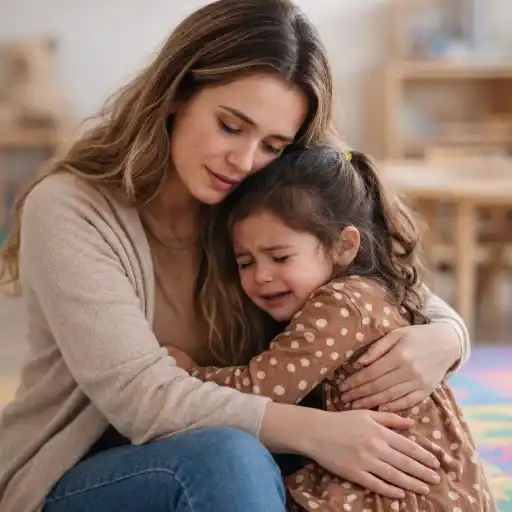
How can you identify the reason a child is crying?
Observation is more useful than assumptions. Record what happens before, during, and after the crying. An ABC approach—antecedent, behavior, and consequence—can reveal patterns without labeling the child. For example: “After the parent left, Jordan cried, reached toward the door, and refused the sensory table. The teacher held Jordan, named the feeling, and offered a family photo.” This description supports problem-solving much better than “Jordan was difficult all morning.”
Look for patterns across several days and across routines. Does crying begin at arrival, before meals, during diapering, at cleanup, before nap, or when a particular adult leaves? Does it decrease with one caregiver, in a quieter space, or during movement? Ask families about sleep, eating, illness, medication, changes at home, and calming strategies that work outside the program.
For infants, complete routine checks according to program policy: feeding, diapering, temperature, comfort, sleep, and signs of illness. For older children, observe language, play, peer interactions, and transitions. A child may cry less after a short period of connection but still remain withdrawn or unable to participate; that information matters too.
Documentation should be brief and objective:
- Time and length of crying
- What occurred immediately beforehand
- Body language and words used
- Adult response and child response
- Participation after calming
Tracking helps the team identify what supports the child rather than repeatedly trying random strategies.
What should you do in the moment when the child is crying?
During intense distress, a young child may not be able to process explanations or follow multiple directions. Prioritize safety, connection, and regulation before teaching or problem-solving. The following sequence is practical for staff to rehearse together:
- Connect: Move close without crowding. Lower your voice and, when appropriate, your body. Say, “I’m here. You are safe.”
- Validate: Name the likely feeling without judgment: “You miss your dad. Goodbyes are hard.”
- Check: Consider physical discomfort, illness, hunger, tiredness, toileting, or sensory overload.
- Comfort: Offer one manageable option—a trusted adult, a family photo, a comfort object, rocking, hand-holding, a quiet space, or a familiar book.
- Reconnect with the day: When the child begins to settle, invite—not force—participation in a simple activity or classroom job.
Co-regulation is central here. ZERO TO THREE and NAEYC describe young children as relying on responsive adults to help organize intense emotions. Your calm voice, steady breathing, and predictable presence provide a foundation for the child’s developing #selfregulation. Avoid saying “Stop crying,” threatening consequences, shaming the child, or delivering a long lecture. Emotional safety comes before compliance.
😊 If the child welcomes physical comfort, offer a lap, gentle rocking, a hand to hold, or quiet proximity while continuing to supervise the group. Follow the child’s cues and program policies regarding touch and comfort.
How can routines and relationships reduce crying over time?
Prevention is often more effective than repeated crisis response. Children feel safer when the day has a recognizable rhythm and adults respond consistently. A simple arrival sequence might include greeting by name, putting belongings away, saying a brief goodbye, connecting with a primary caregiver, and beginning a familiar activity.
Visual schedules can make time more concrete. Instead of saying, “Your parent will be back later,” try, “First play, then lunch, then nap, and then your family comes.” Use photographs, objects, or simple pictures for children who do not yet understand clock time. A consistent goodbye ritual should be warm, honest, and brief; sneaking away can weaken trust, while prolonged farewells may intensify distress.
- Welcome the child by name and make eye contact.
- Assign a familiar receiving adult whenever staffing permits.
- Offer one small, washable comfort item according to program policy.
- Prepare a low-demand activity near the entrance.
- Give transition warnings before cleanup, meals, nap, and departure.
- Practice calming strategies during peaceful moments, not only during crying.
- Use consistent language across teachers, substitutes, and classrooms.
A relationship with a chosen “safe person” is not spoiling. NAEYC guidance emphasizes that loving proximity can help a distressed child feel secure enough to move toward play and participation. Directors can support this by planning coverage, sharing information among staff, and ensuring that the child is not dependent on only one adult forever; the goal is to gradually expand the child’s circle of trusted relationships.
For a more complete approach to predictable schedules and transitions, consider Every Moment Matters: Schedules and Transitions Buy Now $55.00. The course focuses on designing routines and transitions that support calmer classrooms and more intentional practice.
How should you partner with families and decide when to seek more help?
Families may feel guilty, frightened, or judged when their child cries all day. Begin with empathy and specific observations: “We noticed that Maya cried for 25 minutes after arrival, then settled while looking at her family photo. She ate a small snack and joined blocks for five minutes.” This communicates concern without blame and highlights progress.
Develop a shared plan that includes the goodbye ritual, comfort strategies, preferred caregiver, communication method, and review date. Ask families what the child is like at home and whether there have been changes in sleep, eating, routines, relationships, or living arrangements. Use interpreters or translated materials when needed. A consistent two-way plan often reduces uncertainty for both adults and children.
Seek additional guidance when crying is sudden, persistent, worsening, prevents participation, occurs across settings, or is accompanied by fever, pain, vomiting, poor feeding, injury, regression, self-harm, or significant changes in sleep or behavior. Encourage families to consult a pediatrician or qualified child mental-health or developmental professional when appropriate. Providers should share factual observations rather than diagnoses.
Directors can strengthen the response by:
- Reviewing documentation with the team while protecting confidentiality
- Checking whether classroom noise, staffing, or routines are contributing
- Creating an individualized transition or support plan
- Coaching staff in the same response language
- Connecting families with community resources when consent and policy permit
The course CDA Infant/Toddler: Parent Relationships Buy Now $16.00 can further support educators who want to strengthen family partnerships around separation, attachment, and responsive care.
What common mistakes should providers avoid?
Even caring adults can unintentionally intensify distress when they are rushed or overwhelmed. The goal is not perfection; it is reflection and consistency.
- Minimizing feelings: Replace “You’re fine” with “You’re sad, and I’m here.”
- Using too many words: Offer one validating sentence and one choice during peak distress.
- Sneaking away: Encourage a clear, brief goodbye so the child can trust the routine.
- Changing strategies constantly: Use a shared plan long enough to observe its effect.
- Forcing participation: Invite the child into a low-pressure activity after connection.
- Ignoring physical causes: Check health, hunger, sleep, toileting, and sensory needs.
- Communicating only problems: Share concrete progress as well as concerns.
Also protect staff well-being. A crying child can activate frustration, helplessness, or anxiety in adults. A teacher may need a brief handoff to a colleague, a drink of water, or several slow breaths before responding. NAEYC’s co-regulation guidance reminds us that adults need support to share calm effectively. A director who normalizes reflective teamwork—not blame—helps protect both children and providers.
Ask the team after a difficult day: What did we notice? What helped even briefly? What should we change tomorrow? This turns an exhausting experience into a manageable cycle of observation, response, and adjustment.
Conclusion: What is the best response when a child cries all day at daycare?
When a child cries all day at daycare, respond with curiosity rather than punishment. Check physical and emotional needs, observe patterns, provide calm co-regulation, create predictable routines, and partner respectfully with the family. Persistent or concerning distress deserves documentation and possible consultation, not a rushed label.
Your immediate checklist is simple:
- Check safety, health, comfort, and basic needs.
- Connect before redirecting: “I’m here. You are safe.”
- Use one consistent goodbye and arrival routine.
- Track what happens before and after crying.
- Share specific observations and progress with the family.
- Seek professional guidance when distress is severe, persistent, or disruptive.
The central question is not merely, “How do we stop the crying?” It is, “What is this child communicating, and what support or skill will help next?” With patient, consistent care, many children gradually move from distress to trust, connection, and play.
What other training may help our team?
The ABCs of Behavior: Turning Challenges into Learning Opportunities Buy Now $55.00 can help providers examine triggers and consequences while using positive, consistent guidance.
- Bienvenido! Welcoming All Families
- Pediatric RSV First Aid & CPR/AED
- 45 Hour School Age Methods and Materials
- CDA Bridge Bundle: Family Child Care
- CDA Bridge Bundle: Family Child Care without Portfolio Review
- CDA Bridge Bundle: Infant/Toddler without Portfolio Review
- CDA Bridge Bundle: Preschool without Portfolio Review
- Texas Director Credential
- 👧 ¿Cómo iniciar y abrir una guardería en Texas? Lo que necesitas saber
- 🚨 Reporte Obligatorio en Nevada
- Qué capacitación se requiere para ser director de cuidado infantil en Texas?
- Recursos en Español sobre el Sueño Seguro del Bebé
- Capacitación en Salud y Seguridad Preventiva en Línea para Proveedores de Cuidado Infantil
- ¿Cómo solicito la licencia para una guardería en California?
- Normas de Licenciamiento de Cuidado Infantil en Virginia para Centros Diurnos Infantiles y Hogares Diurnos Familiares
- Lista para Abrir una Guardería en Casa en Virginia: Cómo Empezar
- Lista para Guardería en Casa en Illinois: Cómo Iniciar una Guardería en el Hogar
- Lista para Guardería en Casa en California: Cómo Iniciar una Guardería en el Hogar
- Lista para Guardería en Casa en Texas: Cómo Iniciar una Guardería en el Hogar
- Retraso del Habla en la Guardería: Cómo Pueden Ayudar los Proveedores
- Cómo Trabajar en el Cuidado Infantil en California: Requisitos y Pasos
- Cómo Ser Maestra de Preescolar en Dakota del Norte
- Cómo Trabajar en el Cuidado Infantil en Virginia: Requisitos y Pasos
- Capacitación Previa al Servicio para Proveedores de Cuidado Infantil en Dakota del Norte
- Celebrando la amistad en el cuidado infantil durante el Día de los Mejores Amigos
- How can child care programs ease drop-off tears and manage separation anxiety?
- What Should a 2-Year-Old Be Learning at Daycare?
- What Should You Do When a Child Cries All Day at Daycare?
