Good training helps staff feel confident and ready to teach. Start with these five ideas: #preschool #training #teachers #curriculum #safety. This article is for child care providers and directors who run programs, hire staff, or coach teachers. Read on for clear steps, links to trusted courses, and tips you can use today. Remember: state requirements vary - check your state licensing agency.
1) What are the core topics every preschool teacher needs to learn?
- Child growth and development
- What to teach at ages 2–5 and why it matters. See classroom management tips for strategies tied to child development.
- Curriculum and planning
- How to plan play-based lessons and adapt to children’s needs. Check 45-Hour Preschool Methods and Materials Buy Now $399.00 and the 45-Hour Preschool Curriculum
 Buy Now
 $399.00$275.00 for detailed guidance.
- How to plan play-based lessons and adapt to children’s needs. Check 45-Hour Preschool Methods and Materials Buy Now $399.00 and the 45-Hour Preschool Curriculum
- Classroom management and positive guidance
- Use routines, visuals, and calm coaching. ChildCareEd’s article on management strategies is practical and ready to use.
- Health, safety and first aid
- CPR, choking response, hygiene, and daily safety checks. See basic health and safety training ideas at ChildCareEd and public resources from the CDC.
- Inclusion and working with families
- How to include children with different needs and partner with parents. ChildCareEd’s preschool curriculum guidance covers family connections: Preschool curriculum.
Why this list matters: Well-trained teachers raise program quality. Research shows programs with trained staff and smaller ratios get better child outcomes; see the RAND summary on early interventions for more evidence: RAND.
2) How can I plan practical training that fits our staff and schedule?
- Mix learning types
- 🔁 1. Short online modules for theory (self-paced). ChildCareEd offers free and paid online courses: Free online courses.
- 🧑🏫 2. Live workshops or Zoom sessions for hands-on practice. The 45-hour Methods Buy Now $399.00 course blends Zoom and online work. If you prefer in-person professional development, we also offer on-site, instructor-led trainings that come to your program to deliver workshops and job-embedded coaching.
- Use short practice cycles
- 🔍 3. Teach a skill, let teachers try it in class, then regroup to reflect. This follows the "whole teacher" idea where attitudes, skills, and practice link to better learning (ECRP study).
- Provide job-embedded coaching
- 4. Pair new teachers with mentors for observation and feedback. Studies show this boosts retention and child outcomes when combined with curriculum supports (NIEER/Teaching Strategies study).
- Offer certificates that meet state rules
- 5. Use approved trainings like ChildCareEd’s 90-hour and 45-hour courses to meet licensing: 90-Hour Preschool Training. State requirements vary - check your state licensing agency.
Quick checklist for planning:
- Pick 2–3 priority topics each month.
- Set short goals (one skill per workshop).
- Schedule a coaching visit within two weeks after training.
3) What certifications and state rules should we know about?
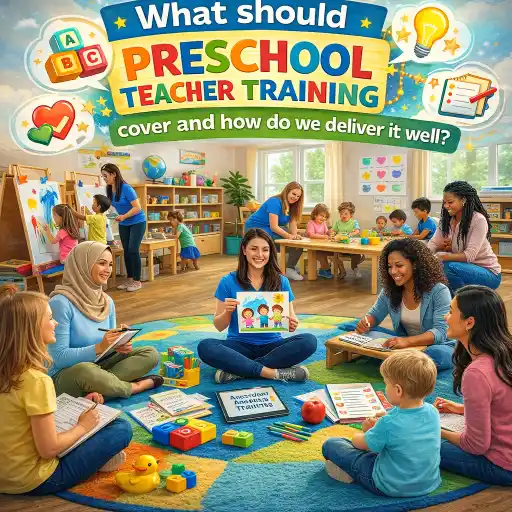
Rules differ by state, but common steps help your staff meet qualifications.
- Know the common credentials
- 🔖 1. High school diploma or GED is often required for lead and assistant teachers. Some states need an associate or bachelor’s degree for lead teachers. See a clear guide at ChildCareEd: Become a Preschool Teacher.
- Complete approved clock hours
- 2. Many states accept training bundles like a 90-hour certification. ChildCareEd’s 90-Hour Preschool Training is one example used in Maryland.
- Keep records and renewals
- 3. Track CEUs and certificates. The ChildCareEd Group Admin tools help programs assign courses and track staff hours: Free online courses & Group Admin. Also: state requirements vary - check your state licensing agency.
- Background checks and health
- 4. Most states require criminal background checks, TB screens, and immunization or health checks for staff. Include first aid and CPR training in onboarding; ChildCareEd reviews these basics at Basic Health & Safety.
- Use recognized career pathways
- 5. Encourage CDA, associate degrees, or state career programs like the Maryland Preschool Teacher Career Program to build staff skills and retention.
Tip: Build a simple chart that lists each staff member, their required hours, expiration dates, and next steps. This keeps you ready for licensing visits and grants.
4) How do we keep training strong over time and avoid common mistakes?
Ongoing training keeps your program growing. Here are ways to keep it working and common mistakes to avoid.
- Make training continuous
- 🔁 1. Plan regular short trainings, not one-off workshops. The "whole teacher" model shows training that links attitude, skill, and practice is most effective (ECRP).
- Measure and celebrate progress
- 2. Use simple observations and checklists after training. Celebrate wins and share short success stories at staff meetings.
- Common mistakes and how to avoid them
- ❌ Mistake: Offering too many long trainings with no follow-up. Fix: Use short modules + coaching visits.
- ❌ Mistake: Training that doesn’t match the classroom. Fix: Use job-embedded practice and examples from your own room.
- ❌ Mistake: Not tracking certificates. Fix: Keep a CEU file and calendar reminders.
- Support retention and well-being
- 3. Offer career paths, mentorship, and regular feedback. Research shows better PD and supports increase teacher retention and child gains (Teaching Strategies/NIEER).
FAQ (quick):
1) How long before a teacher is ready? Many programs use 45–90 hours of focused training plus coaching.
2) Can online courses count for licensing? Often yes, if approved. Check state rules.
3) What if staff resist training? Start small, use practical tools, and show quick wins.
4) Who pays? Look for grants, sliding fees, or use free ChildCareEd resources to lower costs: Free training.
Conclusion
Good preschool teacher training is clear, hands-on, and ongoing. Use short lessons, job coaching, approved certificates, and strong safety training. Track staff progress, build career steps, and be kind—teachers who feel supported stay and help children learn. For ready-to-use options, review ChildCareEd courses like the 90-Hour Training, 45-Hour Methods Buy Now $399.00, and free modules at ChildCareEd Free Courses. State requirements vary - check your state licensing agency. You’re building something important—small steps put your program on the path to stronger teachers and better outcomes for children.
Here are the big topics to include in any training plan. Each topic builds teachers' skills and keeps children safe and learning.Short, usable training beats long lectures. Use a blend of formats and make time for practice.- 45 Hour Child Growth and Development
- CDA Preschool Credential
- 45 Hour Preschool Methods and Materials
- Pediatric RSV First Aid & CPR/AED
- CDA Bridge Bundle: Preschool without Portfolio Review
- 45-Hour Preschool Curriculum
- 45-Hour Infant and Toddler Curriculum
- Texas Director Credential
- 45 hour Growth and Development Birth-age 12 ONLINE
- Lesson Planning for Infants and Toddlers
- Preschool Curriculum for Educators to Choose
- Child care education
- Requisitos Para Ser Maestra Principal En Un Daycare: Lo Que Necesitas Para Empezar
- Recursos en Español sobre el Sueño Seguro del Bebé
- Capacitación en Salud y Seguridad Preventiva en Línea para Proveedores de Cuidado Infantil
- Lista para Guardería en Casa en Illinois: Cómo Iniciar una Guardería en el Hogar
- Lista para Guardería en Casa en Texas: Cómo Iniciar una Guardería en el Hogar
- Cómo Trabajar en el Cuidado Infantil en California: Requisitos y Pasos
- Cómo Ser Maestra de Preescolar en Dakota del Norte
- Cómo Ser Maestra de Preescolar en Illinois
- Cómo Ser Maestra de Preescolar en Wisconsin
- Cómo Ser Maestra de Preescolar en Maryland
- Capacitación Previa al Servicio para Proveedores de Cuidado Infantil en Dakota del Norte
- What should preschool teacher training cover and how do we deliver it well?
- How can we encourage scientific thinking through hands-on exploration?
- What Questions Keep a Preschool Science Conversation Going?
