Child care directors and providers, this short guide helps you plan and lead strong #health and #safety training for your team. Training keeps children safe, reduces illness, and builds family trust. Below you will find clear steps, links to helpful ChildCareEd courses, and simple checklists you can use today. Why this matters: trained staff prevent accidents, respond fast in emergencies, and create calm classrooms where children learn best.
1) What topics should be in Child Care Health and Safety Training?
When planning staff training, include these core topics. Use numbered lists so you can check them off during orientation or annual reviews.
- Infection prevention and hand hygiene (how and when to wash hands). See CDC guidance on preventing infections: CDC Preventing Infectious Diseases and ChildCareEd resources: What should child care providers learn.
- Safe sleep and SIDS rules for infants. Follow AAP and CDC safe sleep guidance: CDC Safe Sleep and ChildCareEd's SIDS checklist: Creating a SIDS-Safe Environment.
- First Aid, pediatric CPR, and choking response. Use blended skills checks or Red Cross courses and ChildCareEd blended or in-person options: Administering Basic Health & Safety ONLINE
 Buy Now $24.00 and Red Cross.
 - Medication administration, allergy and asthma care, and documentation. See ChildCareEd's guide: Medication Administration: Rules, Records, and Training.
- Recognizing and reporting suspected abuse (mandated reporter duties). Take a mandated reporter course: Mandatory Reporting Training.
- Emergency preparedness, evacuation plans, and drills. Use ChildCareEd and FEMA resources: Emergency Preparedness Training and FEMA IS-36.
Tip: map each topic to a course from ChildCareEd Training Resources Buy Now $0.00 so staff know where to go for learning. Training builds skills and confidence — and reduces mistakes every day.
2) How do I plan, document, and stay legal with training?
Follow these steps to make training easy to manage and ready for inspections. Remember: state requirements vary - check your state licensing agency.
- 📋 Create a training plan for the year: list required topics, who must take them, and due dates. Use ChildCareEd's summaries to match state needs: Training Requirements Explained.
- 🗂️ Keep a training file (paper or digital) for each staff member with certificates, dates, course names, and CEUs. Numbered items to track:
- Orientation date
- First Aid/CPR expiry
- Annual updates
- 🔁 Schedule refreshers. CPR and some health topics need renewal (often every 2 years). Plan practice days for hands-on skills.
- ✅ Use approved courses. Some states require instructor-led or specific approved trainings. For Maryland, for example, use the Basic Health & Safety and Breastfeeding Awareness Buy Now $35.00 approved course. Consider enrolling staff in the Basic Health and Safety Promotion course to ensure your program meets Maryland's health and safety training requirements and to provide a clear enrollment pathway for staff.
- 📑 Document policy and procedures. Post your safe sleep policy, emergency plan, and medication rules where staff can see them. ChildCareEd has templates and free resources: Free Resources.
Why it matters: clear records protect you at inspection time and help families see your commitment to #training and #safety. A simple log prevents missed renewals and keeps your program compliant.
3) How do we practice skills and prepare for emergencies?
Practice turns knowledge into action. Use drills, hands-on checks, and simple kits so staff feel ready. Here is a step-by-step approach you can follow.
- 🔔 Build an emergency plan: list evacuation routes, a reunification spot, and roles for every staff member. Use the ChildCareEd emergency training guide: Emergency Preparedness Training and FEMA's IS-36 course for planning help: FEMA IS-36. Also include clear relocation procedures and reunification guidance; for state-specific information on temporary facility moves, see the MSDE relocation guidance: MSDE relocation guidance.
- 🚨 Run regular drills: fire, lockdown, severe weather, and evacuation. Number your drill goals: 1) get children out safely, 2) account for everyone, 3) communicate with families.
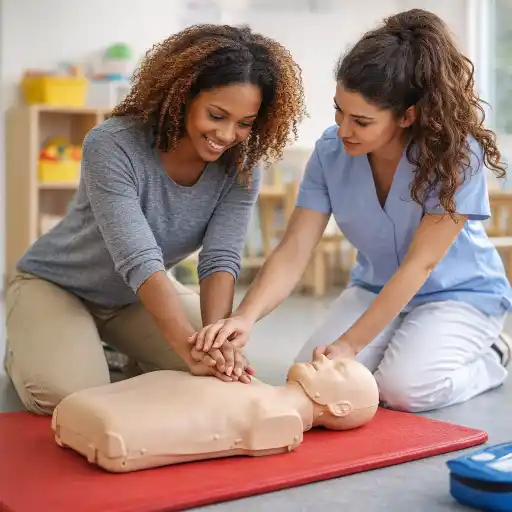
- 🩺 Practice first aid skills: schedule hands-on CPR and choking response with manikins or blended courses from ChildCareEd or Red Cross: Red Cross Advanced Child Care.
- 🎒 Prepare emergency kits: number and check items weekly — first aid, water, snacks, meds (if needed), and family contact lists. Keep a portable kit for trips.
- 🤝 Coordinate with local responders: invite fire or police to review your plan or run a practice drill with your site. This builds relationships and realistic feedback. For a recent example of state-level support for emergency preparedness, see Maryland's MSDE school-safety initiative, which describes federal grants used to strengthen school emergency planning.
Practice helps staff stay calm. Small steps — like a monthly 5-minute drill and quarterly hands-on practice — make a big difference in an actual emergency. Include emotional supports after events; children may need comfort and staff may need debrief time.
4) How can we avoid common mistakes and include medication and special needs safely?
Here are common pitfalls and how to prevent them. Use the checklist approach and train more than one staff member for every skill.
- ⚠️ Common mistakes to avoid:
- Signing MAR before giving medicine — always sign after administration.
- Relying on one trained person — cross-train so coverage exists during absences.
- Using unapproved online-only CPR where state needs in-person skills — check state rules.
- 💊 Medication rules and training:
- Only trained staff should give meds. Use ChildCareEd's medication guidance and MAT course: Medication Administration.
- Use a clear MAR, store meds securely, and track drop-off and return.
- Practice with EpiPen trainers and inhaler devices during training.
- 🧩 Inclusion and special health needs:
- Get written health action plans from the child’s health provider for asthma, diabetes, or seizures.
- Train staff on accommodations and ADA responsibilities. Keep plans and supplies accessible but secure.
- 🛡️ Mandated reporting and child protection: ensure every staff person completes a mandated reporter course and knows the reporting steps: Mandatory Reporting Training.
Small safety systems — checklists, two trained staff for emergencies, and clear documentation — prevent big mistakes. Use practice, templates, and routine audits to keep your program strong.
Summary and quick FAQ
Conclusion: Build a yearly plan, use approved ChildCareEd and CDC resources, practice hands-on skills, and document everything. Training protects children and supports staff confidence.
Quick FAQ (short answers):
- Q: How often must CPR be renewed? A: Often every 2 years — check your certifying agency and state rules.
- Q: Do online-only courses count? A: Some do; many states require blended or in-person skill checks. Check your state licensing agency.
- Q: Who can give emergency meds? A: Only trained, authorized staff per your policy and state law.
- Q: Where to find low-cost training? A: See ChildCareEd Free Resources and local health departments.
Use these links to get started: Basic Health & Safety Guide, Training Resources Buy Now $0.00, and CDC prevention guidance. Keep practicing, keep documenting, and keep children healthy, safe, and learning. training CPR hygiene
- 45 Hour Child Growth and Development
- How To Keep A Healthy Class: Six Tips for Germ Control
- Basic Health & Safety and Breastfeeding Awareness
- Pillars of Health and Safety in Child Care
- 24 Hour Texas Pre-Service
- Administration of Medicine
- Texas Director Credential
- Family Child Care: Building, Premises, and Outdoor Safety
- Focus on Health and Safety Training
- ChildCareEd Bringing High-Quality Training to Providers Across the Globe
- Basic Health and Safety Training: The Essential Guide for New Child Care
- What Must Maryland Child Care Providers Know to Keep Children Safe?
- Does Maryland's Basic Health and Safety Training Cover Today's Biggest Risks?
- 🏡Pajamas, Playtime & Paperwork: Why Pre-Service Training Is Key to Starting Your In-Home Daycare
- Capacitación en Salud y Seguridad Preventiva en Línea para Proveedores de Cuidado Infantil
- Proporciones de Cuidado Infantil y Tamaños de Grupo por Edad en Maryland (Guía Rápida para Centros y Hogares)
- What are the basic steps for Michigan child care providers?
- What do I need to know to provide child care in New York?
- How do ChildCareEd's urban childcare courses help Michigan providers in high-density communities?
- What Family Child Care Training Do I Need to Run a Safe Program?
- Oregon Daycare Center Standards: What Providers Need to Know
- Working in Maryland Child Care: Training, Requirements, and Career Tips
- What Massachusetts EEC Regulations Do Child Care Providers Need to Follow?
- Pre-Service Training for Child Care: What Must You Finish Before Your First Day?
- Do You Have to Retake Emergency and Disaster Preparedness Training in Maryland?
- Child Care Facility Rules and Regulations DCF Practice Test: What Should You Study?
- What Should Providers Know About the New Measles Guidance for Classrooms?
- What Health and Safety Training Is Required for Child Care Providers?
