Starting and running a family child care business means you wear many hats — teacher, chef, safety officer, and business owner. This short guide helps child care directors and #providers know the common #training and steps they need to stay safe, legal, and high quality. Read the simple steps below, and remember: state requirements vary - check your state licensing agency.
1. What training is usually required for family child care?
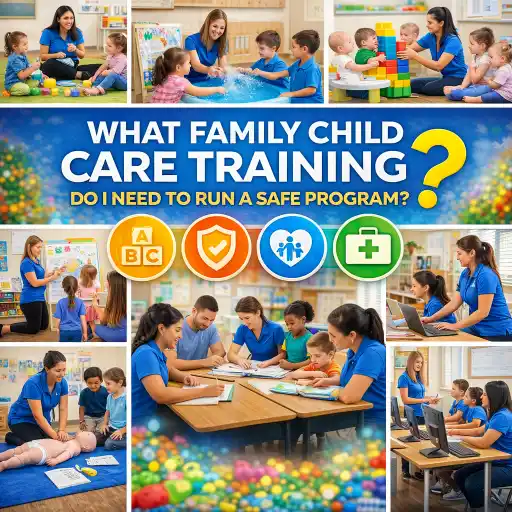
Most states require a mix of pre-service and ongoing training. Common topics include first aid/CPR, health and safety, sudden infant death syndrome (SIDS), infant-toddler care, medication administration, emergency planning, inclusion, and recordkeeping. For example, Maryland lists specific pre-service items and ongoing hours in their guide — see Family Child Care Providers Training Requirements for details.
Typical training steps (easy to number):
- Complete required orientation or preservice training (often 18–24 hours in many states).
- Obtain First Aid and CPR certificates for the ages you care for.
- Take health & safety and infant/toddler courses — some states require a 45-hour infant/toddler block if you care for several infants.
- Finish medication administration and emergency planning training if you will give medicines or run a home program.
- Keep up with annual continuing education (for example, 12–18 hours per year in some states).
ChildCareEd offers many of these courses online and state-specific bundles like the 24 Hour Family Child Care Pre-Service  Buy Now $299.00 (Maryland) and renewal bundles for states such as Wisconsin here. For a full course catalog check Online Childcare Trainings.
2. How do I find approved, affordable, and flexible courses?
- Check your state licensing website or call your licensing office to ask which sponsors and course types are approved. (Yes — state requirements vary - check your state licensing agency.)
- Search for trainings that match required topics: health & safety, infant care, emergency planning, inclusion, and communication. Many platforms let you filter by hours and topic.
- Look for flexible delivery: self-paced online, live webinars, and blended models. ChildCareEd lists many self-paced and state-approved options at ChildCareEd Online Courses.
- Use free resources and short certificate classes when you need a few hours — see Free Online Childcare Training with Certificates.
Tips to save money or time:
- 🟢 Apply for grants or vouchers where available (some states offer reimbursements; Maryland mentions grant help for family child care providers).
- 🔁 Buy course bundles or an annual subscription to cover multiple topics affordably.
- 📅 Plan training across the year so you meet annual hours without rushing.
3. Why does ongoing training matter for quality and safety?
Three big reasons to invest time in professional learning:
- Safety and health: Up-to-date CPR, medication rules, and infection control keep kids safe. The CDC offers resources for ECE health and safety work here.
- Better learning: Courses on development and curriculum help you plan activities that fit ages and needs — especially in mixed-age #family settings. See ChildCareEd’s DAP for Family Child Care course here Buy Now $16.00.
- Program stability: Training builds your confidence and helps you meet licensing and Quality Rating and Improvement Systems (QRIS) standards. Many states use QRIS to measure and reward higher quality — more training often equals higher ratings.
Investing in your #training also helps staff morale and reduces burnout. Providers who learn new strategies often feel more successful and stay in the field longer. For practical pathways and course ideas, see ChildCareEd’s article on why professional development is worth it here.
4. How can I stay compliant and avoid common mistakes?
Common mistakes and how to avoid them are easy to fix if you plan. Below are the top pitfalls and plain steps to prevent them.
- Not checking your state rules often. ✅ Fix: Bookmark your state licensing page and set a calendar reminder to review updates every 6 months. Example state guidance pages include licensing steps on how to become a provider (TN) and starting a daycare guide.
- Assuming online certificates are accepted. ✅ Fix: Ask licensing what sponsors they accept before you pay. Many ChildCareEd courses give certificates and meet state needs; see course listings.
- Waiting until the last minute to renew training hours. ✅ Fix: Spread required hours across the year and use short 1–2 hour modules to stay current.
- Missing documentation during an inspection. ✅ Fix: Keep a clear training file with certificates, course outlines, and dates — scanned copies help too.
Quick compliance checklist:
- 📂 Maintain a training folder for each staff person and yourself.
- 🗓️ Track annual hours with a simple spreadsheet or the registry tool your state offers.
- 💬 Plan for mixed-age groups with specific infant/toddler training if you care for infants.
- 📣 Apply for local grants or fee assistance when available (Maryland and some other states have grant programs to help family providers).
If you need specific state examples, ChildCareEd has state-focused pages such as Georgia Family Child Care Providers and summaries for Texas regulations here Buy Now $0.00.
For Arizona providers seeking state-specific training requirements, certification guidance, and local resources, see Arizona Child Care Providers.
Summary
1) Know what your state requires; 2) Pick approved, flexible courses that match those topics; 3) Spread training across the year; 4) Keep great records. Use reliable course providers (many are on ChildCareEd) and remember: state requirements vary - check your state licensing agency. Your #training and care matter — it helps children learn, keeps families happy, and supports your business. Stay curious, keep learning, and lean on your local licensing office and training sponsors when you need help.
Finding the right courses is easier when you use trusted providers and know what your licensing office accepts. Follow these steps:Why it matters: Good training improves children’s outcomes, keeps your program safe, and protects your license. Research shows that program quality depends on both how spaces are run and how adults interact with children. Training helps with both parts — the day-to-day care and the big-picture decisions.- How do I start a home daycare step-by-step?
- How to Start a California Family Child Care Home
- How to Become a Daycare Owner and Start Your Child Care Business
- California Child Care Ratios and Group Sizes by Age (Center + Home Quick Guide)
- Capacitación en Salud y Seguridad Preventiva en Línea para Proveedores de Cuidado Infantil
- Starting a Home Daycare: Requirements and Steps
- Texas Home Daycare Checklist: How to Start a Daycare at Home
- Lista para Guardería en Casa en Texas: Cómo Iniciar una Guardería en el Hogar
- Capacitación Previa al Servicio para Proveedores de Cuidado Infantil en Dakota del Norte
- In-Home Daycare Requirements in Texas
- Daycare Center Requirements in Texas
- The Beginner’s Guide to Buying a Child Care Business
- What are the basic steps for Michigan child care providers?
- What do I need to know to provide child care in New York?
- Starting an In-Home Daycare in Texas: Requirements and Tips
- What Family Child Care Training Do I Need to Run a Safe Program?
- What training do I need to run a safe and legal home daycare?
- Cómo simplificar la capacitación para sus empleados de daycare
- What is an easy annual training checklist for child care centers?
- What Certifications Do I Need to Open a Child Care Center? Owner vs. Director Requirements Explained
