Child care directors and providers: this short guide helps you know what to learn, where to find training, and how to make your program safer every day. Training keeps children well and families trusting your care. You will read clear steps, simple lists, and real resources you can use today. Five words to remember: #health #safety #training #CPR #hygiene.
Why does this training matter?
Simple facts:
- Trained staff stop germs from spreading and lower classroom absences. See CDC guidance on preventing infectious disease.
- First aid and CPR training help staff save lives. Check courses like the ones listed at ChildCareEd Buy Now
$85.00$80.00 and the Red Cross.
What topics must be in child care health and safety training?
Common topics (numbered for easy planning):
- Infection control and cleaning (handwashing, sanitizing, ventilation). The CDC has clear steps for this: Preventing Infectious Diseases. These practices protect kids and staff and support good #hygiene.
- Safe sleep for infants and SIDS prevention. Follow guidance in CDC safety and sleep recommendations.
- First Aid, CPR, and choking response for infants, children, and adults. Look at blended or online options such as ChildCareEd's blended course Buy Now
$85.00$80.00 or the Red Cross pediatric course. - Medication administration and allergy management. Many helpful courses and resources are listed on ChildCareEd's training resources Buy Now $0.00.
- Emergency plans, fire and weather drills, and child supervision best practices.
- Outdoor safety, sun protection, water safety, and playground rules (see CDC outdoor play guidance).
- Environmental health: reducing toxins, lead, mold, or chemical risks (see EPA Healthy Child Care resources).
Tip: Use a checklist from your training vendor to make sure your staff cover all topics. Many ChildCareEd courses map to state and federal expectations.
How do we get trained and stay certified?
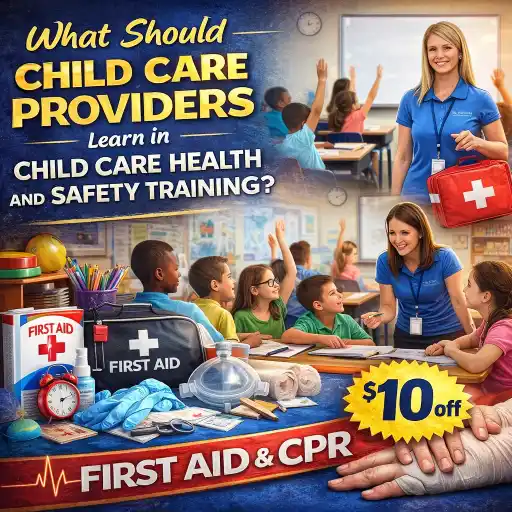
Getting the right certificates helps your program meet rules and keep kids safe. Here are clear steps you can follow. If you want a single place to enroll in courses that meet common licensing requirements, see ChildCareEd's Health and Safety Training page.
- 🔹 Choose the right course. Pick courses that cover the topics above. Check ChildCareEd's list Buy Now $0.00 for options that match your needs.
- 🩺 Take First Aid and CPR. Many programs use blended (online + skills check) courses like ChildCareEd's Pediatric Blended First Aid & CPR Buy Now
$85.00$80.00 or Red Cross classes (Red Cross). - 📋 Track staff training. Keep a simple log with: name, course, date, CEUs, and expiration. This helps during inspections and staff turnover.
- 🔄 Refresh skills often. CPR and medication rules change. Plan refresher training every 1–2 years.
Remember: state requirements vary - check your state licensing agency for exact hours and approved trainers. ChildCareEd has many courses that meet common licensing needs; see their page on training requirements.
How do we create a culture of safety and avoid common mistakes?
Creating a safety culture takes practice and clear steps. Use the simple 10 actions approach and make safety part of daily life. The 10 Actions to Create a Culture of Safety Buy Now $0.00 is a helpful guide.
Easy steps to follow (numbered):
- 🔎 Regular checks: Walk the room daily. Fix hazards and remove broken toys.
- 🗣️ Talk about safety: Hold short team huddles. Ask staff for safety ideas.
- 🔐 Lock meds and chemicals: Store them out of reach and log every dose.
- 📚 Use clear plans: Post emergency and illness plans where staff can see them.
- ✅ Practice drills: Run fire, tornado, and evacuation drills with children.
Common mistakes and how to avoid them:
- Not logging training: Keep a simple binder or digital file with certificates.
- Skipping refreshers: Schedule practice days for CPR and first aid.
- Assuming one person knows everything: Cross-train staff so more than one person can handle emergencies.
- Overlooking environmental risks: Use EPA tools to check air, lead, and cleaning products (see EPA Healthy Child Care).
Who can help? If you need expert advice, consider a Child Care Health Consultant. Programs like the Central Jersey Family Health Consortium offer training and phone support.
Frequently asked questions
- Q: How often should staff renew CPR?
A: Usually every 2 years; check your certifying agency and state rules. See Red Cross courses. - Q: Where can I find low-cost training?
A: Look at free resources and low-cost courses on ChildCareEd free resources. - Q: Do online-only CPR courses count?
A: Some states accept them, some do not. Many agencies prefer blended courses that include in-person skills checks (Red Cross, ChildCareEd Buy Now$85.00$80.00). - Q: How do we teach kids about handwashing?
A: Make it fun: sing a song for 20 seconds and practice together. CDC provides tools at Preventing Infectious Diseases.
Conclusion
Good #health and #safety training is practical and lifesaving. 1) Pick quality courses, 2) track training, 3) practice skills often, and 4) make safety part of your teamwork. Use trusted guides like ChildCareEd, CDC pages on prevention and safety, and EPA tips for healthy spaces. When your staff feel prepared, children learn better and families trust your program. Keep learning, keep practicing, and keep everyone safe.
Why it matters: Good health and safety training helps prevent injuries and sickness. It also makes your team calm and ready when something goes wrong. When staff are trained, parents feel safer and children learn in a calm, healthy place.Child care programs usually teach many topics. A good training plan covers key skills you use every day. For a full list of course topics, see ChildCareEd's summary of training requirements.- Childcare Training
- Focus on Health and Safety Training
- ChildCareEd Bringing High-Quality Training to Providers Across the Globe
- Basic Health and Safety Training: The Essential Guide for New Child Care
- What Must Maryland Child Care Providers Know to Keep Children Safe?
- Does Maryland's Basic Health and Safety Training Cover Today's Biggest Risks?
- 🏡Pajamas, Playtime & Paperwork: Why Pre-Service Training Is Key to Starting Your In-Home Daycare
- Capacitación en Salud y Seguridad Preventiva en Línea para Proveedores de Cuidado Infantil
- Regulaciones de Licenciamiento de Cuidado Infantil en California para Centros y Hogares de Cuidado Infantil Familiar
- Capacitación Previa al Servicio para Proveedores de Cuidado Infantil en Georgia
- What are the basic steps for Michigan child care providers?
- What do I need to know to provide child care in New York?
- How do ChildCareEd's urban childcare courses help Michigan providers in high-density communities?
- How many annual training hours do child care providers in Pennsylvania need and how can ChildCareEd help?
- How to Become a Childcare Worker in Oregon: Requirements and Steps
- Working in Maryland Child Care: Training, Requirements, and Career Tips
- What Massachusetts EEC Regulations Do Child Care Providers Need to Follow?
- Pre-Service Training for Child Care: What Must You Finish Before Your First Day?
- Do You Have to Retake Emergency and Disaster Preparedness Training in Maryland?
- What Health and Safety Training Is Required for Child Care Providers?
