A difficult day can test even the most committed child care professional, but the right combination of temperament, knowledge, and practical skill can protect children and sustain the team. Strengthen your professional foundation with Professional Presence in Early Childhood  Buy Now $55.00, which focuses on communication, reliability, teamwork, reflection, and time-management habits that support stronger daily practice.
For providers seeking a broader professional pathway, Early Childhood Education Buy Now $99.00 offers 30 hours of training in relationships, observation, curriculum, guidance, environments, and family partnerships. Together, these courses can help translate good intentions into consistent practice; state requirements vary - check your state licensing agency.
Why do child care worker qualities matter most when the day becomes difficult?
Children do not experience a difficult day as a scheduling inconvenience. They experience tiredness, frustration, separation, conflict, sensory overload, or unmet needs through their developing bodies and emotions. The adult’s response becomes part of the child’s learning environment. A calm, attentive provider can turn an escalating moment into an opportunity to build language, self-regulation, and trust.
NAEYC describes effective early childhood practice as a combination of knowledge, skills, values, and dispositions. This framing matters because excellent care is not produced by personality alone. Patience without safety knowledge can be insufficient; strong curriculum skills without empathy can feel disconnected; and warmth without reliability can undermine children’s predictability.
Research on educator emotional competence similarly connects adults’ emotion coaching and self-efficacy with children’s social competence and attachment security. In practical terms, staff members need support to notice their own stress, regulate their responses, and remain available to children even when the room feels chaotic.
- Children need safety, predictability, and responsive relationships.
- Families need accurate, respectful communication.
- Teams need dependable colleagues who solve problems rather than assign blame.
- Directors need observable competencies that can be coached and strengthened.
Which personal qualities help providers remain effective under pressure?
Personal qualities are not fixed personality traits reserved for a few “naturally gifted” educators. They are dispositions that can be practiced, modeled, and supported through reflective supervision. On a difficult day, the following qualities become especially visible.
- Patience: Patience creates enough space for children to repeat, try again, and recover. It does not mean permitting unsafe behavior; it means setting limits without humiliating the child.
- Empathy: Empathy helps adults ask what a child may be communicating through behavior. It supports a response that is both compassionate and developmentally appropriate.
- Flexibility: A flexible provider can alter an activity, shorten a transition, or offer a quieter option without abandoning the learning goal.
- Reliability: Arriving prepared, following through, and maintaining routines help children and coworkers feel secure.
- Humility: Strong educators can say, “That strategy did not work; let’s examine why,” and seek input from colleagues and families.
- Respect: Respect protects children’s dignity and honors family culture, language, identity, and perspective.
A useful coaching question is: “What did the child need, what did I communicate, and what might I try next?” This shifts reflection away from self-criticism and toward professional growth.
 What practical skills protect children and support learning?
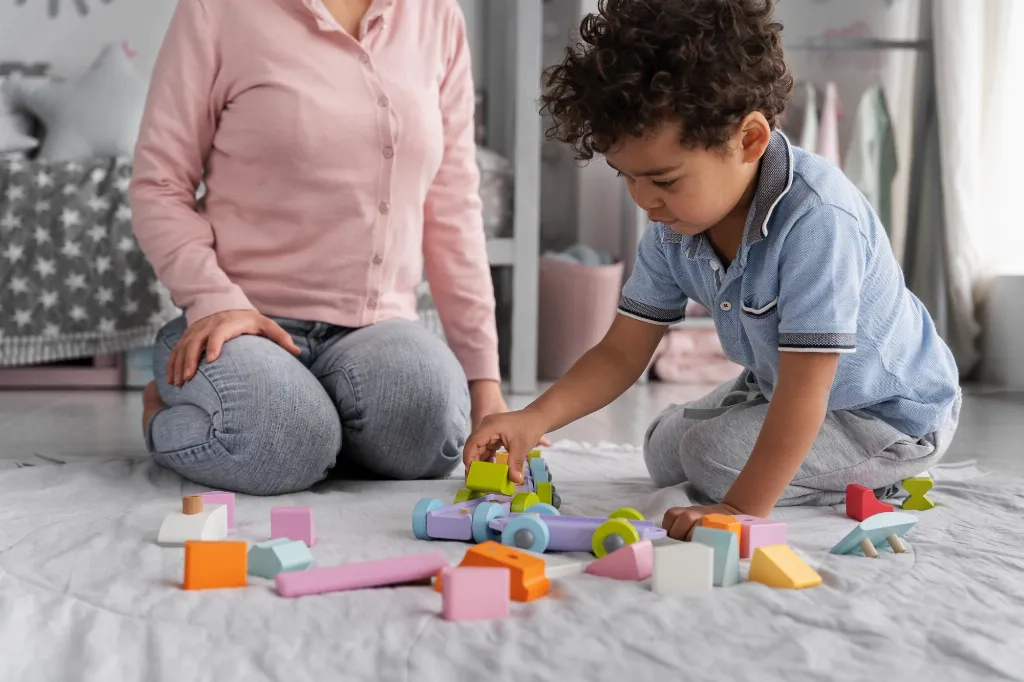
Good intentions become dependable care through concrete skills. Health and safety knowledge is foundational: providers must understand supervision, hygiene, safe sleep when applicable, emergency procedures, medication policies, mandated reporting, and program-specific protocols. CPR and first aid requirements also need to remain current according to applicable regulations and employer policies.
Communication is equally practical. Providers must speak with children at their developmental level, listen for meaning, document observations objectively, and share information with families without labels or unnecessary interpretation. The NAEYC professional standards and competencies emphasize the integrated knowledge and dispositions required to promote children’s development and well-being.
Additional day-to-day skills include:
- Planning play-based, age-appropriate experiences with meaningful choices.
- Using visual schedules, transition warnings, and predictable routines.
- Observing children and using documentation to individualize support.
- Managing materials, space, time, ratios, and supervision responsibilities.
- Guiding conflict with calm language, clear limits, and replacement skills.
- Collaborating with coworkers so children receive consistent messages.
For example, instead of saying, “You are being difficult,” a provider might say, “You want the truck. Hands are for helping. You may ask for a turn or choose another truck.” This brief statement combines observation, safety, language development, and problem solving.
How do communication and relationships influence a difficult day?
Relationships are not an extra feature added after routines are complete; they are the mechanism through which routines work. Warm greetings, face-to-face interaction, attentive listening, and specific encouragement help children feel seen. CSEFEL’s guidance on building positive teacher-child relationships emphasizes calm voices, simple language, following children’s interests, redirecting behavior, and acknowledging effort.
Providers can use a relationship-centered sequence during challenging moments:
- Move close while preserving the child’s personal space and safety.
- Name the emotion or goal: “You look frustrated because the blocks fell.”
- State the limit briefly: “I will not let you hit.”
- Teach one replacement: “You can ask for help or stomp on the spot.”
- Reconnect after regulation: “You calmed your body and tried again.”
Family communication requires the same balance of warmth and accuracy. Begin with a strength, share observable facts, explain the impact, and invite collaboration. The National Center for Pyramid Model Innovations emphasizes that meaningful family engagement includes welcoming diverse families, learning from them, and partnering to promote children’s outcomes. Programs can also invite intergenerational participation with age-appropriate activities; National Grandparents’ Day celebration ideas can help educators create meaningful opportunities for children to connect with grandparents.
Providers should also prepare for difficult conversations privately, gather documentation, use interpreters or translated materials when appropriate, and protect confidentiality. Professional communication is not about avoiding disagreement; it is about remaining respectful and focused on the child.
How can directors build these qualities through coaching and training?
Directors influence whether skills remain abstract ideals or become shared practice. Competency-based frameworks from ZERO TO THREE and federal early childhood research emphasize that educators can learn and improve specific knowledge, skills, and attributes over time. A supportive program therefore hires thoughtfully, orients thoroughly, observes fairly, and coaches consistently.
A practical professional-development cycle may include:
- Identify one observable strength and one growth goal.
- Connect the goal to a specific child, routine, or interaction.
- Model the practice or provide a short script.
- Allow the educator to rehearse through role-play or guided practice.
- Observe implementation and provide timely, descriptive feedback.
- Revisit progress rather than treating training as a one-time event.
Useful documentation may include a training tracker, coaching notes, expiration reminders, and examples of changed classroom practice. Directors should avoid using evaluation language that labels an educator as “not caring” or “not patient.” Instead, describe what was observed: “During cleanup, the provider gave several directions at once and raised their voice. Next week, we will practice one-step directions and visual cues.”
Training options can address distinct needs. The ABCs of Behavior Buy Now $55.00$45.00 supports function-based thinking and positive guidance, while Connections That Count Buy Now $55.00 focuses on relationships, cooperation, self-regulation, and family engagement. State requirements vary - check your state licensing agency before counting any course toward a specific requirement.
What common mistakes make difficult days harder?
Even experienced educators can fall into predictable traps when stress is high. Recognizing these patterns is not an indictment; it is a way to create practical safeguards.
- ⚠️ Reacting before observing: A quick assumption may miss hunger, fatigue, sensory overload, language differences, or a difficult transition. Pause and collect brief facts.
- Using long explanations during dysregulation: Children often cannot process lectures while upset. Use a short limit and teach more after calm returns.
- Labeling the child: “Aggressive” or “defiant” describes a fixed identity rather than a teachable action. Describe what happened and what skill is needed.
- Inconsistent adult responses: When staff use different limits and consequences, children receive confusing signals. Agree on short scripts and shared expectations.
- Communicating only when there is a problem: Regular positive updates create trust before a concern must be discussed.
- Neglecting adult well-being: Exhaustion narrows attention and reduces emotional availability. Build coverage, breaks, peer support, and reflective supervision into program operations.
A difficult day also requires knowing when to ask for help. Persistent, intense, or unsafe behavior may warrant a team meeting with the family, administrator, and appropriate specialists. The goal is not to remove responsibility from the provider; it is to create a coordinated plan that no individual must carry alone.
Conclusion: What matters most in a child care worker on a difficult day?
The strongest child care workers combine heart and hands: empathy with boundaries, patience with action, flexibility with consistency, and warmth with professional judgment. Their most important qualities are not perfection or endless energy. They are the capacity to remain curious, protect children’s dignity, communicate clearly, accept coaching, and repair relationships after hard moments.
Directors can strengthen these qualities by creating predictable systems for training, observation, feedback, documentation, and self-care. Providers can begin with one small practice: greet each child intentionally, use one emotion word, give one specific acknowledgment, or replace one label with an objective observation.
Ultimately, what matters most is whether adults can turn difficult moments into safe, respectful opportunities for learning. When programs support that work collectively, children benefit, families experience greater trust, and educators are more able to sustain the meaningful profession they have chosen.
Sources and further reading
- ChildCareEd: Skills and Qualities of a Child Care Worker
- NAEYC Professional Standards and Competencies
- Manitoba: Best Practices for Guiding Children’s Behaviour
- CSEFEL: Building Positive Teacher-Child Relationships
- Emotional Competence of Early Childhood Educators and Child Socio-Emotional Wellbeing
- ZERO TO THREE: Defining Workforce Competencies
- ACF: Supporting Infant and Toddler Professional Development
- ZERO TO THREE Critical Competencies
- NCPMI Family Engagement
- Head Start: Challenging Conversations with Families
- SkillsYouNeed: Children’s Interpersonal Skills
- ChildCareEd: Professional Communication During Difficult Situations
- ChildCareEd: Managing Challenging Behaviors
- ChildCareEd: Positive Guidance Strategies
- ChildCareEd: Proactive Behavior Guidance
- ChildCareEd: Positive Discipline
- ChildCareEd: Essential Child Care Worker Skills
- ChildCareEd: Resilience and Self-Care
- ChildCareEd: Preparing for Challenging Family Conversations Buy Now $0.00
- ChildCareEd: Qualities Parents and Employers Seek
- 45 Hour Preschool Methods and Materials
- 45 Hour Infant and Toddler Methods and Materials
- CDA Bridge Bundle: Preschool
- Pediatric RSV First Aid & CPR/AED
- 45 Hour School Age Methods and Materials
- CDA Bridge Bundle: Family Child Care
- Healing Young Hearts: Stress and Grief
- CDA Bridge Bundle: Infant/Toddler
- Texas Director Credential
- Listening and Communicating
- CDA Certification en Español: Recursos y Consejos para Educadores Bilingües
- 🔍 ¿Qué ves cuando observas a un niño aprender?
- Normas de Licenciamiento de Cuidado Infantil en Virginia para Centros Diurnos Infantiles y Hogares Diurnos Familiares
- Proporciones de Cuidado Infantil y Tamaños de Grupo por Edad en Maryland (Guía Rápida para Centros y Hogares)
- Cómo Trabajar en el Cuidado Infantil en California: Requisitos y Pasos
- Cómo Ser Maestra de Preescolar en Maryland
- Capacitación Previa al Servicio para Proveedores de Cuidado Infantil en Dakota del Norte
- Capacitación Previa al Servicio para Proveedores de Cuidado Infantil en Nevada
- Child Care Worker Qualities Parents and Employers Look For
- What Skills and Qualities Do You Need to Be a Child Care Worker?
- Celebrando la amistad en el cuidado infantil durante el Día de los Mejores Amigos
- Canciones, juegos y preguntas de círculo para niños
- What skills should child care providers put on their resume?
- What Should You Say in a Daycare Interview If You Have No Experience?
- How Can You Show Child Care Worker Skills and Qualities on a Resume and Interview?
- Child Care Worker Skills and Qualities That Matter Most on a Difficult Day
- Daycare Job Qualifications: What’s Required vs. What Helps You Stand Out
- Want to Become a Daycare Assistant? Start With These Essential Training Skills
- No Daycare Experience? What Do Directors Notice Before They Decide to Hire You?
