Transportation is one of the highest-risk parts of a child care program’s daily operations. Whether children are traveling in a vehicle, walking through the community, arriving during pickup, or attending a field trip, clear and repeatable procedures are essential. This article gives directors and providers practical strategies for maintaining accurate permission forms and attendance records, selecting and checking appropriate #carseats and restraints, conducting vehicle inspections, assigning staff responsibilities, and maintaining active #supervision from departure through return. Consistent #transportation routines and accurate #permission documentation reduce preventable errors, support staff accountability, and reassure families that children are protected during every transition.
To strengthen your team’s preparation, explore ChildCareEd’s self-paced online course Transportation Safety  Buy Now $16.00. The training addresses appropriate supervision during transportation and field trips, vehicle safety hazards, and procedures for keeping children safe in vehicles and school buses. Providers can also take Enriching Education: Field Trips Buy Now $16.00, which covers field-trip planning, transportation supervision, and strategies for creating safe, developmentally meaningful outings. State requirements vary, so always check with your state licensing agency.
Why it matters:
1) Crashes and lapses in supervision cause preventable injuries—proper restraints and checks save lives (CDC: Child Passenger Safety).
2) Good routines reduce stress for staff and families and help your program meet licensing expectations (state requirements vary - check your state licensing agency). ChildCareEd resources like How can child care programs keep children safe during transportation? and the Transportation Safety guide are practical starting points.
1) What legal and regulatory essentials must I follow?
- Know these documents: permission slips, medical authorizations, roster, leader packet, and vehicle inspection logs (Identify important safety procedures).
- Driver rules: minimum age, licensure checks, clean driving record, and drug screens may apply (see your state page; Illinois guidance is a useful model).
- Insurance and capacity: never exceed the vehicle’s rated passenger capacity; carry required liability coverage and proof.
When in doubt, consult your state licensing agency and keep written policies that reference local law. For additional regulatory summaries, see ChildCareEd: #transportation.
2) How do I prepare paperwork, checklists, and leader packets before every trip?
- 📋 Packet contents (one copy in child file; one with trip leader):
- Signed permission slip naming date, destination, times, and travel mode (see ChildCareEd field trip templates: Field trip permission slip guidance).
- Emergency & health info, allergy notes, medication authorizations, and labeled meds.
- Printed roster, map/route, first-aid kit, and phone with charger.
- 🔁 Pre-trip routine: day-before paperwork check, morning-of vehicle & seat checks, and a final roll-call before departure.
- ✅ Documentation habit: log who completed each check (time, name, and signature or initial).
Use numbered lists, visible checkboxes, and a simple ‘‘leader packet’’ pouch. Templates and sample checklists are available in ChildCareEd’s resources (Transportation and Field Trip Safety resources).
3) What vehicle, car seat, and restraint practices save lives?
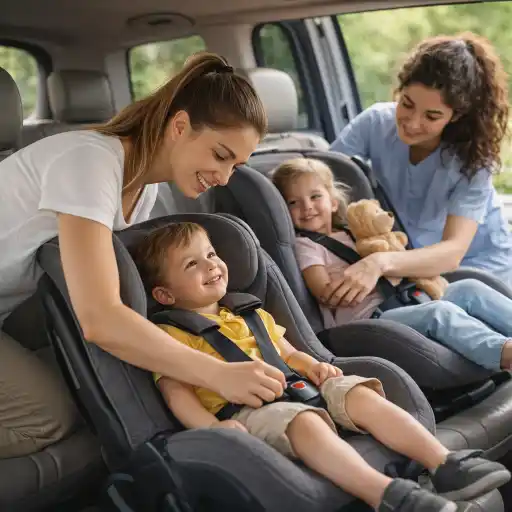
Car seats and restraint fit matter more than brand. Follow manufacturer guidance and national recommendations; keep seats appropriate for weight/height and install them tightly.
- 🔧 Installation checks:
- Seat moves
- Harness straps flat and snug; chest clip at armpit level.
- Check expiration dates and recall status before use.
- 📚 Age/size guidance: keep children rear-facing as long as the seat allows, move to forward-facing harness when limits are exceeded, then booster until adult belt fits (CDC child passenger guidance: CDC).
- 📋 Daily protocol: assign a trained staff member to confirm each seat and log the check. Use local car seat check events or certified technicians when possible (ChildCareEd notes practical car-seat plans in North Dakota guidance).
For vans and center-owned vehicles, post an empty-seat check or do a sweep after unloading. Technology alarms or vehicle sweep protocols can prevent tragic oversights (vehicle safety alarms).
4) How should supervision, counting routines, and staff roles be organized during transport?
Supervision during transport is active, intentional, and role-based. Use a small number of repeatable actions and assign specific duties to reduce error.
- 👥 Roles to assign in writing before the trip:
- Leader (manages packet & communications).
- Counter (runs head counts at defined points).
- Medication holder (manages any on-trip meds).
- First-aid person (carries kit & documents incidents).
- 🔢 Counting routine: at minimum, count (1) before leaving room, (2) after loading, (3) after arrival, (4) before returning. Post the routine and rehearse it.
- 👀 Active supervision: staff should position themselves to see and hear children; maintain low noise, seats clear of bags, and seat belts/harnesses fastened when moving (Transportation Safety).
Keep ratios consistent with licensing rules and add adults for transitions. For mixed-age groups or infants, ratio requirements often increase—consult your state guidance (for example, Illinois DCFS).
5) How do I include children with special health needs and reduce missing/abduction risk?
Inclusion requires planning and family partnership. Collaborate early, document specifics, and train staff on device use and behavioral supports.
- 🤝 Family meeting: collect written health plans, calming strategies, and consent for medication or devices. Put essential notes in the leader packet.
- 🧰 Equipment checks: confirm specialized seating fits the vehicle and that staff can secure it correctly. Include a backup plan for noisy or bumpy rides; some children need an assistant or a Transportation Safety Plan (Transportation Safety).
- 🔒 Missing/abduction risk mitigation:
- 📸 Keep recent photos and unique identifiers in the packet.
- 📞 Immediately report missing children to law enforcement and use resources like NCMEC (NCMEC: Missing from Care).
- ⚠️ Teach simple bus-stop rules and stranger awareness to children in age‑appropriate ways (see prevention tips: Preventing Abductions).
Always include the family in planning and document all agreed accommodations. State rules and IEP/IFSP notes may require specific steps—state requirements vary - check your state licensing agency.
Conclusion
Transportation safety is built from a handful of dependable habits: solid paperwork, tight seat and vehicle checks, clearly assigned staff roles, practiced counting routines, and thoughtful inclusion plans. Use ChildCareEd templates and courses to train staff (see the Transportation Safety course Buy Now $16.00 and free resources at ChildCareEd resources).
Quick checklist to implement today:
- 📋 Collect signed #permission slips and place one copy in the leader packet.
- 🩺 Pack emergency & medication forms; label meds.
- 🔒 Confirm #carseats and restraints are correct and logged.
- 👥 Assign staff roles and rehearse the counting routine.
- 🔁 Do a post-trip vehicle sweep and document completion.
FAQ
- Q: Can parents sign permission forms electronically? A: Often yes, if permitted by your licensing agency—state requirements vary. See local guidance.
- Q: What do I do if a child won’t tolerate a seatbelt? A: Use calm, planned strategies; involve the family and never compromise proper restraints.
- Q: Who is responsible for first aid on trips? A: Trip leader plus a designated backup adult; both should carry the kit and emergency contact list.
- Q: How often should staff refresh transportation training? A: Regularly—annually at minimum, more often when policy or staff changes occur. ChildCareEd offers modular trainings to help maintain competence.
Final note: build simple tools that staff can follow under pressure. State law, best practice, and compassion for children converge in small, practiced routines. Use the resources linked here and keep these five words front of mind: #transportation #safety #supervision #carseats #permission.
Understand 3 core layers: federal guidance (best practices), your state licensing rules, and local traffic/vehicle laws. For example, Illinois DCFS spells out driver qualifications, ratios, and written parental consent for field trips (Illinois: DCFS field trip rules). Nevada requires a 1‑hour transportation training for drivers in childcare settings (Nevada training note). Preparation turns panic into protocol. Build standardized packets and short pre-trip checklists that staff can follow without extra thought.
- 45 Hour Child Growth and Development
- Appropriate Precautions in Transportation of Children
- Transportation and Field Trip Safety
- Transportation and Field Trip Safety in the Early Childhood Environment
- Creating Environments that Nurture Growth and Community
- Texas Director Credential
- Child Care Orientation
- Transportation Safety
- Capacitación en Salud y Seguridad Preventiva en Línea para Proveedores de Cuidado Infantil
- Regulaciones de Licenciamiento de Cuidado Infantil en California para Centros y Hogares de Cuidado Infantil Familiar
- Normas de Licenciamiento de Cuidado Infantil en Virginia para Centros Diurnos Infantiles y Hogares Diurnos Familiares
- Proporciones de Cuidado Infantil y Tamaños de Grupo por Edad en Maryland (Guía Rápida para Centros y Hogares)
- Lista para Guardería en Casa en Texas: Cómo Iniciar una Guardería en el Hogar
- What Is Daycare and How Does It Work?
- What are the supervision basics for child care in Michigan?
- How can child care programs keep children safe during transportation?
- What are transportation safety basics every child care provider needs to know?
- What Massachusetts EEC Regulations Do Child Care Providers Need to Follow?
- What Is the Difference Between Babysitting, Child Care at Home, and a Licensed Home Daycare?
- How Do You Look Up a Georgia Daycare’s Inspection History Before Enrolling?
- Health and Safety Training: 7 Everyday Habits That Protect Children in Care
- What Makes a Great Home Daycare? 10 Things Parents Notice First
- What Is the Difference Between MSDE Basic Health and Safety Initial Training and the Annual Update?
- What Daycare Certification Requirements Must You Complete Before You Can Start Working?
- Do You Have to Retake Emergency and Disaster Preparedness Training in Maryland?
- How Can Child Care Programs Build a Practical Field Trip Safety Plan?
- What Health and Safety Training Is Required for Child Care Providers?
- How Can Family Child Care Providers Choose Hours That Meet Local Needs?
