When a child is hurt, becomes ill, or needs urgent help, confident preparation can make a critical difference. A practical starting point is ChildCareEd’s Health and Safety Orientation  Buy Now $55.00, which covers core topics such as illness prevention, safe sleep, medication, allergies, emergencies, and reporting concerns; explore it as you build a training plan tailored to your program.
Why does health and safety training matter in child care?
Families trust providers with children’s daily well-being, while staff must make rapid decisions in environments that change by the hour. Training helps turn policies into reliable practice: recognizing signs of illness, anticipating hazards, following safe routines, and responding appropriately when an emergency occurs. It also gives teams a shared vocabulary and clearer expectations.
Federal law and associated Child Care and Development Fund (CCDF) provisions shape state and territorial health-and-safety standards. Providers serving children whose care is supported by CCDF must receive training in required areas, and states establish detailed rules for licensed programs. ChildCare.gov explains that requirements vary by role, setting, and the ages served. Training is therefore not one universal checklist with identical hours or deadlines nationwide.
Well-designed learning should be practical and maintained over time. New employees need orientation, while continuing education and drills help staff retain skills and adapt when policies, staffing, or children’s needs change. This investment supports children’s #health and #safety while strengthening staff confidence and family trust.
Which core health and safety topics should providers expect?
Federal health-and-safety topic areas provide a useful framework for reviewing a program’s training plan. Specific requirements, timing, and accepted course formats are determined by the applicable state or territory and sometimes by the program type.
- Infectious disease prevention and control, including hygiene and immunization-related practices.
- Infant safe sleep and reducing the risk of sudden infant death syndrome (SIDS) and other sleep-related deaths.
- Preventing shaken baby syndrome, abusive head trauma, and child abuse or neglect; recognizing concerns and understanding reporting responsibilities.
- Medication administration consistent with parental consent, program policy, and applicable rules.
- Preventing and responding to food and other allergic reactions.
- Emergency preparedness and response for natural disasters and human-caused events.
- Safe handling, storage, and disposal of hazardous materials and contaminated items.
- Indoor and outdoor premises safety, including hazards, water, traffic, and supervision.
- Safe transportation practices when the program transports children.
- Infant and child first aid and CPR, and child development knowledge relevant to care.
Child Care Technical Assistance Network guidance recommends that caregivers complete relevant health-and-safety preparation before caring for children without supervision; medication training should precede medication administration. Keep in mind that first aid/CPR formats, credentials, renewal schedules, and required training hours can differ across jurisdictions.
When should training happen, and who needs it?
Rules commonly distinguish between pre-service or orientation training and ongoing professional development. For programs receiving CCDF assistance, states and territories establish pre-service or orientation requirements, including deadlines. Federal program rules describe orientation within a specified period, but local regulations determine how that applies to a particular staff role and setting. Do not assume that a single deadline applies to every provider.
Training needs may differ for teachers, assistants, directors, family child care providers, substitutes, and staff who transport children or administer medication. The ages served matter, too: infant rooms require focused preparation in safe sleep and infant care, while programs offering transportation need relevant vehicle and field-trip procedures. A staff member’s duties should guide their learning plan.
For directors, a training matrix makes oversight manageable. Track each employee’s role, required topics, completion date, certificate, and renewal or refresher date. Revisit the matrix when someone changes responsibilities, a child with specific health needs enrolls, or licensing guidance is updated. Maintain records in a secure, accessible location so staff and program leaders can confirm training status promptly.
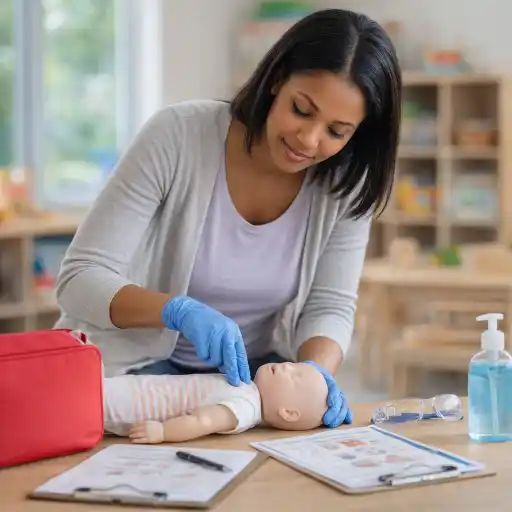
How can teams turn training into everyday safe practice?
Course completion matters, but safety depends on what staff can do in the classroom, playground, kitchen, and during transitions. Connect each topic to written procedures and routine practice. For example, infection-control learning should be reflected in handwashing and cleaning routines; medication instruction should align with the program’s consent, storage, administration, and documentation procedures.
- Use brief orientation walk-throughs to identify exits, first aid supplies, hazardous-material storage, and safe outdoor boundaries.
- Practice emergency plans through age-appropriate drills. Assign roles for evacuation, attendance checks, communication with families, and children needing individual support.
- Review child-specific allergy or health plans with the staff who need to know them, respecting privacy while ensuring an effective response.
- Refresh infant sleep procedures with staff who work with babies, and check that the actual sleep environment matches program policy.
- 🧯 After a drill or incident, hold a short, supportive debrief: what worked, what was confusing, and what needs adjustment?
Emergency preparedness guidance from the CDC emphasizes planning ahead so early care programs can protect children during emergencies and support them afterward. Rehearsal should be calm and developmentally appropriate; it is intended to build familiarity, not frighten children.
Useful related ChildCareEd learning options include Safe Sleep Training Buy Now $16.00, Stay Alert! Steps for Emergency Prep Buy Now $25.00, and Illness, Medication, and Allergies in Child Care Buy Now $32.00. Check with your licensing agency or registry to determine whether a particular course meets a specific requirement.
What common training and compliance pitfalls should directors avoid?
One frequent pitfall is treating a course title or certificate as proof that a requirement has been met. Training may be relevant but still differ from the jurisdiction’s accepted provider, delivery format, clock-hour rules, or skills demonstration. Before staff enroll, compare the course details with official guidance and retain evidence of that verification when appropriate.
Another mistake is relying on informal reminders instead of a consistent tracking system. Certificates can be misplaced, renewal dates overlooked, or only one employee trained to respond to an emergency. Directors can reduce these risks by maintaining individual training files, designating backups for essential duties, and reviewing records on a regular schedule.
A third pitfall is assuming that finishing a class alone creates readiness. Medication procedures, allergy response, evacuation roles, and reporting steps must be reflected in current written policies and understood by the staff who carry them out. Review procedures with new hires and revisit them after a change in staffing, facility layout, enrolled children’s needs, or local rules.
Finally, avoid treating training as a one-time event. Ongoing development, coaching, brief practice, and post-incident reflection help knowledge transfer into behavior. Ask staff where a procedure feels unclear, then use that feedback to improve the system rather than assign blame. A supportive learning culture helps people speak up about risks early.
How can a program build and document a reliable training plan?
Start with the official licensing rules and any applicable CCDF, Head Start, employer, or professional-registry requirements. Identify the program’s license type, staff roles, age groups served, and services offered, such as transportation or medication administration. Use those details to determine which topics apply, when training must occur, and what formats are accepted.
- Map the requirements: List each topic, who must complete it, timing, required hours, format, and renewal schedule.
- Choose appropriate learning: Verify course acceptance with the agency or registry. Confirm whether first aid/CPR requires in-person skills practice or a particular credential.
- Schedule and communicate: Include training in onboarding and annual planning; give staff clear deadlines and time to complete required learning.
- Keep documentation: Save certificates, dates, course names, instructor or provider details, and renewal information in each staff member’s file.
- Review and improve: Audit the training log periodically, practice procedures, and update plans when requirements or program needs change.
For further course exploration, consider ChildCareEd’s Health & Safety Requirements for Childcare Providers Buy Now $79.00. No course should be assumed to satisfy a state requirement until acceptance is verified.
Conclusion: What health and safety training is required?
Child care providers should expect training across key areas such as disease prevention, safe sleep, medication, allergy response, emergency preparedness, hazardous materials, premises and transportation safety, first aid/CPR, child development, and recognizing and reporting abuse or neglect. The exact requirements—including hours, deadlines, staff covered, accepted courses, and renewal schedules—depend on state or territory rules, program type, and staff role.
For directors, the practical path is to verify requirements with the licensing agency, build a role-specific training matrix, maintain certificates, and make learning visible in everyday procedures and drills. Training is most effective when it is reinforced through practice and a supportive team culture. These steps help answer the central question—what training is required?—while keeping the focus on safer care and prepared, confident staff.
- 45 Hour Child Growth and Development
- Preventative Health and Safety
- Administering Basic Health and Safety ONLINE
- Healthy Starts: Safety, Nutrition, and Wellness in Child Care
- Pediatric RSV First Aid & CPR/AED
- 24 Hour Texas Pre-Service
- Texas Director Credential
- 10 Hour Health and Safety Orientation Training
- High Quality Trainings in Connecticut
- Childcare Training
- ChildCareEd Bringing High-Quality Training to Providers Across the Globe
- Basic Health and Safety Training: The Essential Guide for New Child Care
- What Must Maryland Child Care Providers Know to Keep Children Safe?
- 🏡Pajamas, Playtime & Paperwork: Why Pre-Service Training Is Key to Starting Your In-Home Daycare
- Que es Título 22 en California?
- Capacitación en Salud y Seguridad Preventiva en Línea para Proveedores de Cuidado Infantil
- Regulaciones de Licenciamiento de Cuidado Infantil en California para Centros y Hogares de Cuidado Infantil Familiar
- What do child care providers need to know about pre-service trainings in New York?
- What are the basic steps for Michigan child care providers?
- What do I need to know to provide child care in New York?
- How many Minnesota child care training hours are required and how can providers earn them?
- How do I get OCFS-ready for publicly funded programs: training and recordkeeping steps?
- What training do I need to run a safe and legal home daycare?
- How can I renew my New York child care license without a gap?
- How to Become a Childcare Worker in Oregon: Requirements and Steps
- Working in Maryland Child Care: Training, Requirements, and Career Tips
- Do You Have to Retake Emergency and Disaster Preparedness Training in Maryland?
- What Health and Safety Training Is Required for Child Care Providers?
