Caregivers should teach children appropriate school bus safety rules before they ride. Practice these routines so children understand what to expect. For broader guidance on transportation planning, educators can explore ChildCareEd’s Transportation Safety  Buy Now $16.00 course and Appropriate Precautions in Transportation of Children Buy Now $10.00 course. Course participation does not by itself establish compliance; confirm applicable requirements with your licensing agency or employer.
How can adults prepare children at the bus stop?
- Stand 6 feet (or three giant steps) away from the curb while waiting for the #bus.
- Maintain active #supervision of young children while they wait.
How can children stay safe around the bus?
- Cross in front of the bus – at least 10 feet (or five giant steps) – and make eye contact with the driver before crossing.
- Never walk behind the bus.
- If you drop something near the bus, do not pick it up; tell the bus driver instead.
What routines help children board and exit safely?
- Wait until the bus has stopped and the door opens before approaching the bus or standing up on the bus; reinforce this #routine consistently.
- Use the handrail.
- Secure any loose or hanging objects like straps on a backpack or drawstrings on a hood.
What expectations support safe behavior on the bus?
- Buckle up if seat belts are available; use appropriate passenger #restraints.
- Remain seated, keep your head, arms, and belongings inside the bus, and speak quietly.
- Keep aisles clear of books and bags.
How can programs support children with individual transportation needs?
Supporting individual needs: The school bus may be intimidating for some children with disabilities or other individualized support needs. Noise, movement, an unfamiliar route, or an unexpected detour may cause distress. Teachers should know their students, implement a Transportation Safety Plan if needed, provide an assistant if needed, and incorporate transportation needs on the student’s IEP.
How can child care programs plan safer transportation?
School-bus rules are one part of a broader transportation-safety system. Before a trip, identify who is responsible for supervision, confirm that the driver and vehicle arrangements are appropriate for the program, and communicate the plan to staff and families. Procedures should be written, practiced, and adapted to the children and route rather than improvised at the curb. For help developing a trip-specific plan, see how child care programs can build a practical field trip safety plan. For a broader program checklist, see how child care programs can keep children safe during transportation.
Assign clear supervision roles. Decide which adults will count children, supervise boarding, sit with or near children as needed, and communicate with the driver. Staff should know where they are positioned and who takes responsibility for each child during transitions. If staffing changes, review the assignment before departure; do not assume another adult has completed a head count.
Prepare the driver and route. Before children are transported, the driver should understand the route, planned stops, vehicle-specific safety procedures, and how to communicate a delay or emergency. Programs should verify driver qualifications and vehicle requirements through the applicable licensing agency and program policies. A new or substitute driver should receive an orientation to the route and the program’s procedures before transporting children. That orientation should include a review of the route and a practice of the program’s procedures before the driver assumes responsibility for children. Avoid promising that a particular training course or checklist substitutes for state or employer requirements. For a practical planning framework, review how child care programs can make transportation safe, inclusive, and compliant.
Use a consistent passenger-check process. Conduct a head count before boarding, after boarding, whenever the group changes vehicles or locations, and after exiting. Match children to the attendance list and have a designated adult confirm the count. After every trip, conduct a final walk-through of the vehicle, including seats and other areas where a child could be out of view. Keep the vehicle secured according to program procedure until the check is complete, and document and report any discrepancy immediately.
Plan for the whole trip. Review the destination, route, expected travel time, weather, communication method, emergency contacts, and arrangements for delays. Share relevant information with families and staff in advance. Bring attendance and emergency information, and establish a procedure for a vehicle breakdown or other unexpected event. On field trips, use a written roster and repeat counts whenever the group moves between the vehicle, destination, and return trip.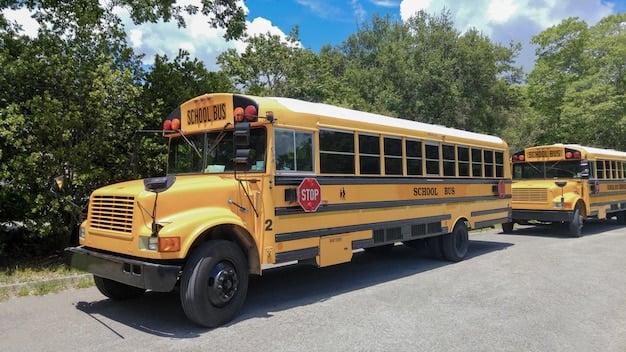
Support children’s understanding. Teach safety routines through modeling, role-play, visual cues, and brief, repeated practice. Explain where children wait, how they board, where they sit, and what to do if they become separated from the group or drop an item. For kindergarten-age children and younger passengers, use concrete directions and rehearse the routine before the first trip. Reinforce calm, seated behavior without relying on verbal reminders as a substitute for active adult supervision.
Individualize access and support. Ask families about a child’s communication, sensory, mobility, medical, or behavioral needs and plan with the appropriate school or program team. Where applicable, coordinate transportation accommodations with the child’s individualized education program (IEP) or other documented plan. Consider advance familiarization, predictable routines, appropriate seating or equipment, and a designated support adult when needed. Confirm that any restraint or mobility equipment is suitable and used according to its instructions and applicable requirements. See also how providers can teach school bus safety through realistic choices for ideas to rehearse safe routines with children.
Review and improve the plan. After a trip, discuss what worked, any near miss, and whether staffing, timing, communication, or accommodations should change. Update written procedures and orient staff to revisions. These practices are general safety guidance, not a substitute for the licensing rules, transportation laws, or employer policies that apply to a particular program. Consistent #planning helps teams make those procedures usable.
What should educators remember about transportation safety?
Reliable transportation safety depends on active supervision, clear adult roles, consistent child counts, thoughtful preparation, and individualized support. Teach and practice age-appropriate bus routines, verify the trip plan before departure, and complete a final vehicle check after every ride. Confirm applicable requirements with the relevant licensing agency and program, especially when driver qualifications, vehicle equipment, or a child’s individual plan are involved.
To plan an outing that works without a vehicle, see how daycares can plan field trips without transportation. For additional outing ideas, explore daycare field trip ideas.
Interested in learning more about transportation safety and field trips? ChildCareEd offers several training courses designed to support educators in keeping children safe while being transported. Check out these courses below to learn more.
- Appropriate Precautions in Transportation of Children
- CDA Home Visitor Subject Area 3 Part 3 Birth to 5
- CDA Home Visitor Subject Area 2 Part 3 Birth to 5
- Birth to Five CDA Credential with Portfolio Review
- Pediatric RSV First Aid & CPR/AED
- Health and Nutrition
- Emergent Learning & Development
- Creating Environments that Nurture Growth and Community
- Preventative Health and Safety
- Mindful Supervision: Balancing Safety & Independence in Montessori
- Vehicle Safety Tips for Summer
- 4th of July Fun Facts
- Nevada Child Care Transportation Rules: Field Trip Forms, Car Seats, Supervision
- Las Mejores Ideas de Excursiones para Guarderías en Dakota del Norte
- Best Daycare Field Trip Ideas in Wisconsin
- How can childcare teams lead safe, fun nature walks in Georgia parks and gardens?
- Summer Field Trips for Daycares in Wisconsin
- Summer Field Trips for Daycares in Maryland
- How Daycares Can Plan Field Trips Without Transportation
- How can child care programs keep children safe during transportation?
- How can my child care program keep children safe during transportation?
- How can child care programs keep children safe during transportation?
- How can childcare programs make transportation safe, inclusive, and compliant?
- What are transportation safety basics every child care provider needs to know?
- What Massachusetts EEC Regulations Do Child Care Providers Need to Follow?
- How Can Child Care Providers Teach School Bus Safety Through Realistic Choices?
- How Can Child Care Programs Build a Practical Field Trip Safety Plan?
- How Can Montessori Field Trips Support Independence While Keeping Children Safe?
- How to Check Children’s Understanding of Bus Safety Rules
- How Can Child Care Providers Check Children’s Understanding of Bus Safety Rules?
