Good supervision keeps children safe and helps teachers do their best. This short guide helps Oklahoma child care directors and providers learn simple, practical steps for daily supervision. You will find quick rules, easy checklists, and places to get official help. Remember: state requirements vary - check your state licensing agency.
Why does supervision matter in Oklahoma?
Supervision matters because it protects children, supports learning, and builds trust with families. When adults watch, count, and move with purpose, accidents are less likely and teachable moments happen more often. Strong supervision also helps your program meet licensing rules and shows families you take safety seriously.
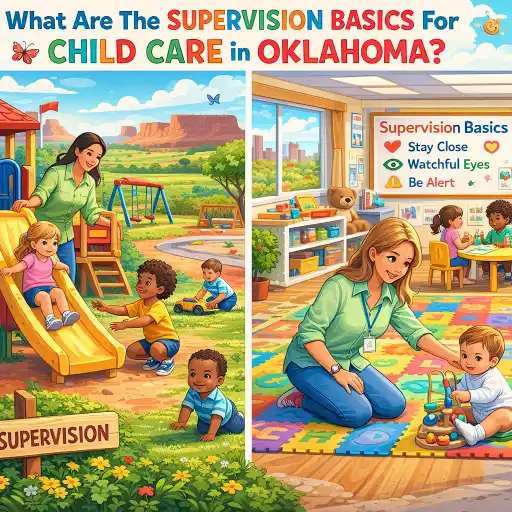
- 🛡️ Safety: Good supervision lowers injuries and keeps children out of danger. See simple safety ideas at Adequate Supervision in Childcare.
- 📚 Learning: When staff are close and attentive, they can jump into play to teach or calm big feelings. ChildCareEd explains how supervision supports learning in The Vital Role of Supervision.
- ✅ Compliance: Supervision is part of licensing checks. OKDHS sets rules that programs must meet — read the official basics at OKDHS Licensing Requirements.
Quick note: good supervision is both a skill and a system. Use short routines, staff coaching, and clear roles so safe habits stick. Add these #Oklahoma ideas to your daily plan to boost #supervision, #safety, #ratios, and #training.
What rules and licensing basics affect supervision in Oklahoma?
Oklahoma has clear licensing rules that affect supervision. Knowing the main areas helps you plan daily work and be ready for inspections. Start with the OKDHS child care pages and a plain guide from ChildCareEd to see how rules fit your program: Child Care Services and What are the Oklahoma child care licensing basics.
- 👥 Staff-to-child ratios and group sizes
- Post ratio charts where staff can see them.
- Plan substitutes for breaks and trips so ratios stay correct.
- 🧾 Background checks and employee records
- Keep fingerprints and registry checks on file.
- Don’t let new hires work unsupervised until cleared.
- 📘 Training and health rules
- Required topics include CPR/First Aid and safe sleep. See approved trainings at ChildCareEd: Safe Supervision in Child Care
 Buy Now $24.00.
 - Follow safe sleep rules for babies from the CDC: CDC Safe Sleep.
- Required topics include CPR/First Aid and safe sleep. See approved trainings at ChildCareEd: Safe Supervision in Child Care
- 🏫 Facility approvals
- Get fire and health department sign-offs early when opening or changing space.
These rules are the floor. Use them to build simple daily checklists so staff know what to do each day. If you need a clear checklist, ChildCareEd has step-by-step help and OKDHS has official forms you must keep on file.
How can centers use active supervision, ratios, and room setup every day?
Active supervision is a set of habits staff can use each day. It helps you see problems early and join children in learning. ChildCareEd explains the six parts of active supervision: position, scan, count, listen, anticipate, and engage — see Why Active Supervision.
- 📍 Position: Place adults where they can see most children. Use low shelves and open sightlines. See room setup ideas at Adequate Supervision.
- 👀 Scan and count: Teach staff to sweep the room with their eyes and count at every transition (line up, outdoors, before leaving).
- 🔊 Listen and anticipate: Sound changes (sudden quiet or loud cries) often warn you something is wrong. Move closer before risky play starts.
- 💬 Engage: Step into play, offer choices, and guide children to safer options. This also supports learning.
- 🔁 Use zones and float staff: Divide the room or playground into zones. Assign each adult a zone and one floater to help during busy times.
- 🧑🏫 Coach: Do short observations (10–15 minutes) and give 1 praise + 1 tip. ChildCareEd has coaching tools at Staff Supervision Resources.
Practice these steps in staff meetings and drills. Post the Active Supervision Poster from ChildCareEd so everyone sees the six steps each day. Small, repeated practice makes big safety gains. These habits also make ratios easier to manage because adults are placed where they can help fast.
How do providers prepare for licensing visits and avoid common mistakes?
Licensing visits can feel stressful. A simple plan makes visits calm and helpful. ChildCareEd has a friendly guide for Oklahoma providers: How can Oklahoma providers prepare for licensing visits?.
- 🧾 Organize records
- Staff files: background checks, training certificates, OPDR IDs.
- Child files: enrollment, health records, emergency contacts.
- 🧰 Do a monthly walk-through
- Check sightlines, playground fences, medication logs, and posted ratios.
- 👩🏫 Train and mock
- Run a short mock inspection with staff a few days before a real visit.
- Practice counts and emergency drills.
- 🛠️ Fix and follow up
- Fix urgent safety items right away and document what you did.
- Make a written plan for other items with dates and names.
Common mistakes and how to avoid them:
- ⚠️ Missing training records — Keep one folder and upload certificates when possible.
- ⚠️ Letting ratios slip — Post charts and schedule substitutes for transitions.
- ⚠️ Blind spots in rooms — Lower shelves and rearrange furniture for clear sightlines.
- ⚠️ Doing paperwork while supervising — Schedule admin time away from active duty.
FAQ (short):
- Q: When can new staff start? A: Don’t let them work unsupervised until background checks and required pre-service training are complete. See OKDHS rules.
- Q: What trainings are required? A: CPR/First Aid, safe sleep, infection control, and child abuse reporting are common required topics. Check ChildCareEd training pages and OKDHS.
- Q: Who approves fire and health? A: Local fire and health departments provide approvals, then licensing completes the review.
Conclusion
Supervision in Oklahoma is simple when you break it into daily habits: set clear zones, follow ratios, practice active supervision, and keep good records. Use ChildCareEd resources for posters, training, and coaching tools (see Active Supervision and Staff Supervision Resources). For official licensing steps, use OKDHS pages like Licensing Requirements.
- ✅ Make a simple daily checklist.
- ✅ Practice counts and transitions every day.
- ✅ Coach staff with short observations and kind feedback.
- ✅ Keep records organized for licensing visits.
You are not alone. Use local licensing staff, ChildCareEd courses, and quick tools to build routines that keep children safe and help staff feel confident. Again: state requirements vary - check your state licensing agency.
- Positive Attention: Interactions & Supervision of Infants & Toddlers
- Basic Health & Safety and Breastfeeding Awareness
- Administering Basic Health and Safety ONLINE
- 1,2,3, Eyes on Me: Classroom Safety
- Pediatric RSV First Aid & CPR/AED
- Texas Director Credential Renewal
- Safe Supervision in Child Care: Birth to School Age
- Texas Director Credential
- Family Child Care: Building, Premises, and Outdoor Safety
- Proveedores de Oklahoma: Beca de Evaluación CDA
- Qué capacitación se requiere para ser director de cuidado infantil en Texas?
- Niveles de credencial de Maryland: qué significan
- Capacitación en Salud y Seguridad Preventiva en Línea para Proveedores de Cuidado Infantil
- ¿Cómo solicito la licencia para una guardería en California?
- Regulaciones de Licenciamiento de Cuidado Infantil en California para Centros y Hogares de Cuidado Infantil Familiar
- Proporciones de Cuidado Infantil y Tamaños de Grupo por Edad en Maryland (Guía Rápida para Centros y Hogares)
- Lista para Guardería en Casa en Texas: Cómo Iniciar una Guardería en el Hogar
- Capacitación Previa al Servicio para Proveedores de Cuidado Infantil en Dakota del Norte
- What are the Oklahoma child care licensing basics every educator should know?
- How can Oklahoma child care programs use daily routines to stay safe and compliant?
- What's new for child care in Oklahoma and what should providers do?
- How do I open a day care in Oklahoma and start my child care business?
- What are the supervision basics for child care in Oklahoma?
- How Can Oklahoma Providers Help Families After Expanded Subsidy Access for School-Age Care?
- What Does Oklahoma’s 2026 Child Care Funding Mean for Providers and Families?
- Licensed for Safety: How Oklahoma Providers Can Use Regulations to Prevent Illness, Injury, and Licensing Surprises
- How can Oklahoma providers cut red tape without cutting safety and quality?
- How can Oklahoma providers turn cribs into confident infant care during the state's child care access push?
- What are Oklahoma's child care ratios and group sizes by age for centers and homes?
