Providers who want practical, classroom-ready guidance can start with our The Montessori Classroom: Theory to Practice Buy Now $25.00 and Montessori Foundations  Buy Now $10.00 courses, both designed for busy early childhood professionals seeking hands-on sensorial strategies.
For mixed-age programs, sensorial work can act as an organizing curriculum strand that supports individualized pacing while sustaining community cohesion. When materials are arranged with clear sequencing and accessible choice, older children model precise vocabulary and procedure while younger children observe, repeat, and internalize routines. This natural peer scaffolding deepens conceptual learning, reduces the need for repeated adult demonstrations, and helps teachers maintain focus during extended work periods. To see practical examples of environment layout, grouping strategies, and transition design that keep sensorial work focused and inclusive, see our ChildCareEd article Montessori Theory in Practice: Bringing Child-Centered Learning to Life.
Teachers can pair sensorial lessons with simple documentation routines—quick checklists, short anecdotal notes, or photo sequences—to show progress across visual, tactile, baric, and other modalities. These lightweight records guide differentiation, curriculum planning, and family communication and create clear next steps for each child. The practical approaches described above extend the classroom-ready strategies offered in the ChildCareEd courses linked earlier and make implementation and family reporting more efficient.
What senses does the Montessori method include?
Of course, these are the five basic senses we tend to think about, but Montessori education has a more extensively defined list all its own:
-
Visual - our ability to differentiate objects by form, color, and size
-
Tactile - just another name for the sense of touch, or how something feels on our body
-
Baric - differentiation based on weight and/or pressure
-
Thermic - the ability to sense various temperatures
-
Auditory - another name to describe the sense of sound
-
Olfactory - our sense of smell
-
Gustatory - the sense of taste
-
Stereognostic - a muscular sense, or the ability to distinguish an object without seeing it, hearing it, or smelling it, but relying of touch and muscle memory alone
How does sensorial work support learning and inclusion?
When teachers design activities that let children investigate singular sensory qualities—color, weight, temperature, texture, pitch—children form more precise perceptual categories. Those categories underpin later academic skills: discriminating sizes supports mathematical ordering; attending to sound patterns supports phonological awareness. In Montessori practice, the sensorial materials intentionally isolate one quality at a time so a child refines discrimination through repeated, focused practice (see sensorial materials and purposes below).
Sensorial practice also supports inclusion. For some learners—children with sensory processing differences, language delays, or autism—multisensory input can be overwhelming; materials that isolate a single quality allow those children to engage successfully and build confidence. Conversely, children who are less responsive to sensory input can be offered high-contrast or novel stimuli that invite exploration. Because Montessori sensorial activities are concrete and manipulable, they provide alternate pathways to learning for children who struggle with traditional, verbally mediated instruction.
Practical note: Montessori sensorial work is not merely "play." It is purpose-built practice that isolates one perceptual variable and offers graduated variation so the child learns to notice ever smaller differences. Our overview of Montessori benefits explains how sensorial work links to cognition and self-regulation. For a discussion about access and equity in Montessori settings, see Is Montessori Really for All?. The original pedagogical rationale for isolating senses and refining sensory discrimination is described in classical Montessori material summaries (see reference below).
Key classroom practices that support learning and inclusion include: consistent routines around sensorial work; child-sized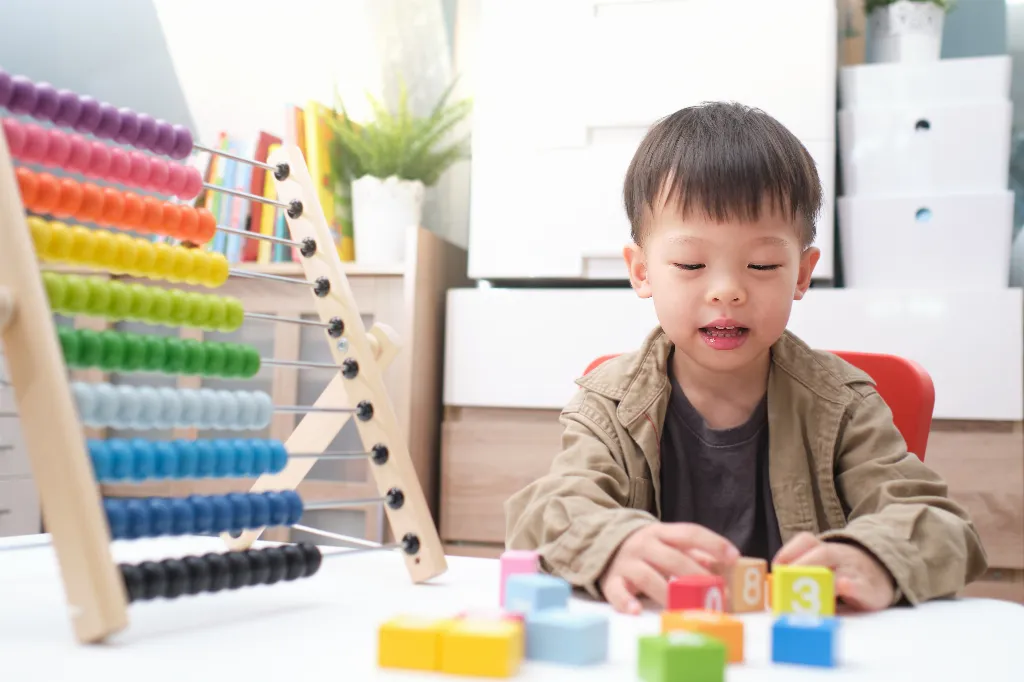 , stable materials presented on trays; brief, focused demonstrations by the adult; and documentation of each child's engagement and progress. These practices let the teacher scaffold, differentiate, and link sensorial refinement to language and math experiences over time.
Further reading on how sensorial materials isolate qualities and scaffold progression is available from Montessori practitioners and training materials (Montessori Sensorial Activities and Material).
How can providers add Montessori-style sensory activities to their programs?
Providers can introduce sensorial work in low-cost, high-impact steps. Below are practical, classroom-ready actions with links to ChildCareEd resources for deeper study.
- Start with the environment: create a dedicated sensorial shelf with small, clearly labeled trays. Each tray isolates one quality (e.g., texture, weight, color gradation). Use child-sized containers and keep materials accessible so children can choose them during work periods.
- Offer short, scripted demonstrations: model one precise movement or comparison (for example, "I am putting the rough on the left and the smooth on the right"). Demonstrations should be brief and followed by child practice.
- Sequence materials by difficulty: arrange pairs or sets from the most contrasting to more subtle differences. This ordered progression supports mastery and avoids frustration. For guidance on sequencing sensorial materials across ages, see Understanding Sensitive Periods in Montessori Education.
- Plan cross-domain lessons: after a child masters a sensorial matching task, plan a follow-up that links that skill to language (vocabulary labeling) or math (ordering by length or weight). Our course Implementing the Montessori Curriculum Buy Now $32.00 provides sample lesson progressions and adaptations.
- Adapt for sensory differences: provide noise-reduced corners near sensorial shelves and offer materials in multiple textures and intensities. Document responses and adjust materials if a child shows distress or disinterest.
- Use simple assessment and documentation: track the child’s independence (from adult demonstration to unassisted work), accuracy (ability to match or sequence), and language (vocabulary used). These observations form short narratives or checklists you can include in family communication.
Try these quick activity suggestions in a mixed-age program:
- Color grading: color tablets ordered from light to dark (visual discrimination).
- Weight scales: small containers that require balancing or ordering by weight (baric sense).
- Thermal matching: pairs of thermal tablets to order from cool to warm (thermal sense).
- Texture boxes: blindfolded stereognostic identification with objects placed in bags (stereognostic sense).
For toddler-specific adaptations and ways to involve families, see Montessori for Toddlers. For classroom rhythm and daily implementation ideas, see A Montessori Day: Calm, Curious, Connected. To connect sensorial work to classroom practice, consider the shorter course Sensitive Periods in Montessori: Guiding Natural Learning Buy Now $16.00.
Summary
Montessori sensorial work gives children concrete ways to refine perception, supports multiple pathways to learning, and can be adapted to be inclusive of children with diverse sensory profiles. Start small: set up a shelf, demonstrate one task clearly, sequence materials, and document learning. Use the ChildCareEd courses and articles linked above to deepen your practice and to design intentional, assessable sensorial lessons.
- The Montessori Classroom: Theory to Practice
- Montessori Foundations
- Montessori Assistant Training
- Birth to Five CDA Credential with Portfolio Review
- Engaging Parents in the Montessori Toddler Classroom
- Texas Director Credential
- Intro to Montessori: Philosophy, Principles, and Practices
- Every Moment Matters: Schedules and Transitions
- Mindful Supervision: Balancing Safety & Independence in Montessori
- Raising Peaceful Learners: The Montessori Advantage
