Hey Georgia teachers — can toddlers learn mathematical concepts? Yes. In Montessori practice, sensorial, hands-on materials let children feel quantity, order, and measure before they meet numerals. If you want practical classroom strategies, start with two ChildCareEd trainings in the intro tier: Math Foundations in Early Childhood  Buy Now $16.00 and Montessori Made Simple: For Today's Teachers Buy Now $35.00. Both courses emphasize concrete-to-abstract progressions and routine activities that build number sense and problem solving in infants, toddlers, and preschoolers.
How do Montessori sensorial materials build early mathematical thinking?
Sensorial materials refine perception — size, length, weight, and order — which are cognitive precursors to mathematics. Materials such as the Pink Tower, Brown Stair, Cylinder Blocks, and Color Tablets develop visual discrimination, sequencing, and proportional reasoning; those skills scaffold later work with number rods, bead bars, and place-value materials. Practical classroom observation shows children forming mental quantities long before they can write numerals: they compare, order, and transform materials and thereby internalize mathematical relationships. The sensorial-to-math progression is described in Montessori training literature and supports a concrete-to-symbolic trajectory for mathematics (see verified reference on sensorial foundations). This foundation also reduces early math anxiety by privileging understanding before rote memorization.
What specific Montessori materials introduce number sense and operations?
Teachers should sequence materials intentionally. Start with quantity and comparison through sensorial work, then introduce:
- Number rods and sandpaper numerals (visual and tactile numeracy)
- Spindle boxes and counters (one-to-one correspondence)
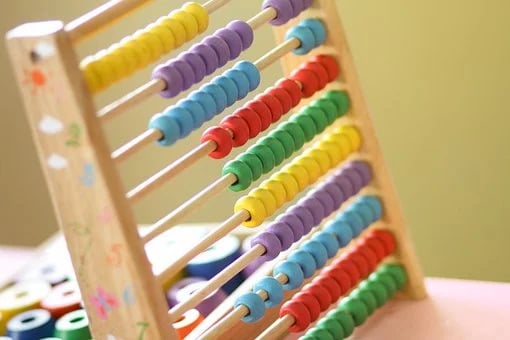
- Bead chains and bead bars (addition/subtraction and early multiplication)
- Golden Beads (place value and decimal concepts)
For hands-on examples and lesson scaffolds, see our internal guides: Exploring Montessori Materials: Essential Tools, Incorporating Math Instruction in the Montessori Classroom, and Montessori Math vs. Traditional Math: Key Differences. These articles give step-by-step sequences and sample presentations you can adapt to toddler and preschool attention spans.
How can I integrate Montessori math into daily routines and the prepared environment?
Integration is practical and low-prep. Use these classroom strategies:
- 1. Embed short math invitations on trays each day (3–10 minutes) tied to free-choice time.
- 2. Create math-friendly work cycles: rotate bead work, number matching, and sorting activities so children revisit concepts across days.
- 3. Use real classroom routines (snack counts, setting places) for one-to-one correspondence and conservation tasks.
- 4. Scaffold language — narrate comparisons, use comparative adjectives and terms such as more/less, longer/shorter, equal, and total.
- 5. Observe and record each child’s level; follow up with a targeted presentation the next day. Systematic observation informs individualized progression and supports mixed-age benefits described in our Montessori Foundations materials.
See related practice articles: Can Montessori Math Unlock a Love of Numbers? and Montessori Math: Preparing Children for Abstract Thinking and Cognitive Development for activity ideas and assessment tips.
How can I document and assess toddlers' mathematical development in a Montessori setting?
Assessment in a Montessori classroom privileges fine-grained observation and sequenced presentations over formal testing. For toddlers, short, evidence-based observations embedded in normal work cycles produce the most actionable information for individualized progression. Use a compact, repeatable routine that captures: what the child does, the context, and the immediate instructional implication.
Use this three-part process during two consecutive work cycles or routines:
- Observe with specificity: record the activity, exact behaviors, and direct quotes where possible. Note examples such as "places three counters in a line without prompting," "matches a bead to a numeral when asked," or "compares lengths of dowels and chooses the longer one consistently." These concrete descriptors reduce ambiguity when you plan the next presentation.
- Map behavior to a developmental progression: align the observation to a simple continuum—sensorial discrimination → one-to-one correspondence → symbolic mapping → emergent operations. For example, reliable one-to-one correspondence during snack routines supports the next presentation (spindle boxes or sandpaper numerals) rather than jumping straight to abstract worksheets.
- Plan a measurable follow-up: schedule a 5–10 minute targeted presentation the next day, record the child's independent response, and set a clear next-step (e.g., "counts five beads without prompting; next aim: match sandpaper numeral to quantity").
Concrete documentation need not be lengthy. A simple template—date, activity, observed behavior (quote), interpretation, next presentation—keeps notes usable across staff and over time. When teachers aggregate these mini-observations in mixed-age settings, patterns emerge that inform short invitations, small-group foci, or when to introduce place-value materials.
Sample toddler indicators you can record during observations:
- Sensorial discrimination: consistently sorts by size or length without adult modeling.
- One-to-one correspondence: places one object per container or counts snack items with one-to-one gestures.
- Symbolic mapping readiness: voluntarily matches a numeral card to a small set of objects or points to a numeral when asked to show '3'.
- Emergent operations: combines two small quantities (e.g., moving two bead bars together) and demonstrates early additive reasoning.
Share a brief, strengths-focused note or a photo at pick-up that names the observed skill and suggests a simple home activity ("count cups at snack to practice one-to-one correspondence"). This strengthens family partnerships and provides continuity between the prepared environment and home routines. Align documentation and PD goals with Georgia DECAL expectations so notes can support Quality Rated evidence and audit readiness.
Implementing this observational system increases instructional precision, supports mixed-age benefits, and keeps progression aligned with Montessori sensorial-to-symbolic ideals while raising the professionalism and readability of documentation for colleagues and families.
What Georgia licensing and training considerations should teachers follow?
Because this article names Georgia, teachers should align training with Georgia DECAL licensing and the Quality Rated standards. ChildCareEd offers Georgia-appropriate professional development and tracks DECAL/Quality Rated hours. Browse our course listings (for Georgia-approved options) at ChildCareEd online courses and confirm approval on GaPDS using ChildCareEd's sponsor code. For guidance specific to Georgia providers, see our overview of Georgia GaPDS and DECAL guidance, and explore 45-hour and topical training options in our Georgia training pages to remain audit-ready. If you need AMS-approved Montessori contact hours, see our AMS-approved listings and the short courses for assistants and classroom implementation.
Summary: What should you do tomorrow to start teaching math the Montessori way?
1. Review classroom sensorial materials and plan two 5–10 minute invitations for this week (number rods and a simple bead-bar addition). 2. Enroll in a targeted ChildCareEd class such as Implementing the Montessori Curriculum Buy Now $32.00 to connect philosophy with daily practice. 3. Use focused observation to individualize your next presentation. 4. Share one example with families at pick-up to strengthen home–school continuity. For quick activity ideas and setup photos, see The Pink Tower: A Montessori Classic and our piece on Hands-On Learning in Montessori Education.
For in-depth reading on the sensorial foundation, consult the verified reference included earlier and the ChildCareEd articles linked above. Tags — #Montessori #math #toddlers #Georgia #earlymath
- Early Mathematics Through Play
- The Montessori Classroom: Theory to Practice
- 45 Hour Preschool Methods and Materials
- 45 Hour Infant and Toddler Methods and Materials
- Pediatric RSV First Aid & CPR/AED
- CDA Bridge Bundle: Infant/Toddler without Portfolio Review
- 45-Hour Infant and Toddler Curriculum
- Texas Director Credential
