Math stories are narrative prompts or short illustrated scenarios that center on everyday problems children can solve with number sense, measurement and spatial reasoning. Try ChildCareED's first math story and pair it with hands-on exploration—for a deeper professional grounding, consider ChildCareEd courses such as No Such Thing as Boring Math  Buy Now $24.00 and Math Foundations in Early Childhood Buy Now $16.00, which model intentional play-based math instruction for preschool settings.
What are math stories and why do they matter for preschoolers?
Math stories situate quantitative problems inside familiar contexts (snack-time, block-building, or playground arrangements). They support mathematical practices described in early learning frameworks—representing quantities, comparing sets, recognizing patterns, describing shapes, and using measurement language. Because they combine language, cognition, and social problem solving, math stories promote cross-domain learning: vocabulary, executive function and emergent numeracy develop in parallel when teachers make the mathematics explicit and scaffold children’s reasoning.
How can I use a math story to teach counting, patterns, and measurement?
Place the single classroom image at the right of this paragraph to model an activity setup. 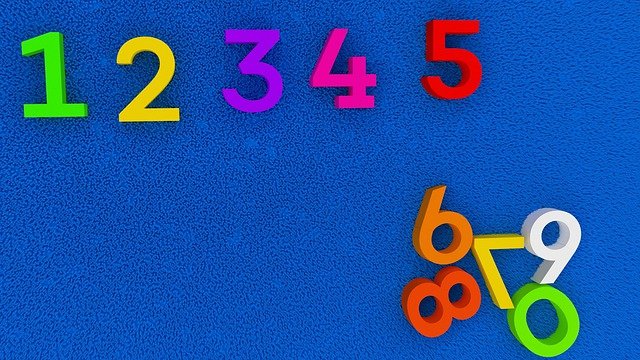
Begin by reading a short scenario that includes a quantitative challenge (e.g., "We have 5 apples and 3 friends—how many pieces can each friend get?"). Follow the read-aloud with concrete materials: counters, real snack items, measuring cups or ribbon for non-standard measurement. Use think-alouds to demonstrate strategies: subitizing, one-to-one correspondence, partitioning sets, or using a number line. Introduce pattern language (AB, AAB, ABB) through movement or bead-stringing extensions. For measurement, compare objects using vocabulary such as longer/shorter, heavier/lighter, and translate comparative language to numeric terms where appropriate.
What sample activities and adaptations can I try in my classroom?
Here are actionable, developmentally appropriate activities linked to a math story:
- Snack-share negotiation: Present a story problem and provide real snacks. Ask children to create fair shares and record results with tally marks. (Differentiation: use visual supports or photo-arranged counters for learners needing language supports.)
- Pattern zines: After a story about a parade of animals, have children fold a small zine and create repeating patterns with stamps or stickers. This pairs with the original zine-fold video resource and fosters fine motor and patterning skills.
- Measurement hunt: Turn a story about building a bridge into an indoor hunt—measure with paper clips or blocks and chart lengths. Use comparative language and have children predict before measuring.
- Shape detectives: Embed a story where characters build houses from shapes; provide tangrams and loose parts for open exploration and classification.
These activities align with strategies in ChildCareEd’s practical trainings such as Letter & Number Planning in Child Care Buy Now $24.00 and the Enhancing STEM Education for Infants and Toddlers Buy Now $16.00 course.
How do I assess learning and support diverse learners during math-story activities?
Use formative observation tools: note children’s use of number words, strategy choice (counting vs. grouping), and representational skills (drawing or using objects). Record one or two short anecdotal observations per child during the activity and use those notes to individualize next steps—extendable problems for children demonstrating strategy flexibility, or scaffolded prompts (visual models, gesture-supported counting) for emergent learners. Collaborate with families to learn home numeracy practices and adapt tasks to cultural contexts. For children with IEP/IFSP goals, align story-based tasks to measurable objectives like increasing spontaneous use of number words or demonstrating one-to-one correspondence with 80% accuracy across three observations. When implementing these practices in Michigan, be sure to align task documentation and individualized objectives with Michigan child-care licensing expectations and early-learning guidance so that observation records and measurable goals meet state requirements.
What courses and articles can help me deepen practice as an educator?
Short professional development and curated articles can deepen both content knowledge and pedagogical technique. Relevant ChildCareEd trainings include No Such Thing as Boring Math Buy Now $24.00, Math Foundations in Early Childhood Buy Now $16.00, and Letter & Number Planning in Child Care Buy Now $24.00. Pair course learning with center resources and reflective planning. See related ChildCareEd articles for practical extensions:
- How can preschool programs intentionally support early math skills every day?
- How Can Preschool Teachers Effectively Support Early Math Skills in the Classroom?
- How Can I Use Fun Math Activities for Preschoolers Every Day?
- How can classroom activities support early learning?
- How can I teach colors, shapes & numbers through play in Michigan classrooms?
- How can I plan peach-themed summer activities for preschoolers in Georgia?
Practical classroom handouts include the archived "Who can unlock the snacks?" activity (pdf) and the zine-folding demonstration; link to both remains available for teacher modeling.
What are the key takeaways?
Math stories make abstract concepts concrete when carefully sequenced with manipulatives, intentional questioning, and differentiated scaffolds. To integrate them systematically into your program, begin by identifying a single measurable objective (for example, improving one-to-one correspondence or pattern recognition), choose a short narrative prompt to foreground that objective, and prepare a small set of concrete materials and pictorial supports aligned to children’s language levels.
Use a concise formative-observation protocol during each implementation: note number vocabulary, strategy choice (counting, subitizing, grouping), representational behavior (drawing or constructing), and evidence of transfer across contexts. Collect one to two brief anecdotal notes per child per interaction, then synthesize those notes weekly to shape small-group extensions or scaffolded prompts. Over several weeks, aggregated observations will reveal whether the class needs repetition, increased complexity, or targeted scaffolding.
Adopt a simple three-step classroom cycle to sustain practice: 1) Plan—select the math story and materials and pre-identify supports for diverse learners; 2) Teach—facilitate the story with explicit math language, modeling, and turn-taking that encourages peer problem solving; 3) Assess—capture brief evidence and adjust subsequent tasks. This cycle yields usable data for individualization and for professional reflection during brief team meetings.
When operating in Michigan, align your activity documentation and individualized objectives with Michigan child-care licensing expectations and the state early-learning guidance so that assessment practices and IEP/IFSP goal alignment meet regulatory expectations. This ensures your observations and measurable goals are transportable into formal planning and family partnerships.
Practical next steps you can implement this week: create a three-week rotation of story prompts targeting different math goals; assemble differentiated material kits (photo supports, manipulatives, visual models); and schedule a 15-minute weekly reflection for staff to review observations and refine questioning techniques. For immediate classroom-ready sequences and printable story packs, consider the linked ChildCareEd courses or contact susan@ChildCareEd.com for sample materials. These concrete steps will support sustained, equitable integration of math stories and produce observable growth in emergent numeracy.
Tags: #math #numeracy #preschool #STEM #assessment
*Archived from ChildCareED's Constant Contact Newsletters [9.28.2022].
Who can unlock the snacks? (pdf) • How to Fold a Zine (YouTube video)
- 45 Hour Child Growth and Development
- Early Mathematics Through Play
- Many Colors, One Canvas: MD ECE Conference
- Setting the Stage: Story Time
- Pediatric RSV First Aid & CPR/AED
- Math Foundations in Early Childhood
- Texas Director Credential Renewal
- Texas Director Credential
- Access for All: Inclusion and the ADA
- Tiny Tots, Big Learning: Crafting Curriculums for the Littlest Learners!
- How can I plan peach-themed summer activities for preschoolers in Georgia?
- How Do Art Activities Support Cognitive Growth in North Dakota Preschoolers?
- How can classroom activities support early learning?
- National Ice Cream Day: Sweet Activities for Preschoolers
- How can North Dakota providers celebrate America’s 250th in age-appropriate ways?
- Cultural Activities for Preschoolers: Fun Ways to Learn About the World
- How can North Dakota child care providers celebrate America’s 250th in simple, respectful ways?
- How Does Guided Play Build School-Ready Skills in New York Preschoolers?
- How Can Dramatic Play Be Used to Support Learning?
- How can everyday play build number sense in young children?
- How can early childhood programs celebrate Kwanzaa respectfully and effectively?
- Bring the Pumpkin Patch Inside: Dramatic Play Ideas for Preschool
- Rosh Hashanah Kindergarten Lesson Plans: 5 Days of Apples, Kindness, and New Beginnings
- Which Printable Activities Belong in Every Preschool Classroom?
- How Can Familiar Objects Make Addition Concrete for Young Children?
- How Can Concrete Models Help Children Understand Subtraction Before Worksheets?
- How Can Providers Build Addition Understanding Before Written Problems?
- How Can Patterned Practice Help Young Children Master Subtraction Facts?
- ¿Cómo puede la retroalimentación visual apoyar la fluidez en la multiplicación?
