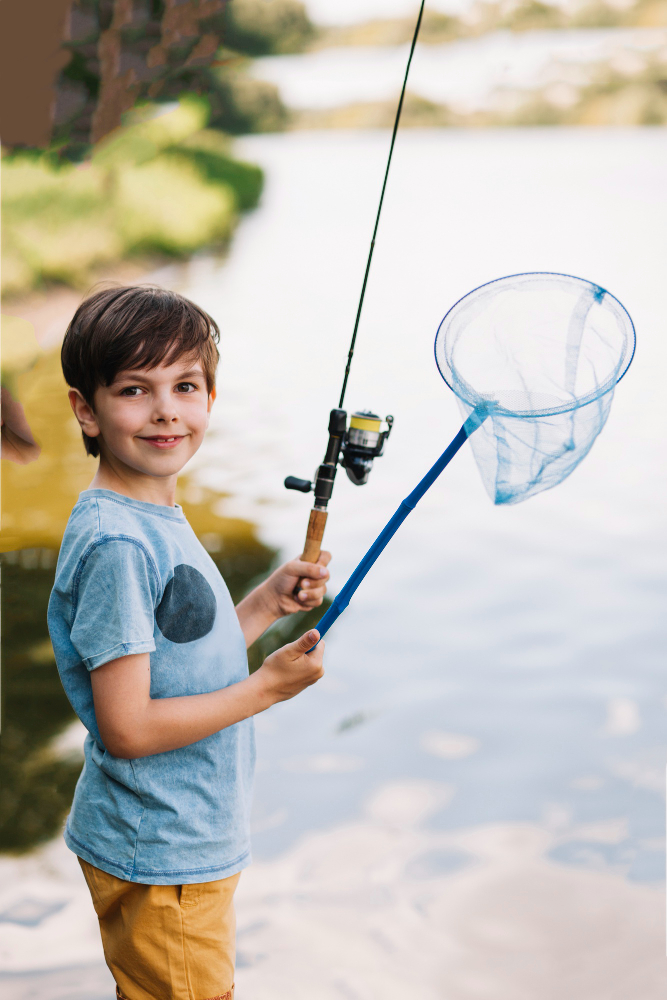
 Fishing for numbers!
Adding math to the #early_childhood classroom can be easy and fun. Playful activities can support #number_recognition, #number_sense, and #early_math as children explore quantities and numerals.
What does number recognition mean in early childhood?
Number recognition is the developing capacity to identify number words and written numerals and associate them with quantities. It is one component of early #mathematics learning; children also develop mathematical understanding by comparing quantities, identifying patterns, counting objects, and explaining their reasoning. These related competencies emerge over time through repeated, meaningful experiences rather than through a single activity. In early childhood education, the aim is to provide engaging opportunities for children to explore numbers without turning play into an assessment.
When a child sees the numeral 3, for example, an educator can connect its written form to three blocks, three claps, or three objects in a story. A child may understand one of these representations before another. Observe what the child can do, model the connection, and offer another chance to explore it later.
Why does number recognition matter for early math learning?
Number recognition contributes to a broader foundation for mathematical thinking. Connecting numerals with quantities can help children make sense of counting, compare groups, and begin exploring simple operations when they are ready. These are related skills, not guarantees of later academic outcomes; children’s development and prior experiences vary.
Educators can support confidence by noticing strategies, inviting children to explain their choices, and treating errors as information about what to model next. For more ideas about building mathematical understanding through hands-on exploration, see Mathematical Skill Development and how early math activities can build mathematical thinking.
- Pair a numeral with a small group of objects so children can see and touch the quantity.
- Use number words in everyday conversation, such as counting cups at snack or steps on a walk.
- Offer choices and questions that encourage reasoning, such as “Which group has more?”
- Provide varied materials and repeat experiences over time, allowing children to participate at their own pace.
How can educators prepare and adapt the number-fishing activity?
- Choose a stable, shallow container and prepare the activity before inviting children to participate.
- Use large, intact foam numerals and nets that are appropriate for the children’s ages and abilities.
- Begin with a small set of numerals; invite children to name a numeral or match it to a group of objects.
- Adjust the challenge by offering fewer choices, adding a matching quantity, or asking children to compare two small groups.
- Supervise actively, keep materials out of children’s mouths, and use a dry-bin alternative when water play is unsuitable.
Fishing and teaching young children number recognition both invite patience and practice. This hands-on activity gives toddlers and preschoolers an opportunity to notice numerals, name them, and connect them with quantities. Adapt the setup to the children’s ages, abilities, and supervision needs.
Materials:
Materials:
- A bucket
- Water
- 1 cup cornstarch
- Food coloring
- Foam numbers
- Small fishing or bug nets
Instructions:
- Fill a bucket ⅔ full of water
- Add 1 cup of cornstarch
- Stir until cornstarch is dissolved
- Add a few drops of food coloring
- Stir until color is mixed
- Add foam numbers
- Have children use the net to scoop up a number and ask them to tell you what number it is.
- Older children can scoop two numbers and try adding them together.
Stay close and actively supervise throughout the activity. Use materials that are appropriate for the children in your care, check foam pieces and nets for damage, and prevent children from putting materials or the mixture in their mouths. Keep the container stable and use only a shallow amount of water. Follow your program’s supervision and health-and-safety practices; if water play is not suitable for a group, use a dry bin with large numeral cards instead.
Keep the learning goal focused and attainable. For a child who is beginning to notice numerals, offer two choices and name the numeral together. For a child who recognizes several numerals, invite them to find a matching quantity of counters or blocks. Children who are ready for greater complexity can compare two small groups or explain which numeral comes before or after another. Avoid requiring every child to complete the same step; systematic observation helps educators select an appropriate next prompt.
Use open-ended prompts that make the mathematical thinking visible: “What number did you find?” “How many counters would match it?” or “How could we check?” Allow time for children to respond with words, gestures, or by arranging objects. If a child gives an unexpected answer, model the number name and count the objects together rather than correcting in a way that interrupts exploration.
You can also extend number learning beyond this activity. Count how many children are present, distribute one item to each place setting, or look for numerals on classroom labels. Invite children to notice which group has more or fewer, and connect spoken number words to objects they can move. These brief experiences help make #numeracy part of ordinary routines. See how everyday play can build number sense and ways preschool classrooms can support early math skills for additional classroom approaches.
How can educators observe and extend children’s number learning?
During play, observe whether a child identifies a numeral, names it, counts objects in sequence, and understands that the final count represents the total quantity. These observations are not a formal assessment; they inform educators’ selection of appropriate materials and prompts. When useful, document specific examples, such as “matched the numeral 2 with two counters after counting aloud.” Share observations with colleagues and families in a respectful, strengths-based manner, recognizing that children may demonstrate their understanding differently across settings.
To build on what you observe, change one feature at a time. A child who readily names numerals might match each to a small collection; a child who counts objects confidently might compare two collections. Use concrete materials first and keep practice brief and playful. For additional activity ideas, explore fun math activities for preschoolers and a preschool arithmetic activity.
How can educators close the activity and summarize the learning?
At the end, invite children to share one numeral they found and show a matching quantity with objects, fingers, or movement. Revisit the number words and numerals without expecting every child to respond in the same way. The educator can summarize the experience by naming the math connection: “We found numerals, said their names, and matched them to groups.”
Number fishing is one playful option within a broader early math environment. Pair hands-on experiences with everyday counting, comparison, and conversation; adapt materials to children’s developmental needs; and use observation to guide the next invitation to learn.
Looking for additional professional learning in early math? Explore the courses linked above for strategies related to number sense, counting, and playful mathematics.
Self-Regulation & Change: Helping Children Cope  Buy Now $16.00
For professional learning focused on early math instruction, see Math Foundations in Early Childhood Buy Now $16.00 or Early Mathematics Through Play Buy Now $24.00, which explores number sense, counting, early operations, and hands-on math experiences. Course participation supports professional development; confirm any applicable requirements with your employer or relevant agency.
- Creating Safe & Healthy Child Care Environments
- Early Mathematics Through Play
- Birth to Five CDA Credential with Portfolio Review
- Children at the Wheel: Emergent Curriculum
- 24 Hour Texas Pre-Service
- Math Foundations in Early Childhood
- Early Childhood Education
- Letter & Number Planning in Child Care
- Enhancing STEM Education for Infants and Toddlers
- Preschool Arithmetic Activity
- CDA Certification en Español: Recursos y Consejos para Educadores Bilingües
- Retraso del Habla en la Guardería: Cómo Pueden Ayudar los Proveedores
- Cómo Ser Maestra de Preescolar en Illinois
- How can we teach letters, numbers, and early literacy to young children?
- How can preschool classrooms effectively support early math skills?
- How can preschool programs intentionally support early math skills every day?
- How Can Preschool Math Become Meaningful, Playful, and Part of Every Day?
- How Do Light vs. Heavy Activities Build Early Measurement Skills?
- How Can Even vs. Odd Sorting Introduce Early Number Sense?
- How Can Child Care Providers Build Strong Early Math Skills Every Day?
- How Can Child Care Providers Create Effective Learning Centers in Small Spaces?
- How Can Hands-On Sorting Support Math and Language Together?
- How Can Early Math Activities Build Young Children’s Mathematical Thinking?
- How Can Shape Vocabulary Strengthen Early Reading Practice?
- How Can Providers Build Addition Understanding Before Written Problems?
- How Can Sorting Help Kindergarteners Understand Odd and Even Numbers?
- How Can Independent Practice Connect Numerals and Number Words?
- How Can You Make a Math Activity Work for Children at Different Skill Levels?
- What Are Simple Ways to Build Early Math Skills During Daily Classroom Routines?
