A child who names the right animal in a picture book may be reading the printed word—or using the illustration to make a clever guess. Learning to tell the difference helps you choose literacy support that builds independent reading rather than rewarding shortcuts. The ChildCareEd course Assessment of Language and Literacy Skills  Buy Now $24.00 offers further guidance on objective observation and turning what you notice into meaningful learning goals.
Why does it matter whether a child decodes or guesses?
Beginning readers naturally draw on everything available to them: pictures, familiar story patterns, conversation, and the print itself. Pictures are valuable for understanding a story and building vocabulary. The key question is whether the child is also attending to letters and connecting them with sounds when reading a word.
Decoding means using knowledge of letter-sound relationships to read a printed word. A child reading sun might identify /s/, /u/, and /n/, blend the sounds, and say “sun.” Picture guessing happens when a child relies on the illustration, the first letter, or the sentence meaning to supply a word without working through its full spelling. For example, seeing a picture of a puppy and saying “dog” when the printed word is puppy may show that the child understood the image, but not necessarily that they read the word.
This distinction matters because a child can sound fluent while still overlooking print. Massachusetts’ evidence-based early literacy guidance notes that readers who lack knowledge of letter-sound correspondences may guess from pictures or an initial letter. Observing the process—not just whether the answer seems plausible—helps educators identify what to teach next. The goal is not to discourage using pictures for meaning; it is to ensure that the written word is read from its letters.
What signs suggest a child is decoding the word?
Look for evidence that the child attends to the sequence of letters and uses known sound patterns. Decoding may be slow and effortful at first, so a pause or a sound-by-sound response is not a problem. Children often need time to apply a new skill before it becomes more automatic.
- The child looks at the printed word and moves through its letters or letter groups from left to right.
- They produce sounds that correspond to the spelling, then blend those sounds into a word.
- They can read a familiar phonics pattern in a different word, not only repeat a memorized page.
- When the word does not match what they said, they pause, reread, or correct themselves.
- They can explain or demonstrate how they arrived at the word—for example, “I saw c-a-t and blended it.”
Notice that skilled readers do not sound out every familiar word aloud. Once a word is recognized automatically, they may read it without visible effort. That is why it helps to observe a range of words, including a few unfamiliar words that use letter patterns the child has already been taught. Decoding is about using print-based knowledge, not about reading slowly forever.
Use a calm, curious tone. Rather than asking a child to prove themselves, invite them to show their thinking: “What did you notice in the word?” That question makes the child’s strategy visible and supports a positive #reading relationship.
How can educators distinguish decoding from picture guessing?
Observe the child across more than one word and setting. A single response is not enough to make a firm judgment: the child may know a word already, may be repeating a familiar story, or may use a different name for a pictured object. Combine careful listening with a brief, low-pressure opportunity to see how the child approaches print.
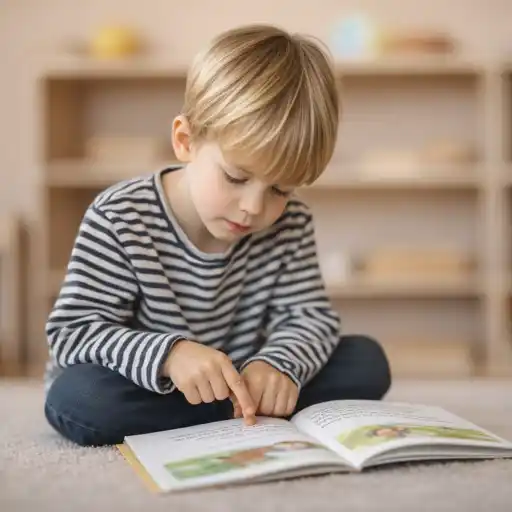
For example, during shared reading, notice whether the child looks at the text before answering, tracks print, says sounds, or responds immediately to the illustration. Then offer a word card or a short, familiar #CVC word—one with a consonant-vowel-consonant pattern—using letter patterns the child has practiced. You can also reread a sentence with the illustration temporarily covered, provided this is supportive rather than presented as a “test.” Compare the child’s approach in both conditions.
- Record what you observe: “Looked at the picture and said ‘cat’ before looking at the word.”
- Notice letter attention: Did the child check each letter, only the first letter, or none of the print?
- Listen for sound blending: Did the child connect the sounds to the printed sequence?
- Watch for transfer: Can the child use the same letter-sound pattern in a new word?
- Include comprehension: After reading, can the child tell you what happened or explain the word’s meaning?
Assessment should be instructionally useful, respectful, and appropriate to the child’s language and experience. Reading Rockets recommends using different forms of information—such as observation, student work, and conversation—to understand early reading skills. NAEYC likewise emphasizes recording observations and using them to adjust teaching. Keep notes specific and free from labels like “lazy” or “bad reader.” A child’s answer may reflect vocabulary, language experience, or familiarity with a book as well as word-reading skill.
How can you respond when a child relies on pictures?
Start with what the child can already do. A picture-based response may show strong comprehension of the illustration or familiarity with the story. Acknowledge that strength, then gently direct attention to the print: “You noticed the puppy. Let’s see what the letters say.” This validates the child’s thinking while making the reading task clear.
Use short, explicit modeling and guided practice. If a child has learned the relevant sound-letter relationships, point to each letter, model its sound, and blend the sequence. Then invite the child to try with a similar word. Massachusetts literacy guidance describes effective instruction as planned, explicit, and interactive, with opportunities to apply taught patterns in connected text.
- Prompt with “Look at the letters. What sound does this one represent?” rather than “What would make sense here?”
- Practice a small number of words that use patterns the child has already learned.
- Pair reading with building or writing words using letter tiles, sound boxes, or a whiteboard.
- Use decodable text that gives children a chance to read familiar phonics patterns in context.
- Continue read-alouds and story conversations to build vocabulary, background knowledge, and enjoyment.
Visual activities can be useful when the letters remain central. ChildCareEd’s CVC Color the Word Buy Now $0.99 resource includes picture-word challenges for practicing CVC words. Invite the child to name the picture, examine the word, say the sounds, blend them, and then check whether the decoded word matches the image. Coloring can make the activity engaging, but the child’s attention to print—not the completed coloring—is the evidence of decoding.
How should educators document progress and plan next steps?
Make observation an ongoing part of literacy teaching, not a one-time judgment. Record the date, activity, word or pattern, child’s response, and any prompt you gave. A concise note might say: “During word-card practice, Maya read map by saying each sound and blending; she named mop from the picture before checking the middle vowel.” This gives you more actionable information than “Maya struggles with reading.”
Review notes over time. Is the child beginning to attend to all letters? Are they blending sounds with less support? Do they decode in a card activity but rely on pictures in a book? These patterns help you select a next step: review a sound, offer additional guided practice, or provide opportunities to apply the skill in simple connected text. Early reading assessment can help educators identify skills to revisit, monitor progress, and guide instruction.
Invite families into the conversation with concrete, strengths-based examples. Share what the child enjoys, what you have observed, and how you are supporting the next skill. If concerns persist despite appropriate instruction and practice, consult your program’s established processes and collaborate with the family and relevant specialists. Do not diagnose a reading disability from picture guessing alone. State requirements vary - check your state licensing agency.
For professional learning on assessing early literacy, explore ChildCareEd’s Assessment of Language and Literacy Skills Buy Now $24.00. The course focuses on objective observations, assessment approaches, and using information to develop meaningful learning goals.
What common pitfalls should providers avoid?
It is easy to mistake a convincing response for evidence that a child read the word. Children are perceptive: they may remember repeated text, infer from a picture, or use sentence context. Those are meaningful comprehension behaviors, but they do not by themselves show decoding. The most reliable approach is to notice the child’s process across multiple opportunities and respond with instruction rather than a label.
- Don’t treat a correct guess as proof of decoding. Ask how the child used the print and observe another example.
- Don’t treat every error as a failure. Self-correction and trying again are valuable learning behaviors.
- Don’t remove pictures from all reading. Illustrations support meaning and engagement; use picture-free practice selectively to observe print skills.
- Don’t move ahead before checking the foundation. If the child cannot yet connect the relevant letters and sounds, teach and practice those skills first.
- Don’t rely only on worksheets. Include oral sound play, letter manipulation, writing, books, and conversation.
- Don’t assume a picture has only one familiar name. Clarify vocabulary respectfully and account for children’s home-language experiences.
A supportive classroom makes mistakes safe and strategy use visible. Praise the process specifically: “You checked the middle letter and blended the sounds.” That feedback tells the child what to repeat and helps maintain a sense of competence as reading grows.
Conclusion: How can you tell whether a beginning reader is decoding or guessing?
To tell whether a beginning reader is decoding or guessing from pictures, observe how they approach the printed word. Decoding draws on letter-sound knowledge and blending; picture guessing relies primarily on the illustration, a familiar pattern, or partial print. Neither one response nor reading speed tells the whole story—look across words, activities, and time.
Use objective notes to guide the next teaching move. Model the sounds, offer practice with known patterns, and provide opportunities to read those patterns in words and connected text. Keep pictures as a helpful source of meaning, while making clear that the letters tell the word. With responsive observation and warm, explicit support, educators can help young readers build confidence and increasingly independent #decoding.
- CDA Certification en Español: Recursos y Consejos para Educadores Bilingües
- 🤔 ¿Cómo hablo con los padres cuando un niño no está avanzando en el entrenamiento para ir al baño?
- Requisitos Para Ser Maestra Principal En Un Daycare: Lo Que Necesitas Para Empezar
- Celebra El Cumpleaños de Dr. Seuss En Tu Guardería Con Actividades Fáciles y Divertidas!
- ¿Qué Se Necesita para Comenzar una Guardería en Casa en Texas?
- Que es Título 22 en California?
- Regulaciones de Licenciamiento de Cuidado Infantil en California para Centros y Hogares de Cuidado Infantil Familiar
- Why Do Predictable Books Help Preschoolers Feel Like Readers?
- Why Do Simple Books Build Early Reading Confidence?
- How Can Child Care Providers Teach Beginning Sounds with Tracing, Pictures, and Repetition?
- How Can Picture and Color Cues Help Children Decode CVC Words?
- How Can Animal Words Strengthen CVC Decoding?
- How Can Predictable Ocean-Themed Text Build Reading Confidence?
- How Can Repetitive Early Readers Help Children Learn Color Words?
- How Can Transportation Interests Motivate Beginning Readers?
- How Can Healthy-Food Vocabulary Help Preschoolers Begin Reading?
- How Can You Help a Beginning Reader Say More Than the Sentence on the Page?
- How Can You Recover Smoothly When You Lose Your Place During a Read-Aloud?
- A Child Has Memorized the Book: What Can You Teach Next?
- Is a Beginning Reader Decoding or Guessing from Pictures?
