A missed match in a preschool literacy game offers a chance to help, but repeated corrections can interrupt play and discourage participation. Try Bingo Cards – Farm Animals Edition Buy Now $1.99 as a relaxed opportunity to name animals, listen, and match pictures, offering a brief model or gentle prompt when needed. Notice whether your feedback helps the child stay involved, and allow time to try again. For practical ways to support early literacy through engaging play, explore Play Safe, Think Big: Literacy Through Play  Buy Now $10.00. For a broader foundation, consider Science of Reading Foundations in the Pre-K Classroom Buy Now $16.00. Read on for ways to balance useful feedback with enjoyment and confidence.
Why does the balance between correction and encouragement matter?
Preschool literacy games work best when children feel free to listen, make a guess, and try again. An educator’s guidance can focus attention on sounds, letters, vocabulary, or print. But frequent interruptions may shift a child’s attention from discovering and communicating to avoiding mistakes. The aim is not to eliminate teaching; it is to make teaching responsive enough that children remain interested and willing to take risks.
Play creates meaningful reasons to talk and listen. During a picture-matching game, for instance, a child might hear an animal’s name, scan the cards, choose a picture, and explain what they noticed. The design of the activity matters, as do the adult’s tone, pacing, and response when a child’s answer does not match. Errors can provide useful information about what a child understands and what support may help next.
A practical question to ask yourself is: does this prompt help the child think or communicate, or does it simply show that I know the answer? Encouragement does not mean praising every action indiscriminately. It means noticing effort, building on children’s ideas, and offering enough support to move learning forward while preserving children’s agency and enjoyment.
- Keep the learning goal clear while allowing children room to explore.
- Use a mistake as information about possible next steps, not as a reason to judge.
- Protect the curiosity, connection, and shared pleasure that make the game worthwhile.
What signs suggest correction has become too much?
There is no universal number of corrections that fits every child or activity. Instead, observe the interaction. A child may stop responding, wait for adult approval before each move, withdraw from the game, or become upset after repeated corrections. Others may keep playing but take fewer independent turns or contribute less language. These signs do not prove that a particular prompt caused distress, but they are useful cues to pause and reconsider how much support is needed.
Correction may be crowding out participation when an adult interrupts every attempt to refine pronunciation, insists on one exact response, or supplies the answer before the child has time to think. A partial response may still show understanding. For example, a child who points to a picture after hearing its name may demonstrate receptive knowledge even if they are not yet ready to say the word independently.
Consider whether an error matters to the immediate learning goal. If children are listening for animal names, a minor pronunciation difference may not need interruption. If the focus is matching a beginning sound, a short, warm cue may be helpful. Developmentally appropriate teaching practices emphasize responsive, positive experiences that foster children’s interest and enjoyment as skills develop at different rates.
- Notice whether children remain curious and willing to take a turn.
- Ask whether your response adds useful information or merely repeats “no.”
- Look for patterns across experiences rather than drawing conclusions from one game.
How can you guide learning without taking over?
Begin with a clear, brief prompt, then wait. Children need time to process language, scan the board, and make a choice. If a child is unsure, offer a hint or a choice instead of immediately giving the answer. For example: “You’re looking for the animal that says ‘moo.’ Which picture could it be?” This keeps the child in the role of active player and gives them an opportunity to reason.
When a child makes a mismatch, acknowledge the attempt and invite another look: “You chose the horse. Let’s listen again: I said ‘cow.’ Which picture shows the cow?” If the child still needs support, model the answer briefly, then return the next turn to them. You can also recast the response: “That is a horse. You found the animal with the long mane.” A recast confirms meaning and adds language without a harsh interruption.
Choose questions that open space for children’s thinking: “What did you notice?” or “What helped you decide?” The research on teacher scaffolding during shared book reading describes how support can respond to children’s answers; strategies such as recasts may also enrich language interactions. One thoughtful question is often more useful than a rapid sequence that makes play feel like an oral quiz.
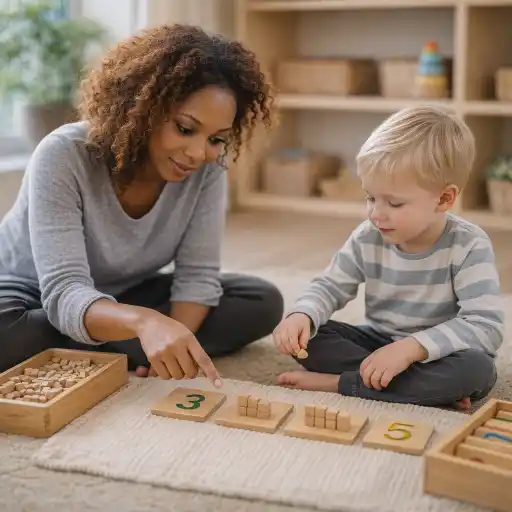
- Try: “You’re close. Let’s look at the pictures together.”
- Try: “I heard you say ‘sheep.’ What does the sheep look like?”
- Try: “Would you like a clue, or would you like a little more time?”
- 🧩 Celebrate noticing, persistence, and careful listening—not only correct answers.
How can you keep the game joyful and inclusive?
Make participation flexible. Children can answer by speaking, pointing, touching a picture, signing, using eye gaze, or communicating with an AAC tool. Varied response modes do not lower the literacy goal; they give more children a way to show what they understand. Pair spoken directions with clear images, gestures, or real objects, especially when children are learning more than one language or benefit from visual support.
Consider the group size and pace. A small group, fewer picture choices, larger markers, and uncluttered boards can make matching more accessible. Keep rounds short enough to hold interest. If competition creates pressure, try a cooperative goal, such as completing one shared board. Include familiar words from children’s lives and, when possible, invite family contributions or words from children’s home languages. NAEYC’s discussion of word play and phonological awareness highlights how playful language experiences can be woven into daily routines and made responsive to children’s cultural and linguistic contexts.
Enjoyment is not separate from literacy learning. A warm, predictable game can encourage children to listen, communicate, and return to a new word or idea. Preview the routine—listen, find, mark, and wait—so children know what to expect, and maintain active supervision throughout play.
- Offer a partner or shared board when individual turns feel demanding.
- Invite children to call clues or choose the next picture.
- Use images, gestures, familiar objects, and different communication methods.
How can you choose the right amount of support in the moment?
Think of guidance as a ladder: start with the least intrusive support likely to help, and add more only if needed. First observe. Then allow wait time. If the child remains unsure, repeat or simplify the clue, add a gesture or visual cue, offer two choices, and finally model the response. This sequence keeps the child engaged as a thinker rather than turning the adult into the game’s answer key.
Match your prompt to the learning goal. If the goal is vocabulary, name the picture and invite children to repeat, point, sign, or describe it. If the goal is listening comprehension, offer a simple clue and time to connect it with an image. If the child is already succeeding, extend the challenge: “What else do you know about that animal?” or “Can you make a clue for us?” Guidance should respond to what children show, not follow a script regardless of their engagement.
Afterward, make brief, objective notes about what the child heard, did, and what support helped. For example: “Matched cow from the spoken name; matched sheep after a repeated clue and a picture choice.” That is more useful than a label such as “good listener” or “not ready.” As you plan training or professional development, remember: state requirements vary - check your state licensing agency.
- Observe before stepping in.
- Use the smallest helpful prompt, then return the turn to the child.
- Adjust future play based on patterns across experiences, not one response.
How can you tell whether learning and play are both happening?
Look for signs of learning alongside signs of engagement. Children may recognize familiar words, attend to spoken cues, describe a picture, ask for a turn, or help a peer. They may also laugh at a silly clue, make animal sounds, or suggest a new rule. Purposeful instruction and playfulness can coexist; a literacy game does not need to be either free play or a formal lesson.
Extend learning through related experiences rather than turning one game into a prolonged drill. After animal bingo, read a picture book about the animals, add toy animals to dramatic play, invite children to draw a favorite, or revisit key words during conversation. The playful, literacy-rich preschool environment offers meaningful opportunities to connect reading, writing, speaking, and listening to children’s interests.
For practical professional learning on emerging literacy and supervision during play, explore Play Safe, Think Big: Literacy Through Play Buy Now $10.00. You may also consider Language and Literacy Foundations in Pre-K Buy Now $16.00, Reading Aloud and Storytelling Buy Now $16.00, and Assessment of Language and Literacy Skills Buy Now $24.00 for additional learning related to literacy practice. Confirm with your licensing agency whether any course meets a specific professional-development requirement.
Conclusion: How much correction is too much?
Correction is too much when it begins to reduce a child’s willingness to participate, explore, or communicate. Keep feedback brief, kind, and connected to the game’s learning goal. Allow wait time, offer the smallest helpful cue, and return the turn to the child. Flexible ways to respond, inclusive materials, and objective observation help you support children without making play feel like a test.
The central question is not how many corrections a child can receive, but whether your guidance is helping them think while preserving curiosity and connection. When children can make a guess, receive a warm prompt, and try again, a missed match can become a useful step in learning.
References for further reading:
- 45 Hour Child Growth and Development
- Student Success: Expectations & Independence
- 45 Hour Preschool Methods and Materials
- CDA Bridge Bundle: Family Child Care without Portfolio Review
- CDA Bridge Bundle: Infant/Toddler without Portfolio Review
- CDA Bridge Bundle: Preschool without Portfolio Review
- Building Vocabulary
- Letter & Number Planning in Child Care
- Supporting Families and Caregivers in Language and Literacy
- CDA Certification en Español: Recursos y Consejos para Educadores Bilingües
- ❄️ ¿Qué actividades al aire libre funcionan bien para los niños de Illinois en cada estación? 🌷🍂
- Requisitos Para Ser Maestra Principal En Un Daycare: Lo Que Necesitas Para Empezar
- Physical Activity Tips for Kids of Different Ages
- Cómo ser director de cuidado infantil en Maryland
- Que es Título 22 en California?
- ¿Cuál es la diferencia entre un certificado CDA y la credencial CDA?
- ¿Cómo pueden los equipos de cuidado infantil practicar habilidades rápidas de primeros auxilios en situaciones reales?
- Actividades de Motricidad Gruesa que Desarrollan el Equilibrio, la Coordinación y la Fuerza
- ¿Cómo solicito la licencia para una guardería en California?
- Regulaciones de Licenciamiento de Cuidado Infantil en California para Centros y Hogares de Cuidado Infantil Familiar
- Consejos de Supervisión Activa para Salones de Preescolar y el Juego al Aire Libre
- Cómo Trabajar en el Cuidado Infantil en California: Requisitos y Pasos
- Cómo Ser Maestra de Preescolar en Illinois
- Cómo Ser Maestra de Preescolar en Wisconsin
- Cómo Ser Maestra de Preescolar en California
- Cómo Ser Maestra de Preescolar en Maryland
- Canciones, juegos y preguntas de círculo para niños
- How Much Correction Is Too Much During a Preschool Literacy Game?
- How Much Correction Is Too Much During a Preschool Literacy Game?
