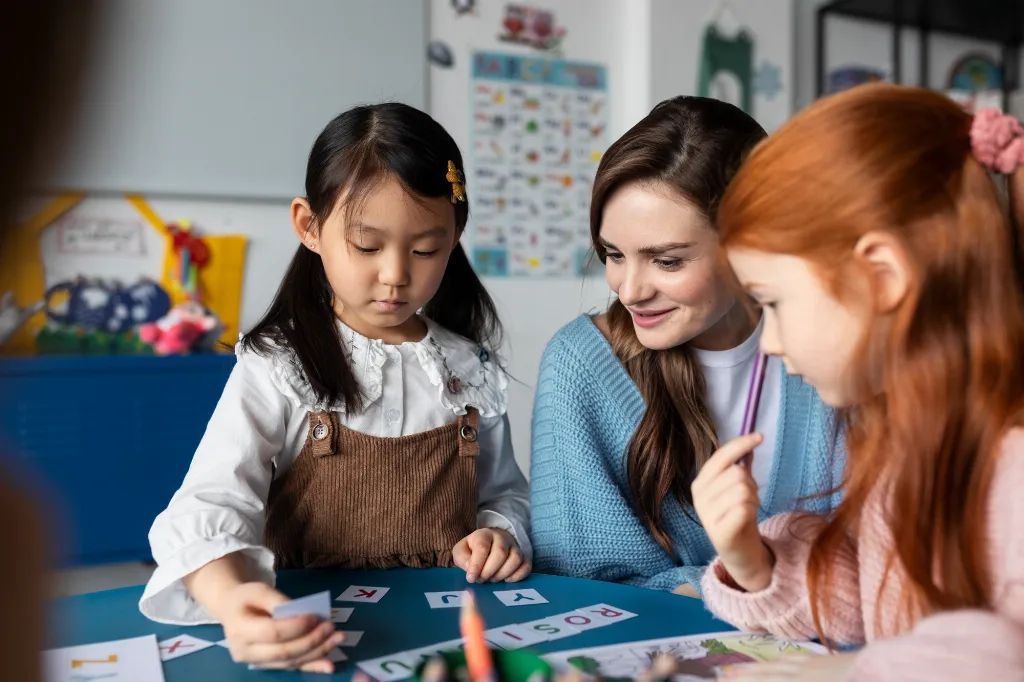
 Young children grow fast. Teachers help them learn to name feelings, make friends, solve problems, and think clearly. This article shows simple, practical ways teachers and directors can support the whole child — social, emotional, and cognitive skills. You will find steps to try tomorrow, links to classroom tools, and ideas for working with families.
How do teachers build positive relationships that help learning?
Children learn best when they feel safe and loved. Teachers make that safety by building steady, kind relationships every day. Research shows that warm, one-on-one moments and calm, respectful talk help children trust adults and try new challenges.
- 😊 Greet children by name every day. A quick hello builds trust.
- Get down to a child’s level for face-to-face talk. This shows you are listening.
- Use a calm voice and short words. Describe feelings: “You look sad.”
- Offer warm, safe touch when it fits the child (pat on the back, hand on shoulder).
- Celebrate small wins. Say exactly what the child did well: “You waited your turn — great!”
What classroom routines and tools teach emotions and thinking?
Routines and simple tools teach children to name feelings, calm down, and solve problems. Put strategies where kids can see them and practice often. ChildCareEd offers ready-to-use materials that fit this work, like calm-down strategy cards (Calm Down Strategy Cards Buy Now $0.00) and emotion books (My Book of Emotions Buy Now $0.00).
- 📚 Read feelings books every week. Pause and ask, “How do you think they feel?”
- 🧭 Use an emotion chart or faces and name emotions as they happen.
- 🧘 Teach 2–3 calming moves (deep breaths, counting, squeeze a toy) and practice them daily.
- 🔁 Keep routines simple and predictable: arrival, circle, snack, play, goodbye.
- 📝 Use short scripted stories or role-play to practice tough moments (sharing, waiting).
For classroom examples and lessons you can use, explore How Can We Support Social-Emotional Learning in Early Childhood?.
How can teachers use play and choice to boost social, emotional, and cognitive growth?
Play is central to learning. Through pretend play children practice thinking, language, and taking another person’s view. Studies show pretend play supports memory, problem solving, and social skills. See the research summary on pretend play and cognition: The Role of Pretend Play.
- 🎭 Offer rich pretend play areas (kitchen, shop, doctor) and rotate props.
- 🧩 Ask open questions during play: “What will happen next?” “How will you solve this?”
- ✨ Teach choice-making. Give simple choices during activities to increase engagement (CSEFEL shows how: Choice-Making Strategy).
- 🎲 Use games that teach turn-taking and rules to practice self-control and fairness.
- 🔧 Add materials that encourage problem solving: blocks, sand, water, simple tools.
How to try this tomorrow:
1) Put 2 new props in the dramatic play area. 2) Offer each child a choice: red or blue paper. 3) During play, ask one open question per child. These small moves build big gains in thinking and social skills. For more classroom play ideas, see Supporting Whole-Child Development and Supporting Cognitive Development resources.
When should teachers screen, get help, or use trauma-informed care?
Some children need extra support. Screening and partnerships help teachers know when to act. Use trusted screening guides and work with families and mental health consultants. The ECMHC screening guide and CECMHC tools list good screening choices: Finding Social Emotional Screening Tools.
For educators seeking deeper, credential-focused guidance on trauma-informed classroom practices, read how the CDA Credential equips educators to support children through trauma and foster emotional resilience, which outlines practical strategies you can use with children and families.
- 🩺 Screen when you see ongoing worries: frequent extreme anger, long withdrawal, or trouble with daily tasks.
- 🛟 Use trauma-informed practices if a child has experienced loss, violence, or big stress. ChildCareEd explains steps in Implementing Trauma-Informed Care.
- 🤝 Partner with families: share observations, ask about home routines, and plan next steps together.
- 📞 Connect with specialists: mental health consultants, early intervention, or a pediatrician when screening suggests more help.
- ⚖️ Remember: state requirements vary - check your state licensing agency and local policies.
Common mistakes and how to avoid them:
- ❌ Only react to behavior. ✔️ Teach the missing skill and practice it.
- ❌ One-time training then stop. ✔️ Use ongoing coaching and peer check-ins (research shows coaching helps teachers keep practices going).
- ❌ Not involving families. ✔️ Share small tips families can use at home and listen to family strengths.
For system supports like the Pyramid Model and community partnerships, see the National Center for Pyramid Model Innovations: NCPMI and ChildCareEd trauma resources.
Conclusion
Teachers and directors do powerful work every day. Small, steady actions — warm greetings, simple routines, play, choice, and teamwork with families — grow a child’s ability to feel, relate, and think. Use free tools from ChildCareEd (calm-down cards, lesson plans, and printable activities) to make these ideas easy to try.
Quick next steps:
- 😊 Add a 2-minute morning check-in each day.
- 📚 Read one feelings book this week and ask a feelings question.
- 🧘 Teach one calming strategy and practice it daily.
- 🤝 Send one short note to a family with a strength you saw today.
Want more? ChildCareEd offers courses and free resources to help your team build strong #relationships and better #SEL practice: SEL supports and Growing the Whole Child.
- Watch Me Grow: School Age Development ONLINE
- CDA Home Visitor Subject Area 3 Part 3 Birth to 5
- CDA Home Visitor Subject Area 2 Part 3 Birth to 5
- CDA Bridge Bundle: Family Child Care without Portfolio Review
- Healing Young Hearts: Stress and Grief
- Are They Ready for Kindergarten?
- CDA Bridge Bundle: Infant/Toddler without Portfolio Review
- CDA Bridge Bundle: Preschool without Portfolio Review
- The Right Kind of Influence for Young Children
- Growing the Whole Child: Health, Emotions & Early Learning
- Bye Bye Winter: The Role of Outdoor Play in Early Childhood Development
- The Montessori Advantage in Early Childhood
- Supporting Social Relationships Among Young Children
- The Family Day Care Chronicles: Tales of Laughter, Learning, and Unexpected Adventures
- Tiny Hands, Big Dreams: Fostering Creativity in Preschoolers
- Exploring the Cognitive Benefits of Movement in Early Childhood Classrooms
- Hungry for Play: The Power of Play-Based Learning in Early Education
- CDA Certification en Español: Recursos y Consejos para Educadores Bilingües
- 🔍 ¿Qué ves cuando observas a un niño aprender?
- Celebrando la amistad en el cuidado infantil durante el Día de los Mejores Amigos
- How Teachers Help Children Develop Social, Emotional, and Cognitive Skills
