A project left unfinished is not necessarily a project a child has lost interest in; sometimes children need time, a welcoming invitation, or a fresh way into their ideas. The Creating Engaging and Meaningful Learning Experiences  Buy Now $55.00 course offers practical strategies for planning responsive, choice-rich experiences and adapting materials, helping you make children’s return to meaningful play a natural part of classroom practice.
Why is returning to yesterday’s project worth supporting?
A child who walks away from a structure, painting, or investigation may be responding to a transition, fatigue, frustration, a peer’s needs, or simply the rhythm of the day. Leaving is not automatically a sign of failure or disinterest. When educators preserve the possibility of returning, children can experience learning as an unfolding process rather than a task that must be finished on an adult’s schedule.
Revisiting work can help children remember their intentions, notice changes, reconsider a strategy, and communicate how their thinking has developed. The Southern Illinois University Edwardsville Early Childhood Center notes that documentation can help children revisit earlier thinking and reflect on learning over time. In developmentally appropriate practice, educators also provide time, materials, and meaningful choices that allow children to re-engage with an experience. This strengthens #agency and recognizes children as active participants in their learning.
For providers, the goal is not to make every project last longer. It is to notice when a child’s unfinished work still holds meaning and make a genuine opportunity to pick it up again. That responsive stance validates effort, supports persistence, and helps educators understand what children are trying to figure out.
How can you preserve a project without pressuring a child?
Before cleanup, observe and ask whether the child wants to save the work. A child may want a photograph, a labeled tray, or a specific shelf; another may be ready to let the project go. Respecting that choice communicates that the child owns the work and its timeline.
- Set aside a clearly marked, accessible “work in progress” space, following program safety and supervision practices.
- Use a tray, bin, or board to keep loose materials together and prevent accidental disruption.
- Take a photograph of a large construction or a project that cannot remain in place.
- Record the child’s words about the plan or next step, with the child’s permission.
- Make saved work easy for the child to find and retrieve independently.
Some projects involve shared materials or limited classroom space. Explain the practical boundary warmly: “We need this table for lunch. Would you like me to save your drawing, or take a picture of your road so you can build it again tomorrow?” A concise note or photograph can preserve continuity without promising that a fragile structure will remain untouched. Keep the saved project visible or otherwise accessible; a project placed out of sight may be difficult to remember or revisit.
Use documentation to honor the process, not to create pressure to finish. The child may return with a new idea, change the plan, or decide the project is complete. Each of those choices is a valid part of learning.
What should you say when inviting a child back?
A gentle, open-ended invitation reconnects a child with the project while leaving the decision in the child’s hands. NAEYC’s guidance on conversations with children recommends questions that encourage children to describe, analyze, and create. Rather than directing the child toward an expected result, refer to what the child actually did and make room for their perspective.
- “Yesterday you were making a home for the animals. Would you like to look at it again?”
- “I saved your picture. What do you notice when you see it today?”
- “You were trying different ways to keep the tower standing. What might you want to try now?”
- “Would you like to continue, change the plan, or leave it for another time?”
Then pause. A child may respond verbally, point, move toward the materials, or show no interest. Accept the response without repeated prompting. If the child is not ready, let them know the work will be available when possible and return attention to the child’s current play.
💬 Try this: “I remember you had an idea about the bridge. I’m curious whether you want to work on it today.” This acknowledges the child’s thinking without implying that the project must be completed. Open-ended questions can also extend reflection: “What changed?” or “What could happen if we tried a different piece?” Match the language to each child’s communication style, home language, and developmental needs.
How can the classroom environment make returning easier?
Children are more likely to revisit a project when the environment makes materials and progress visible, accessible, and manageable. NAEYC’s developmentally appropriate practice guidance supports planned environments with child choice, accessible materials, and extended time for investigation and play. A dedicated project area can protect in-progress work while allowing children to return without needing an adult to reconstruct the setup.
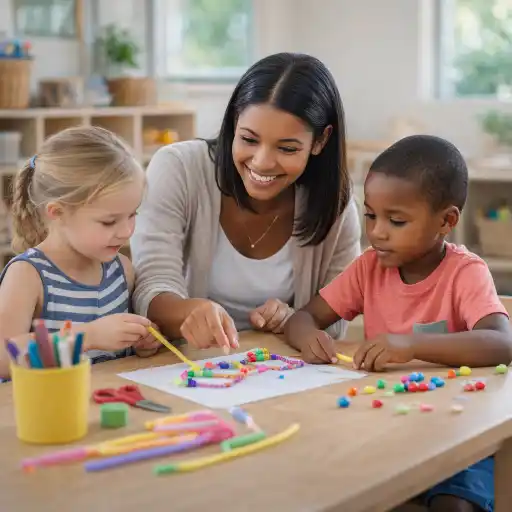
Consider small, practical adjustments:
- Place saved projects at children’s eye level, with a photograph or the child’s name or symbol.
- Store related materials nearby in labeled containers, including images or picture labels where useful.
- Keep a brief visual record showing the project’s previous stage or the child’s stated next step.
- Allow enough uninterrupted play time for children to reconnect and become involved again.
- Offer alternate ways to continue—drawing a plan, dictating an idea, rebuilding, or inviting a peer.
For example, if a child has been constructing a neighborhood, keep the blocks, small figures, paper, and road materials in one accessible area. A photograph can remind the child where the investigation left off, while the child remains free to change the neighborhood entirely. This kind of flexible setup supports participation for children with different abilities, language strengths, and sensory preferences.
Predictable classroom routines help too. Let children know when saved work can be revisited, while avoiding promises that cannot be kept. #choice and access matter more than a polished display: the classroom should invite children to resume their thinking, not require them to reproduce yesterday’s work exactly.
How can you tell whether a child wants to continue?
Careful observation helps educators distinguish a genuine invitation to return from adult hopes for project completion. Watch what happens when the child sees the saved work or hears a brief reminder. Does the child move closer, look carefully, add an idea, or ask for materials? Or do they turn away and engage elsewhere? These observations are information, not a test of motivation.
Record brief, objective details: what was saved, what the child said or did, the support offered, and the child’s response. Avoid labels such as “gave up” or “won’t finish.” A note such as “Looked at the photo, said ‘I want more windows,’ and collected blocks” gives the teaching team useful evidence. Documentation can also help adults notice patterns: a child may return when working with a particular peer, using certain materials, or having more time.
When returning seems difficult, consider whether the project needs a change in access or support:
- Was the next step unclear, too challenging, or dependent on a material that is unavailable?
- Would a smaller group, a peer partner, a model of a technique, or adaptive tools help?
- Could the child explain the plan through drawing, gesture, home language, or assistive communication?
- Does the child still care about the question, or has their interest moved elsewhere?
Offer “just enough” assistance, then leave space for the child to act. If interest has shifted, accept that information and use it to guide future planning. A project’s value is not measured only by whether it is completed; it may also be visible in the questions, experimentation, and relationships formed along the way.
What common pitfalls should educators avoid?
Adults often want to protect children’s work and encourage persistence, but well-meaning support can become pressure. A child’s unfinished project is not a promise to finish, and a saved structure should not become a demand to continue. Keep invitations warm and optional, and let children revise, transform, or abandon ideas as their interests develop.
- Avoid assuming abandonment means disinterest. Look for context, including transitions, fatigue, frustration, and access to materials.
- Avoid asking the same question repeatedly. Ask once, allow processing time, and respect the answer.
- Avoid completing or repairing the project for the child. Offer a strategy or tool and let the child decide what to do.
- Avoid treating documentation as a promise of permanent storage. Explain space and safety limits and offer realistic alternatives.
- Avoid assuming every child will communicate interest verbally. Notice gestures, gaze, movement, play choices, and other communication.
Directors can support consistent practice by helping teams agree on safe storage routines, accessible work-in-progress spaces, and simple documentation methods. Reflect together on whether children have real opportunities to choose what happens next. #reflection turns an everyday classroom moment into a useful planning conversation.
If a child’s return to a project raises broader questions about participation or access, collaborate respectfully with the family and, when appropriate, relevant specialists. Adaptations should support inclusion and the child’s own goals, not impose a single definition of persistence. State requirements vary - check your state licensing agency when setting policies for supervision, materials, and classroom spaces.
Conclusion: How can you help a child return to yesterday’s project?
Help a child return by preserving their work when feasible, making materials easy to access, offering a low-pressure invitation, and listening to the response. Use photographs, brief notes, and children’s own words to make earlier thinking visible, then give the child genuine freedom to continue, change direction, or move on.
The central goal is not to ensure that every abandoned project gets finished. It is to create a classroom where children’s ideas remain welcome and where time, relationships, and flexible environments support re-engagement. When providers observe without judgment and scaffold without taking over, a project from yesterday can become a meaningful new beginning today.
Related professional learning:
- Children at the Wheel: Emergent Curriculum
- Pediatric RSV First Aid & CPR/AED
- Art from the Heart for Preschoolers: Open Ended Art Projects that Build Self-Esteem
- Key Elements of an After School Program
- Creating Environments that Nurture Growth and Community
- Project-Based Learning for Children
- Texas Director Credential
- Wellness in Action: Teaching Healthy Habits to Children
- CDA Certification en Español: Recursos y Consejos para Educadores Bilingües
- 💛🧩 ¿Cómo puedo hacer que mi enseñanza sea inclusiva para los niños con autismo?
- 🚨 Reporte Obligatorio en Nevada
- ¿Cómo empiezo mi certificación CDA en Florida en línea?
- 10 Ejemplos de Cómo la Cultura Influye en el Desarrollo Infantil
- Proporciones de Cuidado Infantil y Tamaños de Grupo por Edad en Nueva Jersey (Guía Rápida para Centros y Hogares)
- Proporciones de Cuidado Infantil y Tamaños de Grupo por Edad en Virginia (Guía Rápida para Centros y Hogares)
- Cómo Celebrar el Día Nacional del Kindergarten
- Lista para Guardería en Casa en Illinois: Cómo Iniciar una Guardería en el Hogar
- Consejos de Supervisión Activa para Salones de Preescolar y el Juego al Aire Libre
- Cómo Trabajar en el Cuidado Infantil en Carolina del Norte: Requisitos y Pasos
- Capacitación Previa al Servicio para Proveedores de Cuidado Infantil en Dakota del Norte
- Celebrando la amistad en el cuidado infantil durante el Día de los Mejores Amigos
- Canciones, juegos y preguntas de círculo para niños
- Cómo simplificar la capacitación para sus empleados de daycare
- “Save My Work!” How Can Child Care Providers Protect Unfinished Projects Between Days?
- How Can You Help Children Return to a Project They Abandoned Yesterday?
- How Can You Help Children Revisit a Building Project Over Several Days?
- Where Did Our Shadows Go on a Cloudy Day—and How Can We Revisit Yesterday’s Prediction?
- How Can Child Care Providers Turn Everyday Weather Observations Into Learning Opportunities?
