Preschool teachers and directors can introduce small, meaningful goals—sometimes called “resolutions”—to help young children strengthen self-help abilities, social routines, emotional regulation, and growing independence. Goals should be concrete, achievable, and connected to familiar experiences, such as putting away materials, trying a calming strategy, taking turns, or completing one step of a daily routine independently. Using visuals, modeling, encouragement, and opportunities to practice through play allows children to experience quick successes while gradually building confidence and persistence. This article offers practical ways to involve preschoolers in choosing goals, track progress without pressure, and celebrate effort rather than perfection.
To strengthen your approach, explore ChildCareEd’s self-paced online course Observations and Goal Setting in Childcare  Buy Now $24.00. This training helps educators use observations to identify children’s individual needs and establish meaningful developmental goals that support their continued progress. Educators can apply these strategies by embedding simple goals into classroom routines, play experiences, and daily lessons while providing the encouragement and support each child needs. State requirements vary, so always check with your state licensing agency.
Why it matters:
1) Small, scaffolded goals build confidence and executive skills that support later school success; research and practice resources are summarized in the Early Learning Fact Sheet Buy Now $0.00.
2) When goals are visual and social, children learn persistence and social problem-solving faster—two key social‑emotional competencies covered in our behavior and social skills posts at ChildCareEd.
Throughout this article, you will see five words we return to often: #preschoolers #goals #routine #families #growth. Use the checklists and scripts below as starting points you can adapt to your group, culture, and licensing rules.
1) How do I explain the idea of a 'resolution' to young children?
Practical steps (use with circle time or transition moments):
- 😊 Name it simply: 'A promise to practice.'
- 🧩 Show it visually: picture card or sticker chart from ChildCareEd activity resources Buy Now $0.00.
- 🎭 Act it out: a 1–2 minute puppet scene demonstrating success and a small setback.
- 🔁 Repeat: embed the short script into daily routines so it becomes familiar language.
Citation: For classroom framing and examples, see Small Resolutions for Small People.
2) What kinds of goals are developmentally appropriate?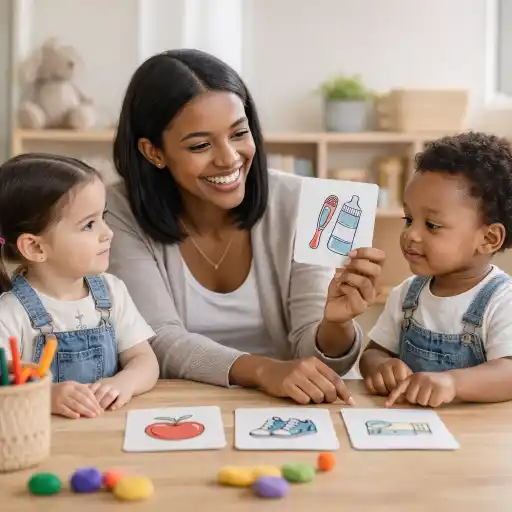
Choose goals that are:
- Short-term (daily or weekly).
- Observable (can be seen or shown with a picture or sticker).
- Teachable with a script or routine.
Examples teachers use successfully:
- 😀 'I will put my cup in the sink.'
- 🟢 'I will use my words when I’m upset: ‘I need help.’'
- 🔵 'I will try one bite of fruit at snack time.'
- 🧸 'I will wait my turn when the timer rings.'
These map to social-emotional and self-help domains highlighted in the sharing and turn-taking guidance. Keep goals individualized and avoid comparing children; small, repeated success builds a #growth mindset as described in How to Foster a Growth Mindset.
3) How do we teach, track, and celebrate progress every day?
Step-by-step daily flow:
- 🕒 Morning check-in: 1–2 minutes — name today’s small goal for the group or individual.
- 🔍 Prompt during routine: use short scripts ('Your turn next,' 'Can I have a turn?').
- 📸 Document: quick photo, a sticker, or a tally on a chart so children see evidence.
- 🎉 Celebrate at transition: 30–60 seconds of specific praise — 'You put your cup in the sink—thank you for helping!'
- 📝 Weekly reflection: 2–3 minutes with children showing their chart and naming what worked.
Use measurable steps and very brief coaching rather than long lectures—this is consistent with play‑based guided practice recommended across ChildCareEd resources. Quick wins support executive function and reinforce classroom #routine.
4) How can we involve families so goals stick beyond the classroom?
Family partnership multiplies impact. Invite families into the goal process with simple, accessible strategies:
- 📧 Share a 1‑line home script: e.g., 'At home we will try: ‘I will put my cup in the sink’—can you practice this one time tonight?' (sent via app or paper).
- 🤝 Ask for one family goal partner: invite a caregiver to suggest or co-create one goal with you for their child.
- 📎 Send visuals home: a photo, sticker chart copy, or a 3‑step script that families can use at transitions like bedtime.
- 🔄 Offer 1 short checkpoint: a weekly message celebrating progress and suggesting a next tiny step.
For approaches to family engagement and communication, review the parent partnership and observation resources. Also note public health and family‑engagement evidence such as the CDC guidance on parent engagement; pair those principles with ChildCareEd classroom tactics to create consistent home–school language.
5) What are common pitfalls, and how do we avoid them?
- ❌ Pitfall: Goals too big or vague. Fix: Break goals into one small, observable behavior (e.g., 'wash hands' not 'be cleaner').
- ❌ Pitfall: Over‑reliance on external rewards. Fix: Use intrinsic language—' You worked hard'—and occasional small celebrations rather than only material prizes.
- ❌ Pitfall: Long lectures. Fix: Use 10–30 second scripts and immediate, specific praise.
- ❌ Pitfall: Not tracking or sharing progress. Fix: Use a visible chart or photo and brief family notes so momentum is visible to everyone.
- ❌ Pitfall: One‑size‑fits‑all goals. Fix: Individualize—different children need different supports and steps.
When a goal isn’t working: shorten the timeframe (try one day), simplify the behavior, or add a preview/priming step. For children who need more practice, use role-play, peer buddies, or environmental adaptations noted in the social skills guidance at ChildCareEd.
Summary: What to do tomorrow
1) Pick one tiny goal for a small group or an individual. 2) Create a 1‑sentence script and a picture or sticker. 3) Use short prompts and specific praise during the routine. 4) Send a short family note with one home practice idea. 5) Track with a simple visual and celebrate small wins.
Resources to explore: Small Resolutions for Small People, Observations and Goal Setting Buy Now $24.00, and the ChildCareEd social skills and growth‑mindset articles for reinforcement and language.
Frequently asked questions (short):
- Q: How many goals per child? A: 1–2 short goals at a time.
- Q: How long before I see change? A: Expect small shifts in weeks with daily practice; bigger habits in months.
- Q: What about children with special needs? A: Individualize goals, add visuals and rehearsal—see the observations & goal‑setting course.
- Q: Are rewards required? A: No; prioritize specific praise and visible progress; occasional small tokens can help some learners short-term.
You are creating a gentle habit-training system that builds confidence, cooperation, and early executive skills one tiny promise at a time. Thank you for the thoughtful work you do caring for our youngest learners.
- SMART Goals in Coaching & Mentoring
- Lesson Planning for Preschoolers
- 45 Hour Preschool Methods and Materials
- Teach with Respect!
- CDA Bridge Bundle: Family Child Care without Portfolio Review
- CDA Bridge Bundle: Infant/Toddler without Portfolio Review
- CDA Bridge Bundle: Preschool without Portfolio Review
- Texas Director Credential
- Observations And Goal Setting in Childcare
- Staying Positive: Guidance for Preschoolers
- Party Hats and Emotional Regulation: Helping Little Ones Navigate Big New Year Feelings
- Kickstart a Healthy Routine for Kids That Actually Sticks Past January
- CDA Certification en Español: Recursos y Consejos para Educadores Bilingües
- 💛🧩 ¿Cómo puedo hacer que mi enseñanza sea inclusiva para los niños con autismo?
- Cómo Abrir Una Quardería En Casa Sin Dinero?
- Recursos en Español sobre el Sueño Seguro del Bebé
- Cómo Empezar una Guardería en Casa: Requisitos y Pasos
- Proporciones de Cuidado Infantil y Tamaños de Grupo por Edad en Maryland (Guía Rápida para Centros y Hogares)
- Proporciones de Cuidado Infantil y Tamaños de Grupo por Edad en Nueva Jersey (Guía Rápida para Centros y Hogares)
- Proporciones de Cuidado Infantil y Tamaños de Grupo por Edad en Virginia (Guía Rápida para Centros y Hogares)
- Actividades de Otoño Fáciles para Preescolares esta Temporada
- Lista para Guardería en Casa en Illinois: Cómo Iniciar una Guardería en el Hogar
- How can we build strong work ethics in DC early childhood classrooms?
- Celebrando la amistad en el cuidado infantil durante el Día de los Mejores Amigos
- How can we help children reach new heights—from the Space Needle to the preschool classroom?
- Canciones, juegos y preguntas de círculo para niños
- Cómo simplificar la capacitación para sus empleados de daycare
- How can we set simple resolutions and goals with preschoolers?
- How do I create meaningful individual learning goals for young children?
