On a winter afternoon in Boerne, Texas, cars crossed a fence and hit children and staff in a preschool play area. One teache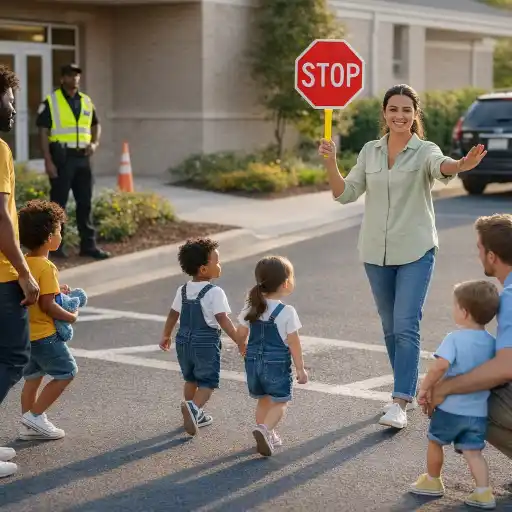 r died, and several children and staff were hurt in the crash — a sharp reminder that the parking lot is part of your #safety plan. Read on for clear, practical steps you can use in your #parking and #dropoff areas today. State requirements vary - check your state licensing agency.
What happened in the Boerne crash and why does it matter to child care programs?
1. Why this matters for your program:
- Parking lots are not just places to leave cars — they are work areas where children arrive and leave. Your #children move through them every day.
- Crashes can come from many causes: medical events, sudden acceleration, distracted driving, or tight traffic patterns. Learning from this crash helps everyone plan better.
- Families expect you to keep children safe before they even step inside. Showing you have a plan builds trust.
2. A quick link for more on how parking and drop-off fit into larger safety work: What Kind of Property Works for a Child Care Center? (ChildCareEd) helps you check parking, drop-off, and outdoor play before you open a space.
How can we make our drop-off and pick-up safer right now?
- 🔒 Create a single, supervised path from the car to the entrance. Keep children and adults away from traffic lanes.
- 🚧 Use cones, signs, or painted lines to make lanes and crosswalks clear. Remind drivers to go slow.
- 👩💼 Station trained staff at the door and in the lot during busy times to help with quick, safe transitions. See practical ideas in Improving Dropoff and Pickup Procedures.
- 🕒 Stagger arrival and pickup times to lower traffic volume. Tell families the reason — safety.
- 🪪 Require ID checks and a single authorized adult for pickup. Add a brief visual check for unusual driving or medical distress when possible.
2. Quick checks before opening the lot each day:
- Look for broken fencing or gaps that let vehicles reach play areas.
- Confirm staff radios or phones work for quick communication.
- Check visibility at corners, mirrors, and signs.
3. For tech help, contact systems like contactless check-in, which reduce people moving in and out of the building; see ideas at EZChildTrack.
What policies, training, and physical changes should we use to prevent parking lot crashes?
- 📋 Policy: Define staff roles for drop-off, pick-up, parking supervision, and emergency response. Put the rules in your parent handbook and post them where everyone sees them.
- 🧑🏫 Training: Teach active supervision, how to scan the lot, and how to move children quickly to safety. Practice these steps in staff meetings and drills. Use your emergency plan from Emergency Preparedness Plans. For structured continuing-education on safety, health, and emergency response that you can use to certify and refresh staff skills, consider the Childcare Safety First training program.
- 🔧 Physical fixes: Install robust fencing, bollards, raised curbs, or planted barriers that block cars from play spaces. Make a one-way traffic flow and clear pedestrian crosswalks.
- 🚨 Drills: Run a quick parking-lot incident drill so staff can move children and call 911 without panic.
- 📞 Community work: Tell local police and fire about your plan and ask for fast response routes and advice.
2. Use tools from transportation safety research to push for safer streets and slower speeds near your center. The CDC explains how transportation design saves lives: Improving Health Through Transportation Policy.
How do we document, fix problems, and work with families and regulators after a near-miss or crash?
1. Record everything right away. Good records protect children and staff and help you improve. ChildCareEd has clear tips at Recordkeeping and Documentation Tips.
- 📝 Immediate report: Date/time, staff on duty, number of children present, what happened, first aid given, and who was notified.
- 📸 Tag the scene: Photos of fencing, vehicles, and the lot layout help you and investigators understand what to fix.
- ☎️ Notify: Call 911 for injuries, call parents, and contact licensing. Remember: state requirements vary - check your state licensing agency.
- 🔁 Fix and follow-up: Take unsafe areas out of use, schedule repairs, and log who completed the work and when.
- 👪 Communicate: Send a clear, calm message to families about what happened, what you did, and what you will change.
2. Learn from the event:
- Hold a short staff review and note 3 changes to stop the event from happening again.
- Update policies, post new signage, or change traffic flow if needed.
3. Why this matters: Parking lot safety keeps children safe before they enter your classroom. It prevents the biggest, rare events that cause the most harm.
Common mistakes and how to avoid them
- ❌ Skipping a morning parking-lot check. ✅ Fix: Make it a required step on the daily opening checklist.
- ❌ Letting many adults park and walk kids in at once. ✅ Fix: Limit arrivals to one adult per child and use staff-assisted curbside drop-off when possible.
- ❌ Not practicing an outside drill. ✅ Fix: Schedule one quick drill every 3 months and review problems at staff meetings.
Summary
1. The Boerne crash reminds us the parking lot is not separate from the classroom — it is part of your #supervision work for #children.
2. Use clear traffic patterns, staff roles, strong fencing or barriers, and daily checks. Train staff and practice drills often.
3. Document incidents well, fix hazards fast, and tell families what you did. Use the recordkeeping advice at ChildCareEd recordkeeping.
4. Finally, remember: small steps every day — parking checks, fences, staff at the door — make a big difference. For playground and yard checks that tie to parking safety, see ChildCareEd’s playground safety checklist and CDC outdoor safety guidance: CDC Outdoor Play and Safety.
FAQ
- Q: Who should watch the parking lot? A: A trained staff member assigned each arrival and pickup time. Rotate duties so everyone stays fresh.
- Q: Do we need fences and bollards? A: If your lot is close to play areas, physical barriers are strong prevention tools.
- Q: How often should we drill? A: Monthly quick checks and an outside drill every 3 months help staff stay ready.
- Q: What if a parent resists the rules? A: Explain the safety reason, put policies in the handbook, and enforce them kindly but firmly.
Thank you for keeping children safe. Your daily attention to drop-off and #dropoff routines protects little lives.
- 45 Hour Child Growth and Development
- Lesson Planning for Preschoolers
- CDA Preschool Credential with Portfolio Review
- 45 Hour Preschool Methods and Materials
- 45 hour Growth and Development Birth-age 12 ONLINE
- Texas Primary Caregiver Qualification
- CDA Bridge Bundle: Preschool
- Effective Supervision in Child Care: For Workforce Solutions
- Texas Director Credential
- 🍼📋 ¿Qué necesitas para trabajar en el cuidado infantil en Texas?
- Cómo usar tu certificación de 90 horas en Maryland para completar tu CDA
- ¿Cómo pueden los equipos de cuidado infantil practicar habilidades rápidas de primeros auxilios en situaciones reales?
- Capacitación en Salud y Seguridad Preventiva en Línea para Proveedores de Cuidado Infantil
- Actividades de Fiesta para Niños de Preescolar y Primaria
- Cómo Solicitar una Licencia de Guardería en Texas
- ¿Cómo solicito la licencia para una guardería en California?
- Regulaciones de Licenciamiento de Cuidado Infantil en California para Centros y Hogares de Cuidado Infantil Familiar
- Proporciones de Cuidado Infantil y Tamaños de Grupo por Edad en Maryland (Guía Rápida para Centros y Hogares)
- Proporciones de Cuidado Infantil y Tamaños de Grupo por Edad en Virginia (Guía Rápida para Centros y Hogares)
- Lista para Abrir una Guardería en Casa en Georgia: Cómo Empezar
- Lista para Guardería en Casa en Texas: Cómo Iniciar una Guardería en el Hogar
- Cómo Trabajar en el Cuidado Infantil en Wisconsin: Requisitos y Pasos
- Cómo Ser Maestra de Preescolar en Illinois
- Cómo Ser Maestra de Preescolar en California
- Cómo Ser Maestra de Preescolar en Maryland
- Las Mejores Ideas de Excursiones para Guarderías en Texas
- Canciones, juegos y preguntas de círculo para niños
- Cómo simplificar la capacitación para sus empleados de daycare
- How Can Texas Child Care Providers Make Parking Lot Safety Real After the Boerne Preschool Crash?
