Thoughtfully planned sensory and fine-motor experiences turn everyday materials into meaningful opportunities for children to explore, create, and build confidence. The Playing with a Purpose: Infant/Toddler Lesson Planning  Buy Now $24.00 course can help you plan age-appropriate activities for children from birth through age three, while the Lesson Planning for Preschoolers Buy Now $24.00 course offers practical guidance for developmentally responsive preschool lessons. Use the ideas below to turn a simple picnic-themed cut-and-paste activity into a flexible learning experience—and discover how purposeful planning can strengthen children’s play and your classroom practice.
Why combine sensory exploration with fine-motor practice?
Young children learn through active engagement with people, objects, and materials. When they touch, move, compare, press, tear, draw, or arrange, they gather information and test ideas with their whole bodies. Sensory-rich activities can support attention, language, problem-solving, and self-regulation while providing natural occasions to strengthen hand and finger control.
Fine-motor development is not limited to writing or crafts. Children use small-muscle coordination to manipulate toys, manage clothing, feed themselves, turn pages, and participate in classroom routines. Experiences such as tearing paper, using tongs, squeezing dough, and cutting with child-safe scissors offer practice in grasp, hand-eye coordination, and using both hands together. The ChildCareEd guidance on increasing fine motor skills in the early childhood classroom also emphasizes purposeful materials and repeated opportunities to practice.
These experiences matter because children benefit from accessible, achievable challenges—not pressure to produce a polished result. A child’s arrangement may look different from an adult’s model, yet still show planning, persistence, and growing control. Treat the process as the learning: observe what children choose, how they use materials, and what support helps them participate.
- Offer varied textures and tools to encourage exploration and hand use.
- Connect actions with language: describe what children notice and do.
- Make room for choice, repetition, and different ways of participating.
How can you plan an activity with clear goals and room for discovery?
Start with one or two learning intentions rather than trying to target every developmental domain at once. For a picnic collage, possible goals include practicing scissor control, picking up and positioning paper pieces, making choices, or describing a plan. Choose a goal that fits the group and the individual children, then select a small set of materials that makes the intended actions possible.
A useful plan includes the goal, materials, steps, adaptations, safety considerations, and a brief observation focus. For example, provide the Picnic Table Cut and Paste Buy Now $1.50 resource as a starting point: children select picnic foods, cut or use pre-cut pieces, arrange them on the table, and paste them in place. The printable offers a clear theme while leaving room for children’s decisions and conversation.
Prepare the environment before inviting children to begin. Use a stable work surface, accessible materials, and a tray or mat to support cleanup. Offer a manageable number of choices at first; additional pieces can be introduced if children are ready. A predictable sequence such as “choose, arrange, attach, and tell” gives children a helpful structure without requiring everyone to make the same picnic.
- State the learning goal in a sentence staff can use consistently.
- Set out only the tools and materials children need for the first steps.
- Plan a short invitation, then follow children’s attention and interests.
How can you make the picnic activity developmentally appropriate?
Match the task to each child’s current skills, not simply to age or a group-wide expectation. Infants and young toddlers are more likely to benefit from closely supervised exploration of large, safe materials—such as textured fabric or sturdy paper—than from a cut-and-paste worksheet. Adults can narrate actions, offer objects to reach for, or invite children to grasp and release materials. Avoid scissors and small paper pieces for children who cannot use them safely.
For toddlers and preschoolers, adjust the steps and tools. Some children may choose among large pre-cut shapes and practice placing or gluing them. Others may tear paper or make short snips with appropriate scissors under close supervision. Children who are ready can cut along a bold line, sort foods by category, create a pattern, or add their own drawings. The goal is meaningful participation and a manageable next step, not identical performance.
Offer supports without taking over. Examples include thicker paper, larger pieces, an adapted grip, a nonslip surface, picture cues, extra time, or a choice to use glue sticks instead of liquid glue. Children may also communicate their ideas through gestures, home languages, pointing, or dictation. In keeping with responsive planning described in ChildCareEd’s lesson planning for infants and toddlers resource, build activities around children’s interests, abilities, and everyday experiences.
- Beginning: choose and place pre-cut pieces; practice pressing them onto the page.
- Developing: cut short strips or large shapes and arrange several items.
- Extending: plan a picnic scene, sort foods, add labels, or tell a story about the setting.
How do you connect sensory and motor learning to language and thinking?
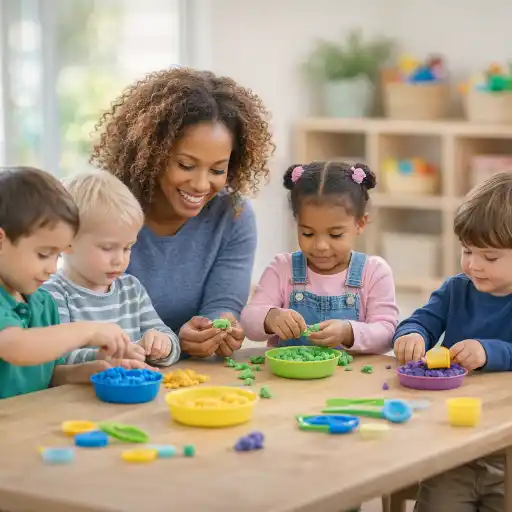
Children’s hands-on actions provide a natural starting point for conversation. Name the materials and actions, describe the qualities children notice, and leave space for them to respond. Instead of quizzing children, try open prompts such as, “What did you choose for your picnic?” or “How could you make room for that piece?” A child may answer with a word, a gesture, a choice, or continued action; each can give you information about their thinking.
Planning the picnic scene also invites early mathematical and cognitive ideas. Children can compare large and small pieces, group similar foods, count choices, consider where pieces fit, and change an arrangement before gluing. These are authentic opportunities for classification, spatial reasoning, sequencing, and flexible thinking. Invite children to explain their choices, but accept imaginative responses rather than imposing one correct outcome.
Extend the experience beyond the table when it suits the group. Read a picnic-themed book, set up a pretend picnic with play food, or make a shared tablecloth with large paper and drawing tools. For sensory exploration, offer safe fabrics or textured collage materials alongside the paper, taking care to check materials for age appropriateness and allergies. Repeating a familiar theme with a new tool or question can deepen engagement without requiring a completely new plan.
- “You moved the apple beside the sandwich. What might go there next?”
- “Which piece feels rough or smooth?”
- “You changed your arrangement before gluing. Tell me about your plan.”
How can providers support inclusion, safety, and observation?
Inclusive planning begins with the understanding that children can participate in different ways. A child may prefer to watch first, use a tool rather than touch a material, select pieces while an adult assists with cutting, or describe an idea for someone else to place. Offer choices and adaptations without framing them as lesser options. If a child avoids a texture or tool, respect the signal and provide an alternative route into the activity.
Safety is part of lesson planning, not an afterthought. Select materials based on children’s ages, abilities, mouthing behaviors, allergies, and program policies. Use scissors only with children who can participate safely and with active adult supervision; store tools and small pieces securely when they are not in use. Check materials before and after activities, and follow your program’s cleaning procedures. State requirements vary - check your state licensing agency.
Observe the process rather than judging the finished product. Brief notes can capture how a child grasps a tool, uses a helper hand, makes choices, stays with a task, or communicates an idea. For example: “Ari selected four pictures, used the glue stick independently, and asked for help with the scissors.” Use observations to choose a practical next step and share strengths with families. If ongoing concerns arise, communicate respectfully with the family and follow your program’s procedures for seeking additional support.
- 😃 Offer a low-pressure alternative, such as arranging pieces without cutting.
- Keep children within sight and hearing and position yourself to respond promptly.
- Record specific actions and the supports that helped, not just whether a child finished.
What common planning pitfalls can you avoid?
Even a simple activity can become stressful when the setup is crowded, instructions are lengthy, or the task is beyond a child’s current abilities. Begin with a clear, small invitation and demonstrate only the tool use or first step children need. Avoid showing a finished example as the sole acceptable result; it can unintentionally narrow children’s choices and shift attention from exploration to copying.
Another common pitfall is completing the work for a child in the name of helping. Instead, offer the least assistance needed for the child to continue: stabilize the page, point to a picture cue, or model one action, then pause. If frustration rises, simplify the task, offer a break, or change the tool. Short, positive practice is more useful than insisting on completion.
Finally, resist overloading the activity with too many objectives or materials. One purposeful focus—such as choosing and placing pieces—can be enough. Keep the experience flexible, consider how children respond, and adjust your plan next time. The ChildCareEd course Inclusive Lessons for Preschoolers Buy Now $16.00 provides additional professional learning about adapting materials and lesson plans so children with varied abilities can participate.
- Too many materials? Start with a small selection and add options when useful.
- Too much adult direction? Use open prompts and allow children time to decide.
- One-size-fits-all expectations? Offer varied tools, levels of support, and ways to contribute.
Conclusion: How can providers plan creative sensory and fine-motor activities?
Plan sensory and fine-motor activities by choosing a clear, achievable goal, selecting safe and engaging materials, and adapting the steps to children’s interests and abilities. A picnic cut-and-paste invitation can encourage hand control, planning, language, and creativity when children have real choices and adults support rather than take over. For infants and toddlers, prioritize safe sensory exploration and individualized interactions; for older children, offer graduated opportunities to cut, arrange, classify, and explain.
Observe children’s strategies, celebrate small steps, and use what you learn to plan the next invitation. Keep safety and inclusion central, and remember that the process matters more than a uniform finished product. To deepen your planning practice, explore the linked ChildCareEd courses: each offers focused learning to help you create thoughtful, developmentally responsive experiences for young children.
- Moving About the Classroom: Effective Transitions for Everyday
- CDA Home Visitor Subject Area 2 Part 3 Birth to 5
- From Play to Planning: Building Culturally Competent, Child-Centered Curriculum
- The ABCs of Behavior: Turning Challenges into Learning Opportunities
- Emergent Learning & Development
- 45-Hour Infant and Toddler Curriculum
- Play with Purpose: Supporting Children with Autism
- Creating Engaging and Meaningful Learning Experiences
- Montessori Cultural Activities: Exploring the World Through Play and Learning
- Terrible Two's Can Be Terribly Fun!
- Creativity & Logic Activities
- Tiny Tinkerers: How Messy Play Today Could Lead to Tomorrow’s Top Inventors
- Pumpkin Spice and Sensory Delight: Easy Autumn Sensory Bins for Early Learners
- How to boost fine motor skills: Holiday Edition
- Counting Candy Canes: The STEM of Holiday Fun for Early Learners
- How motor skills shape child development and creative ways educators can foster them.
- 🔍 ¿Qué ves cuando observas a un niño aprender?
- Proporciones de Cuidado Infantil y Tamaños de Grupo por Edad en Virginia (Guía Rápida para Centros y Hogares)
- Creative Daycare Activities to Help Children Learn and Grow
- Learning Through Creative Daycare Activities
- How Do Art Activities Support Cognitive Growth in North Dakota Preschoolers?
- Calabazas, hojas y manzanas: actividades de otoño para preescolares
- Crayon Activities for Preschoolers: Color, Creativity, and Fine Motor Skills
- Canciones, juegos y preguntas de círculo para niños
- Toddler Glitter Crafts: Fun, Safe, and Easy Ideas
- How can Michigan child care providers celebrate National Ice Cream Day safely and with learning?
- How can we explore sand, space, and science with young children in preschool settings?
- How can seasonal activities (spring, summer, fall, winter) combine fun with clear educational goals?
- Snip, Stick, Celebrate! What Easy Labor Day Crafts Can Toddlers Make?
