Fall brings a tempting mix of crunchy leaves, pumpkins, and colorful textures—but meaningful sensory play does not require every child to touch messy materials. Use the ideas below to offer genuine choices and keep children connected to seasonal learning; for a deeper foundation in accommodations and inclusion, explore ChildCareEd’s Including All Children and the Americans with Disabilities Act Buy Now $35.00 course. It can help you strengthen inclusive classroom practices and build professional knowledge about supporting children with varied abilities.
Why does accessible sensory play matter?
Seasonal sensory activities can invite children to notice color, sound, shape, temperature, weight, and change. A child comparing two leaves, watching a pumpkin roll, or listening to dry leaves rustle is exploring—even without touching a sticky or unfamiliar texture. The learning lies in noticing, investigating, communicating, and making choices, not in getting messy.
Children differ in how they experience touch, smell, sound, movement, and visual input. Some may avoid finger paint, damp leaves, pumpkin pulp, or crowded sensory tables; others may be interested but need more time or a predictable way to approach. A child’s hesitation is information about comfort in that moment, not proof of defiance or a diagnosis.
Accessible participation supports agency and belonging. The U.S. Departments of Education and Health and Human Services affirm that young children with disabilities should have access to inclusive early learning with individualized support, so they can participate alongside peers. Thoughtful choices can also benefit children who simply prefer a different way to explore.
- Keep the learning purpose—such as comparing, sorting, describing, or creating—while varying how children take part.
- Make participation flexible: a child might touch, use a tool, watch, describe, or choose a parallel activity.
- Plan for #access, #choice, and #comfort as part of the activity—not as last-minute fixes.
How can Touch, Tool, or Watch cards guide participation?
Touch, Tool, or Watch participation cards make different ways of joining visible and easy to explain. Introduce the cards before materials come out, using a calm, matter-of-fact tone: “You can touch the leaves, use tongs, or watch first.” If a child does not want any of those options, offer a related alternative without turning the choice into a test.
Cards can feature simple words, clear pictures, or both. Keep them at children’s eye level and point to each option as you explain it. Avoid presenting “touch” as the expected or best choice. The purpose is to communicate that each pathway is welcome and that children can change their minds.
- Touch: Explore a dry leaf, smooth pumpkin, or other material directly, if the child chooses.
- Tool: Use a scoop, tongs, brush, magnifier, tray, or long-handled spoon to interact without direct hand contact.
- Watch: Observe a peer or adult, notice what changes, and share a comment, gesture, or selection.
- Pause or pass: Step away, take a break, or choose a related activity; participation should not be forced.
For a pumpkin investigation, a child using the Tool card might separate seeds with a spoon while a peer describes what they see. A child choosing Watch might compare the pumpkin’s outside and inside through photos or observe an adult demonstrate. Both remain part of the shared inquiry. Refresh the cards as children’s communication develops, and accept gestures or pointing as meaningful choices.
Which fall activities offer meaningful no-mess options?
Start with the learning goal, then offer several ways to explore the same idea. For leaf study, children can sort leaves by color or shape, use a magnifier, make a leaf rubbing with a crayon under paper, or listen to dry leaves rustle inside a container. For pumpkins, children can compare size and weight, look at photographs of the inside, roll a small pumpkin on a tray, or use a spoon to move seeds.
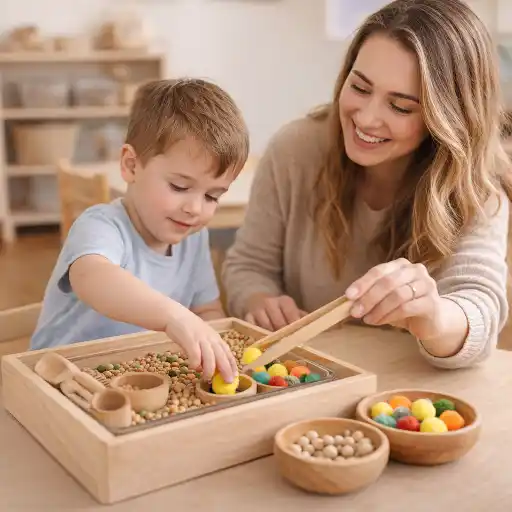
Other options bring seasonal discovery without direct contact with wet, sticky, or loose materials:
- 🧡 Create a fall color collage using paper shapes, stickers, or pre-cut leaves instead of glue and loose natural materials.
- Make a listening station with recordings of wind, rain, or leaves, and invite children to choose a sound card.
- Use sealed sensory bags with leaves or large visual objects inside, secured and inspected according to program policy.
- Offer a picture-based scavenger hunt: children point to, photograph, or mark items they notice outdoors.
- Invite children to compare smooth and ridged pumpkins visually or through a tool, such as a brush or spoon.
Fall play can engage sight, sound, movement, and observation as well as touch. Resources describing seasonal activities include leaf walks, listening walks, sorting, and close observation; adapt any idea to children’s preferences and your setting. For children with visual impairments, narrate relevant details and offer objects or sounds in a predictable way, using family or specialist guidance when available.
How can providers prepare the space and materials?
A predictable setup can make an invitation feel more manageable. Use a defined, uncluttered space with one or two materials at a time, and show children what is available before they approach. Place tools within reach, provide clear routes to and around the station, and keep a cloth or handwashing option visible. If cleanup is part of the experience, explain the steps in advance and allow adequate time.
Consider sensory and physical access as you arrange the activity. A child may need a stable tray, a seated position, extra room, a quieter location, or materials placed at an accessible height. Reduce strong scents and competing noise where practical. Avoid assuming that gloves, a smock, or a particular tool will help; ask or observe, and adjust based on the child’s response.
- Offer a small set of materials and add more only if children are comfortable and engaged.
- Use large, age-appropriate items; inspect natural materials for sharp edges, dirt, mold, and choking hazards.
- Check allergies, hygiene procedures, and program policies before using food or natural materials.
- Maintain active supervision, especially around small objects, water, and materials young children may mouth.
- Keep all participation options within the group so a child can stay connected with peers.
Seasonal activities should be welcoming without assuming every family celebrates fall in the same way or wants to contribute materials. Use respectful, optional invitations and choose familiar, inclusive language. State requirements vary - check your state licensing agency.
How should teams observe, collaborate, and avoid common pitfalls?
Observe what happens before, during, and after an activity rather than judging a child’s response. Note the material, setting, who was present, the child’s observable cues, the options offered, and what supported participation. For example: “Jordan watched the leaf sorting, then used tongs to place three leaves by color” is more useful than “Jordan would not participate.” Include strengths and successful conditions in the record.
Share observations with families as a conversation, not a conclusion. Ask what the child enjoys at home, which tools or routines help, and whether there are safety or sensory considerations the program should know. With family permission, consult appropriate professionals when further individualized guidance may be useful. Providers can observe and adapt; they should not diagnose or prescribe clinical treatment.
- Avoid pressure: Do not place material on a child’s skin, guide their hand into a texture, or repeatedly coax after a clear refusal.
- Avoid labels: One reaction does not establish a diagnosis or reveal a child’s overall interest in sensory play.
- Avoid a single “right” pathway: Watching, describing, pointing, and using tools can all be purposeful participation.
- Avoid overloading: Introduce one manageable feature at a time and notice how the child responds.
Directors can help staff respond consistently by reviewing the cards together, agreeing on respectful invitation language, and documenting safety routines. Keep the focus on access and connection—not on whether every child gets messy.
Conclusion: What is the goal of accessible fall sensory play?
The goal is not to persuade every child to touch seasonal materials. It is to give each child a comfortable, meaningful way to explore and belong. Touch, Tool, or Watch cards make options concrete: children can experience fall materials directly, use tools, observe, or choose another appropriate route into the learning.
Keep the purpose of the activity clear, prepare a safe and predictable space, honor children’s cues, and partner with families. A child who studies a leaf with a magnifier or watches seeds move with a spoon is taking part in the shared experience. When providers value varied forms of participation, fall sensory play can be engaging, inclusive, and respectful for the whole group.
For additional professional learning, consider these relevant English-language ChildCareEd courses:
- Including All Children and the Americans with Disabilities Act Buy Now $35.00 — inclusion, accommodations, and ADA concepts for child care.
- Access for All: Inclusion and the ADA
 Buy Now $16.00 — online learning about accessible environments and inclusion.
- Effective Approaches for Autism and Inclusion Buy Now $55.00 — classroom adaptations, communication, and sensory sensitivities.
- Inclusive Lessons for Preschoolers Buy Now $16.00 — practical approaches to designing activities for diverse learners.
- Playful Spaces for Infants & Toddlers Buy Now $24.00 — play environments, materials, and adaptations for young children.
- CDA Home Visitor Subject Area 3 Part 3 Birth to 5
- Birth to Five CDA Credential with Portfolio Review
- CDA Bridge Bundle: Family Child Care without Portfolio Review
- CDA Bridge Bundle: Infant/Toddler without Portfolio Review
- CDA Bridge Bundle: Preschool without Portfolio Review
- Play with Purpose: Supporting Children with Autism
- Creating Engaging and Meaningful Learning Experiences
- Texas Director Credential
- Access for All: Inclusion and the ADA
- CDA Certification en Español: Recursos y Consejos para Educadores Bilingües
- ¿Cuáles son las mejores actividades del Día de la Tierra para niños en casa o en el aula?
- 10 Ejemplos de Cómo la Cultura Influye en el Desarrollo Infantil
- Proporciones de Cuidado Infantil y Tamaños de Grupo por Edad en Virginia (Guía Rápida para Centros y Hogares)
- Actividades de Otoño Fáciles para Preescolares esta Temporada
- Capacitación CDA gratuita en Illinois
- How Do Art Activities Support Cognitive Growth in North Dakota Preschoolers?
- Celebrando la amistad en el cuidado infantil durante el Día de los Mejores Amigos
- Canciones, juegos y preguntas de círculo para niños
- Cómo simplificar la capacitación para sus empleados de daycare
- Hello, Fall! Cozy Activities to Help Babies Explore the Season
- How Can Child Care Providers Create Effective Learning Centers in Small Spaces?
- Why Does Sensory Play Matter for Brain Development?
- How Can Providers Respond When Children Reject Unfamiliar Materials?
- How Can Child Care Providers Help Families See the Learning Hidden Inside Messy Play?
- How Can Halloween Fine-Motor Activities Be Fun Without Being Scary?
- How Can You Set Up Learning Centers in a Preschool Classroom?
- What Should Preschool Teachers Do When a Child Avoids Messy or Sensory Play?
- How Can Providers Offer Choices When a Child Says, “I Don’t Want to Touch It,” During Pumpkin Exploration?
- How Can Providers Make Fall Sensory Play Accessible Without Requiring Messy Hands?
