A lively classroom can make handwashing feel like one more transition—but a few steady cues can turn it into a skill children practice with confidence. For focused professional learning on hygiene and infection prevention, explore ChildCareEd’s Shoo, Germs! Don’t Bother Me!  Buy Now $24.00, which can help you strengthen classroom practices and professional knowledge. You can also consider Prevention and Control of Infectious Diseases Buy Now $16.00 for a broader look at reducing the spread of illness in child care.
Why does a dependable handwashing habit matter?
Preschoolers share toys, tables, books, bathrooms, and play materials. Hands can carry germs between people and surfaces, so regular hand hygiene is one practical part of a program’s wider health and safety plan. The CDC explains that early care and education programs promoting hand hygiene may see less gastrointestinal and respiratory illness and fewer related missed days. Handwashing cannot prevent every illness, but it is an accessible prevention practice children and adults can repeat.
The routine also offers a meaningful opportunity to learn. Children practice sequencing, coordination, language, and growing #independence as they move through the steps. When educators present washing as caring for one’s own body and community, rather than as a punishment, children can participate with more confidence and less resistance.
Consistency helps make the routine manageable for staff, too. When every adult uses the same simple words and connects washing to predictable events, children know what comes next. The aim is not flawless performance on the first attempt; it is patient teaching, supervision, and repeated practice.
- Build handwashing into transitions already in the daily schedule.
- Allow enough time for children to practice and receive support.
- Use one shared sequence and calm, encouraging coaching language.
When should children wash, and what steps should they learn?
Pair handwashing with clear, familiar moments rather than relying on general reminders to “wash often.” Common times include arrival, before eating or handling food, after toileting or diapering, after outdoor or sensory play, after coughing or wiping a nose, and whenever hands are visibly dirty. Follow your program’s written procedures and applicable health guidance for staff and children.
Teach the same five steps each time: wet, soap, scrub, rinse, and dry. The CDC recommends scrubbing with soap and water for at least 20 seconds. Show children how to cover palms, the backs of hands, between fingers, thumbs, and around nails. A song, rhyme, or short story can make the scrubbing time easier to understand and remember.
- Wet: Wet both hands with clean, running water.
- Soap: Apply soap and make a lather.
- Scrub: Rub all hand surfaces for at least 20 seconds.
- Rinse: Rinse away soap under running water.
- Dry: Dry hands completely with a clean towel or appropriate hand dryer.
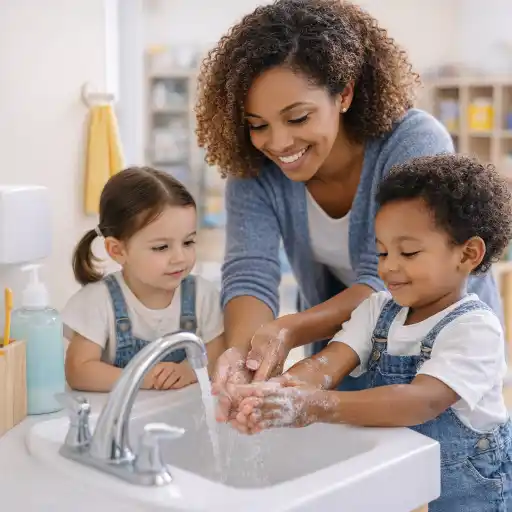
Soap and water are especially important after toileting and when hands are visibly dirty or greasy. If a sink is not readily available, follow public-health guidance and program policy for any sanitizer use. Sanitizer with at least 60% alcohol can be a backup in appropriate situations, but it does not replace soap and water when hands are visibly dirty. Supervise children under six using sanitizer and store it safely. State requirements vary - check your state licensing agency.
How can teachers make the routine enjoyable without losing its purpose?
Play makes an invisible idea—germs—more concrete, but an activity should lead back to real practice at the sink. Keep demonstrations brief, age-appropriate, supervised, and reassuring. Explain that germs are tiny and that washing is one way to care for our bodies and friends; avoid frightening children or suggesting that a child is “dirty.”
- ✨ Glitter transfer: Use a small amount of washable glitter as pretend germs. Notice how it transfers to objects, then practice a complete soap-and-water wash. Explain that glitter is only a model, not actual germs.
- Pepper-and-soap demonstration: With adult handling, observe how pepper moves on water when a soapy fingertip touches it. Clarify that this is a simple model, not a literal depiction of germs.
- Step-card shuffle: Mix picture cards for wet, soap, scrub, rinse, and dry. Invite children to put them in order, then follow the sequence at the sink.
- Song or micro-story: Use one familiar, age-appropriate cue to time scrubbing. Keeping the cue consistent helps children anticipate when to rinse.
- Sink-helper roles: Rotate a “soap helper” or “poster checker,” while each child practices washing their own hands.
Offer specific, warm feedback: “You remembered to scrub your thumbs.” Let children observe and try rather than turning the process into a race. For children who dislike a particular activity, offer another way to participate, such as arranging cards or helping tell the story.
How can the classroom setup and staff coaching support success?
A routine is difficult to follow if a child cannot reach the faucet, press the soap pump, or find a towel. Check the sink from a child’s perspective before a busy transition begins. Stable step stools, accessible soap and drying supplies, a nearby waste bin, and a clear path can reduce waiting and help children focus on the sequence. The CDC recommends accessible hand-hygiene supplies and visible cues in early care settings.
- Post a simple picture sequence at children’s eye level.
- Check that faucets work and soap and drying supplies are stocked.
- Plan small-group turns or staggered transitions if the sink becomes crowded.
- Adapt supports as needed: offer extra time, larger visuals, accessible equipment, or adult assistance.
Model the steps where children can see you. Narrate briefly—“Wet, soap, scrub to the song”—and coach with specific prompts rather than calling corrections across the room. A child who needs help may benefit from a gesture, a picture cue, a demonstration, or physical assistance when appropriate. Gradually reduce prompts as the child becomes more capable, while continuing supervision.
Notice patterns rather than assuming a child is being careless. If several children skip drying, for example, move towels within reach or add a picture cue. This strengths-based approach helps the whole team improve the setup and support each child’s #hygiene skills.
How can programs partner with families and prevent common pitfalls?
Children can carry a routine between home and school when the words and reminders are familiar. Share a small picture card with the five steps, key handwashing moments, or the classroom song. Keep the message welcoming and practical: “We’re practicing soap, scrub, rinse, and dry before snack; here is the song we use.” Families have different routines and resources, so offer ideas without judgment.
Directors can help the routine stay consistent by including it in staff orientation, checking sink supplies, and making time for brief practice or coaching. If expectations change, explain the updated procedure to staff and families and check it against program policy and local guidance.
Common pitfalls are usually fixable:
- 🔹 Rushing the scrub: Use the same song, rhyme, or visual timer to support at least 20 seconds.
- Using sanitizer as a full substitute: Prioritize soap and water when hands are visibly dirty and after toileting.
- Changing the wording or order frequently: Keep one sequence so children can anticipate what comes next.
- Using washing as punishment: Keep the tone neutral and caring—“First wash, then snack.”
- Expecting unsupported independence: Provide accessible supplies, supervision, and individualized help.
Conclusion: What helps handwashing become a lasting classroom habit?
Preschool teachers can make handwashing consistent and enjoyable by linking it to predictable moments, teaching the same five steps, and using a repeatable song or story for the 20-second scrub. Make the sink accessible, model the actions, supervise and support children according to their needs, and use playful activities to introduce—not replace—real handwashing.
Start with one practical change: stock the sink, post a clear visual, or agree on one shared staff script. Then observe what helps children succeed and adjust the routine. With calm repetition, accessible materials, and family partnership, handwashing can become a positive act of care that supports health, confidence, and #classroom community.
References and further reading
- 45 Hour Child Growth and Development
- CDA Preschool Credential
- What Makes Me Special: An Overview of Autism and ADHD
- The ABCs of Behavior: Turning Challenges into Learning Opportunities
- CDA Bridge Bundle: Preschool
- Pediatric RSV First Aid & CPR/AED
- Building Equity: Inclusionary Practices in Preschool
- Lesson Planning for Preschoolers
- Texas Director Credential
- The Unofficial Guide to Acing the Child Development Associate Training: Humor & Hacks
- 💛🧩 ¿Cómo puedo hacer que mi enseñanza sea inclusiva para los niños con autismo?
- Recursos en Español sobre el Sueño Seguro del Bebé
- 10 Ejemplos de Cómo la Cultura Influye en el Desarrollo Infantil
- Proporciones de Cuidado Infantil y Tamaños de Grupo por Edad en Virginia (Guía Rápida para Centros y Hogares)
- Cómo Ser Maestra de Preescolar en Maryland
- Celebrando la amistad en el cuidado infantil durante el Día de los Mejores Amigos
- Canciones, juegos y preguntas de círculo para niños
- Cómo simplificar la capacitación para sus empleados de daycare
- Which Handwashing Activities Best Help Young Children Build Healthy Habits?
- How can group child care programs effectively prevent the spread of illness?
- How Can We Make Handwashing Fun and a Reliable Daily Routine?
- Preschool Classroom Schedule: A Full-Day Example from Arrival to Pick-Up
- Why Can Preschool Morning Arrivals Be Difficult—and What Can Teachers Change?
- How Can Daycare Programs Strengthen Handwashing Routines During Winter?
- How Can Fun Classroom Activities Teach Preschoolers to Cover Their Coughs and Sneezes?
- Why Do Preschoolers Still Forget to Wash Their Hands Properly?
- How Can Child Care Providers Teach Preschoolers Proper Handwashing Through Fun Activities?
- How Can Preschool Teachers Make Germ Prevention Fun During National Handwashing Awareness Week?
- How Can Preschool Teachers Make Handwashing a Consistent and Enjoyable Habit?
