Big city events (parades, subway delays, demonstrations, power outages) and #heat waves can make drop-off, pick-up, and daily routines hard. As child care leaders, you want quick, calm, and clear messages so families know what to do. Good #communication builds trust, keeps children safe, and helps staff stay focused on care. This article gives simple steps you can use in New York City settings to reach families fast, protect children, and meet licensing expectations. Remember: state requirements vary - chec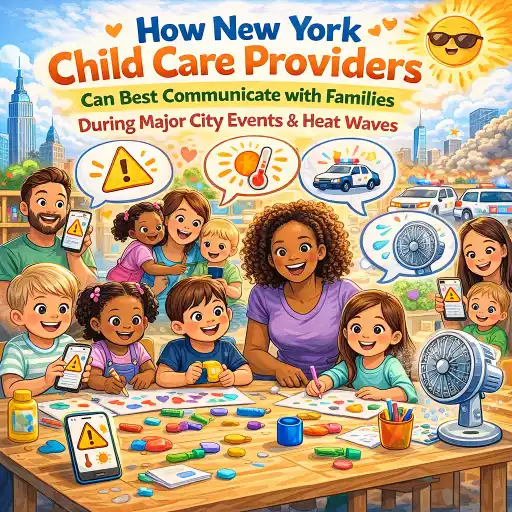 k your state licensing agency.
Why it matters:
- Clear messages reduce panic and help families act fast.
- Working plans mean staff make consistent, safe choices during heat or city events.
- Good records and practice help your program improve and show readiness to inspectors.
How do we plan ahead so families get clear, fast messages during heat waves and city events?
Use numbered steps so staff can act fast. For example:
- Check weather + heat index (Preparing for Extreme Heat). For quick on-site guidance and training on heat-related symptoms, hydration schedules, and activity modifications, see How Can You Stay Safe During Extreme Heat?.
- Decide: stay, shelter, or evacuate, and who notifies families.
- Pull the right message from your templates and send it to all channels.
- Log the message and time for records.
Tips:
- 🔔 Keep updated phone numbers and backup contacts at drop-off.
- 📝 Pre-write three short templates: Heat Alert, Early Pickup, and Delayed Opening.
- 📣 Assign a single staff person to approve outgoing messages to keep them consistent.
What channels and tools reach New York families quickly and reliably?
- 📱 Group text or phone tree: Fast for urgent pick-up and shelter changes. Make scripts short: what happened, what to do, where to go, and who to call if unsure.
- ✉️ Email follow-up: For more details and links to resources (cooling centers, transit updates).
- 🖥️ Website/social app: Post longer updates and FAQs. Use the Red Cross Emergency app as an example of a tool families can use: Red Cross Emergency App.
Other useful tools and ideas:
- 🗺️ Sign up families for local alerts (city or county emergency alerts).
- 📲 Use a tool that shows "message read" when possible so you know who got it.
- 🔁 Keep a backup paper list and a phone tree in case the internet or power fails.
For public health or outbreak info, follow CDC communication tips to keep messages clear and trusted: Communicating During an Outbreak.
What messages should be used during heat waves or major events to reduce worry and help families act?
- Example template — Heat Alert:
- 🔥 "Heat Alert: The heat index is high today. We moved activities indoors and will offer water every 10–15 minutes."
- 💧 "What we did: extra shade, fans, and planned quiet play. What you can do: bring a labeled water bottle, light clothing, and pick up early if needed."
- Example template — Major City Event (transit shut down):
- 🚇 "City transit delays: If you cannot pick up on time, call us and we will keep your child comfortable and safe. We will update every 30 minutes."
Include clear safety signs of heat illness and a line: "Call 911 if your child is dizzy, fainting, or not responsive." Share first aid steps from reliable sources: First Aid for Heat Illness (ChildCareEd) Buy Now $0.00 and Red Cross Heat Safety. Also, remind families: state requirements vary - check your state licensing agency.
How do we practice, track, and improve our family communications so trust grows?
Practice makes quick, calm messages easier. Run short drills with staff and a parent-notify test at least twice a year. Document every real event and run a short after-action review (AAR) that answers three questions: What worked? What didn’t? What will we change? Use ChildCareEd training to build strong plans and checklists: Emergency Preparedness Training.
Common mistakes and how to avoid them:
- ❌ Not updating contact lists — fix: verify contacts at drop-off weekly and require a backup contact.
- ❌ Sending long messages — fix: use templates with clear actions and links to more info.
- ❌ No shared decision rules — fix: write simple triggers (heat index thresholds, transit alerts) and share them with families.
Recordkeeping: Save every sent message, time stamp, and staff notes. These logs help during licensing visits and when reviewing your plan. If you want to strengthen your written plan and emergency practice, consider ChildCareEd's course that includes a fillable Emergency Plan Form: Emergency and Disaster Preparedness  Buy Now
 $55.00$45.00.
Conclusion
When big city events or heat waves happen, families need short, clear, and calm directions. Use a simple plan, keep up-to-date contacts, pick steady channels (text, email, app), and use templates that tell families exactly what to do. Practice your plan, document events, and learn from each experience. For further training and ready-to-use templates, see ChildCareEd's resources on heat and emergency planning: Preparing for Extreme Heat, Emergency and Disaster Preparedness Buy Now $55.00$45.00, and Emergency Preparedness Training article. Small steps now—updated contacts, 3 templates, one practiced drill—make your program easier for families to trust and more ready to keep children safe.
- Engaging Families During a Pandemic
- Professional Presence in Early Childhood
- Emergency Preparedness and Response Planning Resulting from a Natural or Man-Made Event
- Emergency Preparedness and Response Planning Resulting from a Natural or Man-Made Event
- Pediatric RSV First Aid & CPR/AED
- CDA Bridge Bundle: Family Child Care without Portfolio Review
- CDA Bridge Bundle: Infant/Toddler without Portfolio Review
- Classroom Setup for Child Care
- Texas Director Credential
- CDA Certification en Español: Recursos y Consejos para Educadores Bilingües
- Cómo Abrir Una Quardería En Casa Sin Dinero?
- Capacitación en Salud y Seguridad Preventiva en Línea para Proveedores de Cuidado Infantil
- Cómo Empezar una Guardería en Casa: Requisitos y Pasos
- Proporciones de Cuidado Infantil y Tamaños de Grupo por Edad en Maryland (Guía Rápida para Centros y Hogares)
- Proporciones de Cuidado Infantil y Tamaños de Grupo por Edad en Nueva Jersey (Guía Rápida para Centros y Hogares)
- Proporciones de Cuidado Infantil y Tamaños de Grupo por Edad en Virginia (Guía Rápida para Centros y Hogares)
- Horas de Capacitación Anual para Proveedores de Cuidado Infantil en Maryland
- Lista para Abrir una Guardería en Casa en Dakota del Norte: Cómo Empezar
- Lista para Guardería en Casa en Illinois: Cómo Iniciar una Guardería en el Hogar
- Lista para Guardería en Casa en Texas: Cómo Iniciar una Guardería en el Hogar
- Cómo Trabajar en el Cuidado Infantil en Wisconsin: Requisitos y Pasos
- What is the latest news about child care in New York and how does it affect providers?
- How can Minnesota child care programs prepare for severe weather and poor air quality?
- What Does New York’s Free 2-K Rollout Mean for Child Care Providers and How Can You Prepare?
- How can New York child care providers best communicate with families during major city events and heat waves?
- Celebrando la amistad en el cuidado infantil durante el Día de los Mejores Amigos
- Canciones, juegos y preguntas de círculo para niños
- What indoor activities help New York child care programs stay safe and happy during a heat wave?
- Cómo simplificar la capacitación para sus empleados de daycare
