Teaching kids about the #GreatLakes in #Michigan can be fun, local, and powerful. Young children learn best when they touch, see, and test ideas. This short guide helps child care providers and directors bring Great Lakes science into your #classrooms for #students of many ages. Use local partners, simple experiments, and outdoor time to make lessons stick.
Why does Great Lakes science matter for young learners?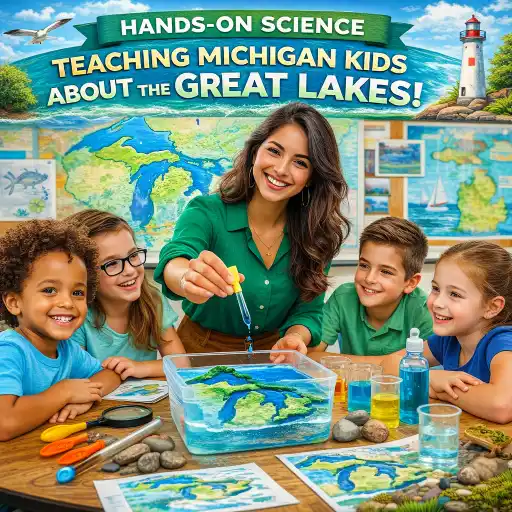
1. It connects learning to where children live. When kids study nearby lakes and rivers, they see science in real life. That builds curiosity and responsibility.
2. It teaches science habits. Observing, asking questions, testing ideas, and sharing results are simple practices children can do. These practices match many national and regional resources like NOAA’s educator guides and the LakeSuperiorStreams curriculum links.
3. It grows stewardship. Programs funded in Michigan schools show place-based learning helps children care for water and wildlife — see examples in the EPA grant list for Michigan profiles.
Why it matters: Kids who learn about local water are more likely to protect it. That matters for health, the economy, and future jobs linked to the lakes. Start small and build on children’s questions.
How can teachers use hands-on classroom activities about the Great Lakes?
1. Use simple experiments that teach big ideas. Try water clarity tests (turbidity), temperature and density cups, or a small model watershed. Many ready-made lessons and data sets are free, for example, the Great Lakes lesson collections at Great Lakes for Kids and lessons from LakeSuperiorStreams.
2. Bring in local content and standards. Align activities to grade-level goals. Michigan teachers can connect to NGSS-style skills and use materials from state programs like the Great Lakes Stewardship Initiative and university projects at MTU/NMU STEM teacher programs.
3. Try a short sequence (1-3 lessons):
- 🔬 Observe: Collect water in clear bottles and note color, smell, and floaters.
- 🧪 Test: Measure temperature, try pH strips, and compare with a chart.
- 🔬 Early science foundations: To help staff confidently plan and facilitate hands-on science experiences for young children, ChildCareEd's Building Early Science Foundations
 Buy Now $16.00 is a 2-hour online course covering how to introduce observation, inquiry, and simple experiments in developmentally appropriate ways — a direct match for the water testing, data collection, and science habit-building activities described in this guide.
 - 📝 Conclude: Make a class graph and ask: How does our sample compare to lake data?
4. Use classroom-friendly kits and online data (NOAA, EPA) to show real Great Lakes trends. Free teacher guides and activities like those from NOAA sanctuaries and local aquariums can save prep time.
What field trips and community partners help deepen Great Lakes lessons?
1. Local partners to contact:
- 🐟 Regional aquariums and nature centers (example lesson plans at the Belle Isle Aquarium: Belle Isle lesson plans).
- 🛥️ University centers and research docks (look for programs from Michigan Tech and Great Lakes research centers).
- 🏛️ Museums and hands-on centers listed in Michigan field trip guides like ChildCareEd’s Field Trip Guide for Michigan Providers.
2. Plan a strong field trip:
- 📅 Pre-visit: Prepare children with a short question list and photo scavenger hunt.
- 🌿 Outdoor and nature-based learning: For staff who want to strengthen how they plan and manage outdoor and field trip experiences, ChildCareEd's Creating the Natural Outdoor Classroom Buy Now $16.00 is a 2-hour online course covering how to design safe, engaging nature-based learning opportunities that connect children to their local environment — directly supporting the shoreline visits, field trip planning, and place-based stewardship steps outlined in this article. For seasonal, hands-on extensions—especially in autumn—try autumn-themed STEM projects using pumpkins, pinecones, and leaves to practice observation, measurement, and simple engineering with natural materials.
- 🧰 On-site: Do one simple sampling activity and a walk to observe shoreline plants or animal tracks.
- ✍️ Post-visit: Back in class, have children draw and label findings and compare to classroom tests.
Note: State requirements vary - check your state licensing agency for ratios, permissions, and transportation rules before any trip. Use local sanctuary webinars and NOAA resources to build staff knowledge (webinar archive).
How do we assess learning and avoid common mistakes?
1. Simple ways to assess:
- 📝 Exit tickets: Ask each child one or two quick questions: What did you see? One new word?
- 📊 Class charts: Have children help build a chart from their data and explain one trend.
- 🎨 Projects: Draw a habitat poster or create a group model of a food web.
2. Common mistakes and how to avoid them:
- ⚠️ Too much talk, not enough doing — fix: make activities short and hands-on (10–20 minutes each).
- ⚠️ Overly complex vocabulary — fix: teach 3 key words and use labels, pictures, and gestures.
- ⚠️ No follow-up — fix: plan one simple at-home or classroom task so learning continues.
3. Safety and equity tips:
- 🩺 Check for allergies and sun protection when outdoors.
- 🚶♂️ Use chaperones and accessible routes so all children can participate.
4. Use vetted resources: link activities to trustworthy sources like EPA lesson collections (EPA lesson plans), NOAA guides, and local curricula like LakeSuperiorStreams or the Great Lakes for Kids pages.
Conclusion
Teaching about the Great Lakes in Michigan is an easy win for child care programs. Start with 1–2 short hands-on lessons, add a local field trip or guest, and use simple assessments. Use the links in this article to find lessons and partners. Small steps build excitement, local knowledge, and lifelong care for water.
FAQ
- Q: How long should a Great Lakes activity last? A: Keep hands-on parts to 10–20 minutes for young children, with short talk and reflection before and after.
- Q: Where can I find free lesson plans? A: Try Belle Isle Aquarium lessons (Belle Isle), NOAA educator pages (NOAA), and ChildCareEd resources (Field Trip Guide).
- Q: Are live animals okay? A: Use trained partners and follow health rules. For classroom pets or touch tanks, check licensing and hygiene policies first.
- Q: How do I include older or younger kids? A: Differentiate: younger children observe and draw; older students collect data and graph results.
Key resources mentioned: ChildCareEd Field Trip Guide, ChildCareEd Solar Eclipse fact sheet Buy Now $0.00, Belle Isle Aquarium lesson plans, NOAA for Educators, and EPA Michigan grants.
- 45 Hour Child Growth and Development
- 45 Hour Preschool Methods and Materials
- Moving About the Classroom: Effective Transitions for Everyday
- 45 Hour Infant and Toddler Methods and Materials
- 45 Hour School Age Methods and Materials
- Emergent Learning & Development
- Texas Director Credential
- Enhancing STEM Education for Infants and Toddlers
- CDA Certification en Español: Recursos y Consejos para Educadores Bilingües
- 10 Ejemplos de Cómo la Cultura Influye en el Desarrollo Infantil
- Actividades de Fiesta para Niños de Preescolar y Primaria
- Proporciones de Cuidado Infantil y Tamaños de Grupo por Edad en Maryland (Guía Rápida para Centros y Hogares)
- Proporciones de Cuidado Infantil y Tamaños de Grupo por Edad en Nueva Jersey (Guía Rápida para Centros y Hogares)
- Proporciones de Cuidado Infantil y Tamaños de Grupo por Edad en Virginia (Guía Rápida para Centros y Hogares)
- Apoyo en Preescolar para Retrasos del Habla: Estrategias Simples que Ayudan
- Retraso del Habla en la Guardería: Cómo Pueden Ayudar los Proveedores
- Cómo Trabajar en el Cuidado Infantil en Carolina del Norte: Requisitos y Pasos
- Cómo Ser Maestra de Preescolar en California
- Las Mejores Ideas de Excursiones para Guarderías en Texas
- How can Michigan early childhood educators include children with Down syndrome?
- How can I teach colors, shapes & numbers through play in Michigan classrooms?
- How can Michigan classrooms teach children about the Great Lakes with hands-on science activities?
- How can Michigan's Great Lakes communities fix rural child care deserts?
- Celebrando la amistad en el cuidado infantil durante el Día de los Mejores Amigos
- Canciones, juegos y preguntas de círculo para niños
- How can Michigan providers keep kids safe around the Great Lakes and backyard pools?
- How Could Employer-Sponsored Child Care Reshape Demand for Michigan Providers?
- How Can Simple Cooking Activities Teach Skills in North Dakota Child Care Programs?
