Young children learn responsibility most deeply when they can see how their actions help others. Kwanzaa’s principle of Ujima—collective work and responsibility—offers child care providers a meaningful way to make cooperation visible through play, shared projects, and everyday classroom jobs. To build your confidence in culturally responsive planning, explore Cultures in the Classroom  Buy Now $24.00, which offers strategies for introducing cultural learning in ways that foster acceptance and belonging.
For a deeper look at how to translate children’s interests into inclusive, developmentally appropriate experiences, consider From Play to Planning: Building Culturally Competent, Child-Centered Curriculum Buy Now $55.00. This course can help you connect play, curriculum goals, and responsive practice as you shape activities that invite every child to contribute.
Why can Kwanzaa principles help children practice community responsibility?
Kwanzaa is a seven-day cultural celebration observed from December 26 through January 1. Its seven principles, called Nguzo Saba, include Umoja (unity), Ujima (collective work and responsibility), and Ujamaa (cooperative economics), alongside self-determination, purpose, creativity, and faith. In early childhood settings, these ideas offer a thoughtful starting point for discussing how people care for one another and contribute to shared life.
Intentional experiences can nurture #cooperation, empathy, communication, and a sense of agency. They also help children understand that responsibility is not simply following adult directions: it is noticing a need, contributing in a way that fits their abilities, and seeing how a group benefits. Kwanzaa should be introduced accurately and respectfully, not reduced to a generic lesson or a set of decorative symbols.
How can educators introduce the principles accurately and accessibly?
Begin with a short, clear explanation: “Kwanzaa is a celebration of African American culture and community. One of its principles, Ujima, means working together and caring about our community.” Use visuals and everyday examples to help children connect the unfamiliar word to familiar actions. Explain that families observe Kwanzaa in different ways, and some do not observe it.
Introduce one principle at a time rather than trying to teach all seven in one lesson. A picture of a kinara, a book from a reliable source, or a simple principle card can prompt questions. A brief, hands-on Kwanzaa classroom activity can support a discussion about unity, helping, or creativity without turning the experience into a performance.
- Use plain language and repeat key terms in meaningful contexts: “Umoja is unity; we can show unity when we make room for everyone’s ideas.”
- Connect cultural context to an activity; explain why a symbol or principle matters rather than using it only as decoration.
- Choose age-appropriate books and images, and preview them for accuracy and representation.
- Invite questions and respond honestly; if you are unsure, tell children you will find a reliable answer.
For younger children, brief conversations paired with play and visual support are often more effective than lengthy explanations. Children can listen, point, draw, speak, or join an activity in different ways, while learning remains rooted in the actual meaning of the celebration.
Which activities make cooperation tangible for young children?
Choose shared tasks with a visible purpose. A classroom helper chain, for example, can show how individual contributions connect: each child adds a link showing a job such as sorting books, watering a plant, or checking that blocks are returned. Children can help choose roles and notice how the group benefits when each person contributes.
Collaborative art is another inviting option. Children might create a “We Belong” mural by adding a handprint, drawing, or dictated idea about how they help. Provide several ways to participate, and let children decide whether they want to explain their contribution. The aim is not a perfect product; it is shared planning, turn-taking, and respect for one another’s ideas.
- Shared-care project: Let children identify a classroom plant, play area, or library that needs care, then make a simple plan to help.
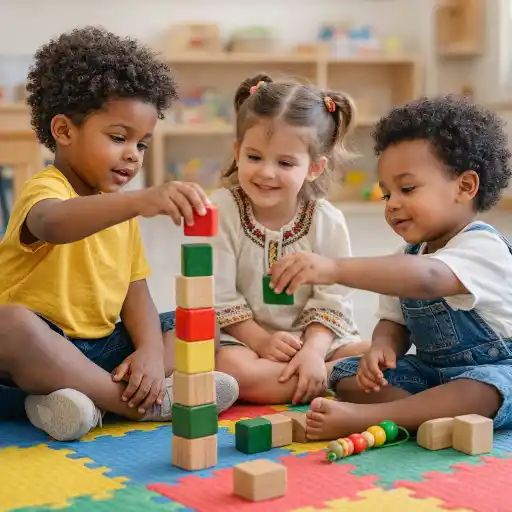
- Cooperative building: Invite small groups to build a neighborhood, bridge, or gathering place, discussing how each person’s idea can be included.
- Classroom market: In dramatic play, children can take different roles and discuss how people exchange goods and help meet community needs.
- 🤝 Helping-hands reflection: At closing circle, invite children to name or show one way they helped, received help, or noticed someone’s contribution.
Activities like these can support #community, language, problem-solving, and fine-motor development at the same time. Keep them brief and flexible, and adapt materials, roles, and communication options so children with different abilities and temperaments can participate meaningfully.
How can daily routines reinforce shared responsibility?
Children build social understanding through repeated, ordinary experiences—not only special events. Embed shared responsibility in transitions, cleanup, snack preparation, and care for classroom materials. Explain the purpose of a task and model it alongside children: “We put the blocks in this basket so the next group can find them.” The message is that the environment belongs to everyone and everyone can help care for it.
Use specific, descriptive feedback to help children notice the effects of their actions. Instead of “Good job,” try “You held the basket while Maya put the toys away; that helped your team finish.” This language makes cooperation visible without comparing children or implying that one kind of contribution is more valuable than another.
- Offer meaningful choices among jobs, and rotate them so participation is fair.
- Break tasks into achievable steps; a toddler might carry one soft toy while an older preschooler sorts a set of materials.
- Model how to ask, offer, and accept help: “Would you like me to hold that?” or “Can we do this together?”
- Use brief reflection prompts: “What did our group do together?” “What could we try if we disagree?”
When conflict arises, treat it as an opportunity to practice listening and problem-solving. Support children in naming what happened, hearing one another, and generating a workable next step. Avoid making “being helpful” a demand for compliance; genuine responsibility grows when children have a voice, appropriate choice, and a sense that their contribution matters.
How can family partnership make the experience more respectful?
Families can help educators understand children’s interests, languages, and traditions, but no family should be expected to represent an entire culture or teach a holiday. Share the learning purpose in advance and invite voluntary input, such as a book recommendation, family-approved image, or idea about community care. Make clear that children and families may choose not to share or participate in a particular activity.
Plan with cultural accuracy and care. Kwanzaa is a cultural celebration with a specific history and principles; it is not interchangeable with other holidays or simply a theme about kindness. Use sources that explain its context, and avoid asking a child to speak on behalf of Black people, African Americans, or Kwanzaa observers. The ChildCareEd guidance on respectful Kwanzaa celebrations offers planning considerations for family communication and inclusive participation.
- Use opt-in invitations, and provide an equally welcoming alternative activity.
- Ask permission before sharing family stories, photographs, or contributions publicly.
- Represent Kwanzaa through accurate explanations and varied materials—not assumptions about what every family does.
- Review plans for access, sensory needs, allergies, and safety; state requirements vary - check your state licensing agency.
After the experience, reflect with families and staff: Did children have meaningful choices? Whose perspectives were included? What might we improve next time? This kind of reflection helps cultural learning become part of a thoughtful, ongoing practice rather than a one-day display.
What common pitfalls can educators avoid?
Good intentions are a valuable beginning, but careful preparation helps ensure the experience is accurate and welcoming. Avoid treating Kwanzaa as a craft theme with no context, or presenting the seven principles as if they were interchangeable slogans. A craft can be engaging, but children benefit most when an educator explains its connection to the principle and invites them to explore the idea through action and conversation.
Another pitfall is overloading the schedule with long explanations or too many activities. Young children need time to revisit an idea through play, routines, and reflection. Keep the learning goal focused—such as noticing how a group solves a problem—and choose a small number of activities that allow for meaningful participation.
- Avoid forced participation: Offer choices without asking children to explain why they opt out.
- Avoid stereotypes and tokenism: Do not rely on a single image or expect one child to represent a whole community.
- Avoid adult-only definitions of helping: Give children real choices and recognize different forms of contribution.
- Avoid unsafe symbolism: Use paper or felt representations and battery-operated lights rather than open flames in classroom activities.
Finally, assess learning through observation rather than a right-answer test. Notice whether children begin offering help, negotiating roles, or referring to a shared goal. These small signs can inform what you plan next and help your team recognize growth that unfolds over time.
Conclusion: How do Kwanzaa-inspired experiences build responsibility?
Kwanzaa-inspired learning can promote cooperation and community responsibility when educators connect the principles—especially Ujima—to real, age-appropriate actions. Shared art, helper roles, cooperative play, and classroom care routines allow children to experience how individual contributions support a group. Accurate context, family choice, and inclusive participation keep the learning respectful.
Keep experiences purposeful, brief, and open-ended. Model helping, invite children’s ideas, and describe how their efforts affect others. Most of all, remember that responsibility grows through relationships and repeated opportunities—not through a single holiday activity. With thoughtful planning, Kwanzaa’s principles can help children practice belonging, care, and shared responsibility throughout the year.
Five ChildCareEd courses for continued learning
- Cultures in the Classroom Buy Now $24.00
- From Play to Planning: Building Culturally Competent, Child-Centered Curriculum Buy Now $55.00
- Supporting Social Learning: Creating Classrooms that Care Buy Now $35.00
- Strength in Differences: Cultural Diversity Buy Now $24.00
- Bridging Cultures: Family Communication & Collaboration Buy Now
$55.00$42.00
- From Play to Planning: Building Culturally Competent, Child-Centered Curriculum
- The Best Promotion is Play
- What Makes Me Special: An Overview of Autism and ADHD
- The Best Promotion is Play
- Play with Purpose: Supporting Children with Autism
- Sensitive Periods in Montessori: Guiding Natural Learning
- Wellness in Action: Teaching Healthy Habits to Children
- Bridging Cultures: Family Communication & Collaboration
- Montessori Cultural Activities: Exploring the World Through Play and Learning
- Professional Integrity in Child Care
- CDA Certification en Español: Recursos y Consejos para Educadores Bilingües
- 🔍 ¿Qué ves cuando observas a un niño aprender?
- 📚 ¿Qué capacitaciones se requieren para el personal de cuidado infantil en California?
- 👶 ¿Cuáles son las proporciones y grupos requeridos en Dakota del Norte? 🏫
- Recursos en Español sobre el Sueño Seguro del Bebé
- Proporciones de Cuidado Infantil y Tamaños de Grupo por Edad en Maryland (Guía Rápida para Centros y Hogares)
- Proporciones de Cuidado Infantil y Tamaños de Grupo por Edad en Nueva Jersey (Guía Rápida para Centros y Hogares)
- Proporciones de Cuidado Infantil y Tamaños de Grupo por Edad en Virginia (Guía Rápida para Centros y Hogares)
- Cómo Trabajar en el Cuidado Infantil en Carolina del Norte: Requisitos y Pasos
- Cómo Ser Maestra de Preescolar en Virginia
- Capacitación CDA gratuita en Illinois
- Canciones, juegos y preguntas de círculo para niños
- Cómo simplificar la capacitación para sus empleados de daycare
- How Can You Celebrate Black Culture and Music Effectively in Your Program?
- How can early childhood programs celebrate Kwanzaa respectfully and effectively?
- Proporciones para guarderías en casa bajo el Título 22: Cómo la mezcla de edades cambia su capacidad en California
- ¿Todos los niños deben participar en el tiempo de círculo?
- ¿Faltan Materiales o Falta una Nueva Estrategia? Cómo Revisar los Rincones del Aula
- How Can Kwanzaa-Inspired Learning Experiences Promote Cooperation and Community Responsibility?
