A handmade gift can be a joyful classroom project, but families may have personal, cultural, religious, or practical reasons for declining one. A respectful process protects family choice while helping children feel included; Engaging Families for Child Success  Buy Now $55.00 offers providers focused learning in empathetic, culturally sensitive family partnerships. Explore the course as a next step for building stronger communication practices that support children and the people who care for them.
For a practical planning tool, consider the Family Gift and Celebration Preference Forms resource; use the preferences families share to guide invitations and alternatives, rather than making assumptions.
Why does respecting a family’s decision about a gift matter?
A classroom gift may seem small, yet it carries messages about belonging, family identity, and whose preferences are taken seriously. A family may decline because of a religious or cultural belief, privacy concerns, household circumstances, a wish to reduce clutter, or a preference not to mark a particular occasion. The reason may be deeply personal—or simply a matter of choice. Providers do not need to evaluate whether that reason is persuasive in order to honor it.
Respectful practice places family autonomy alongside children’s emotional safety. NAEYC’s guidance on the anti-bias approach to holidays emphasizes that celebrations are not universal and should not be imposed on families. Head Start likewise frames effective partnership as an ongoing relationship grounded in mutual respect and trust.
When a family declines, respond calmly and privately. Avoid asking the child to explain, treating the choice as a problem, or suggesting the family is rejecting the child’s effort. Instead, communicate that the child can participate in the learning activity without a gift going home. This protects #belonging, reinforces #respect, and demonstrates that family choices are welcome in the classroom community.
How can providers ask about preferences without creating pressure?
Ask early, briefly, and in a way that makes opting out an equally acceptable response. A preference form can help staff learn whether families are comfortable with classroom gifts, special-day activities, public displays, photographs, or take-home projects. The form should not require an explanation for a “no.” Families can update their preferences as circumstances change.
Use clear, neutral language. For example: “We sometimes offer children an optional keepsake activity. Would you like your child to bring home a handmade gift? You may choose yes, no, or contact me to discuss another option.” When the activity relates to a holiday, identify it accurately and allow families to share their preferences without being asked to speak for a whole culture or faith.
- Offer translated materials or interpretation when available, and ask which communication method works best.
- Explain what the activity involves, what will go home, and whether photos or names might be shared.
- Make the choice voluntary; do not link a family’s decision to enrollment, participation, or a child’s behavior.
- Store preference information discreetly and share it only with staff who need it to plan appropriately.
The NAEYC family-engagement framework highlights reciprocity: families should be able to contribute to decisions affecting their children. A simple, respectful invitation can strengthen #communication without turning family input into a test of willingness to participate.
What should staff do when a family declines a handmade gift?
Thank the family for sharing their preference and confirm how staff will respond. A short acknowledgment—“Thank you for letting us know; we’ll make sure the classroom plan reflects your choice”—is usually enough. Avoid debating, persuading, or asking for details. If staff need to clarify logistics, ask only what is necessary and do so privately.
Next, plan participation so the child is not singled out. Depending on the family’s preference, the child might create something for classroom use, make art without taking it home, choose another activity, or observe. Ask the family what option feels appropriate when the form does not cover the situation. If the family prefers that the child not take part in the gift activity at all, provide a calm, engaging alternative nearby.
- Brief the team using factual, minimal information: “This family opted out of take-home gifts.”
- Use flexible terms such as “special person” only when they fit the activity and do not misrepresent the family’s request.
- Keep the child’s work private if requested; do not display or photograph it without the required consent.
- Continue ordinary warmth and inclusion—no child should receive less attention because a family opted out.
Professional trust depends on protecting family dignity and privacy. NAEYC’s discussion of professional boundaries is a useful reminder that educators handle sensitive information responsibly and maintain respectful relationships with families.
How can gift activities include different family structures and beliefs?
Start by examining the purpose of the activity. Is it intended to practice art skills, express appreciation, mark a specific holiday, or connect with caregivers? That purpose helps staff decide whether the activity should be revised, offered as an optional choice, or replaced. A project labeled only for “Mom” or “Dad,” for example, can unintentionally exclude children whose caregiving relationships differ from that assumption.
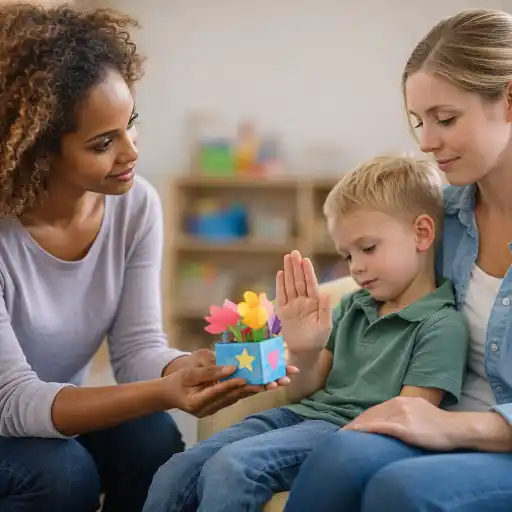
Offer flexible choices without implying that every child must identify a recipient. A child might make something for a caregiver, relative, trusted adult, or simply for personal enjoyment. Some families may welcome a gift but prefer a different occasion, wording, or recipient; others may decline all take-home keepsakes. The point is not to manufacture a universal solution, but to make space for each family’s stated preference.
- Use activity names that describe the learning or relationship purpose accurately.
- Provide choices in materials and participation, including drawing, dictation, collage, or observation.
- Ensure that alternate activities are meaningful—not framed as a punishment or lesser option.
- Represent diverse relationships throughout classroom books, dramatic play, and daily conversation, not just during holiday projects.
As the ChildCareEd resource on celebrating every family suggests, belonging is built through consistent representation and genuine partnership. These practices support #inclusion without asking children or families to justify their lives.
What common pitfalls should programs avoid?
Good intentions do not automatically make a celebration inclusive. Problems often arise when a classroom treats a handmade gift as harmless or universally welcome, or when staff interpret a decline as a criticism of their work. The most supportive response is to center the family’s stated choice and the child’s experience—not adult expectations about what a family ought to appreciate.
- Pressuring a family for a reason: Accept a “no” without probing. Ask only a necessary planning question, privately.
- Making the child explain: Keep adults responsible for communication. Never ask a child to describe family beliefs or circumstances to classmates.
- Assuming the recipient: Avoid default labels such as “for Mom” unless families have chosen that wording. Let children and caregivers define relationships.
- Creating a conspicuous alternative: Offer several classroom choices so one child is not publicly identified as opting out.
- Sharing without consent: Do not post a child’s gift, name, image, or family preference without following consent and privacy policies.
- Turning feedback into a one-time fix: Review forms and event plans periodically as families and circumstances change.
Directors can support consistent practice by setting a simple policy: gifts and celebration activities are optional, staff use respectful language, and preference information is handled confidentially. State requirements vary—check your state licensing agency, especially for rules concerning records, photographs, visitors, and family communications. Build #trust by applying the policy consistently across classrooms and occasions.
How can directors build a sustainable preference process?
A preference form works best as part of a relationship—not as a substitute for conversation. Introduce it during enrollment or an annual update, explain why the program asks, and make it easy for families to revise their answers. Include a contact person for questions, and make sure the form is accessible in the languages and formats families need whenever possible.
At the program level, review planned celebrations with staff and ask whether the event’s purpose is clear, whether participation is voluntary, and whether children have dignified alternatives. Keep a shared planning calendar and a brief checklist so educators do not have to reinvent the process each time. When a family shares a preference, record only the information necessary to carry it out and follow program privacy procedures.
Invite feedback after activities in low-pressure ways: a brief question at pickup, a short survey, or an opportunity to speak privately with a director. Look for patterns—such as unclear wording or limited alternatives—and respond with practical changes. Strong family engagement is reciprocal: educators listen, explain decisions, and show families that their input shapes practice. A course such as Family Voices Matter: Tools for Meaningful Collaboration Buy Now $55.00 can further develop providers’ skills in responsive communication and collaboration.
For additional professional learning, explore these relevant English-language ChildCareEd courses:
- Engaging Families for Child Success Buy Now $55.00
- Family Voices Matter: Tools for Meaningful Collaboration Buy Now $55.00
- Bridging Cultures: Family Communication & Collaboration Buy Now $55.00
- Family Connections: Creating Inclusive Relationships Buy Now $55.00
- Community and Family Engagement in Childcare Buy Now $24.00
Conclusion: How can providers honor family choice while keeping children included?
Respecting families who decline handmade classroom gifts begins with a clear invitation, a genuine option to say no, and a calm response that does not demand an explanation. Providers can protect children from feeling singled out by offering dignified alternatives, using inclusive and accurate language, and safeguarding family privacy. Directors can make the practice reliable through accessible preference forms, clear staff guidance, and regular reflection.
The central goal is not to ensure that every child brings home a craft. It is to create a classroom where family decisions are respected and every child remains valued, connected, and welcome. Listen first, plan with flexibility, and treat family input as an important part of supporting child success.
- Roots & Resilience: Understanding What Shapes a Child
- CDA Family Child Care Credential
- CDA Family Child Care Credential with Portfolio Review
- 45 Hour School Age Methods and Materials
- CDA Bridge Bundle: Family Child Care
- CDA Bridge Bundle: Family Child Care without Portfolio Review
- Creating Engaging and Meaningful Learning Experiences
- Texas Director Credential
- Gift of Gratitude: Fostering Emotional Intelligence in Children through Acts of Kindness
- CDA Certification en Español: Recursos y Consejos para Educadores Bilingües
- 💛🧩 ¿Cómo puedo hacer que mi enseñanza sea inclusiva para los niños con autismo?
- 👶 ¿Cuáles son las proporciones y grupos requeridos en Dakota del Norte? 🏫
- Recursos en Español sobre el Sueño Seguro del Bebé
- 10 Ejemplos de Cómo la Cultura Influye en el Desarrollo Infantil
- Capacitación en Salud y Seguridad Preventiva en Línea para Proveedores de Cuidado Infantil
- Regulaciones de Licenciamiento de Cuidado Infantil en California para Centros y Hogares de Cuidado Infantil Familiar
- Proporciones de Cuidado Infantil y Tamaños de Grupo por Edad en Maryland (Guía Rápida para Centros y Hogares)
- Proporciones de Cuidado Infantil y Tamaños de Grupo por Edad en Nueva Jersey (Guía Rápida para Centros y Hogares)
- Proporciones de Cuidado Infantil y Tamaños de Grupo por Edad en Virginia (Guía Rápida para Centros y Hogares)
- Lista para Abrir una Guardería en Casa en Georgia: Cómo Empezar
- Lista para Guardería en Casa en Texas: Cómo Iniciar una Guardería en el Hogar
- Retraso del Habla en la Guardería: Cómo Pueden Ayudar los Proveedores
- Cómo Trabajar en el Cuidado Infantil en Wisconsin: Requisitos y Pasos
- Capacitación CDA gratuita en Illinois
- Cómo simplificar la capacitación para sus empleados de daycare
- How Can Handmade Gifts Help Children Express Appreciation?
- ¿Todos los niños deben participar en el tiempo de círculo?
- How Can Child Care Providers Respect Families Who Decline Handmade Classroom Gifts?
