Outdoor play helps children grow strong, learn with friends, and have fun. But play needs to be safe. This article gives simple steps child care providers and directors can use every day to keep the #playground safe. You will find easy numbered checks, clear supervision ideas, surfacing tips, and what to do after an incident. For quick tools, see the Ultimate Playground Safety Checklist and the ChildCareEd Playground Safety Checklist Buy Now $0.00.
Why it matters
1) Safe playgrounds let children learn to take healthy risks without getting badly hurt. 2) Simple routines build trust with families and protect your program during licensing reviews. Remember: state requirements vary - check your state licensing agency.
1) What quick checks should staff do before children go outside?
- 🔍 Inspect equipment for loose bolts, cracks, rust, splinters, or missing guardrails.
- 🌡️ Temperature check: touch slides and metal—too hot? Keep children off until cool.
- 🧹 Scan the surface for glass, holes, animal waste, or tripping hazards. Check that cushioning (wood chips, sand, rubber) looks even and deep enough.
- 🪧 Confirm age zones and signage so toddlers and older kids use the right equipment.
- 📝 Log it: staff initial the short form with time and notes. Keep records for repairs and licensing.
For a full inspection list and downloadable forms, see ChildCareEd's Playground Safety Checklist Buy Now $0.00 and the Ultimate Checklist guide on ChildCareEd: Ultimate Playground Safety Checklist. These quick checks keep your #checklist useful and fast.
2) How should we supervise children so injuries are less likely?
- 📌 Divide the yard into zones and post a zone map. Assign one adult to each zone.
- 👀 Use active supervision: move, scan, and predict. Walk so you can see all children and spot risky moments early.
- 🔢 Count children at transitions (door, bus, or moving to another area).
- 👋 Teach short rules kids can remember (e.g., "slides feet-first").
- 📣 Have a 60-second huddle before play to name who carries the first-aid kit and who covers each zone.
Active supervision lowers most playground injuries. For training ideas, use ChildCareEd courses like "A Watchful Eye: Supervision in Early Childhood" referenced on ChildCareEd's training pages.
3) What surfacing and equipment rules reduce falls and burns?
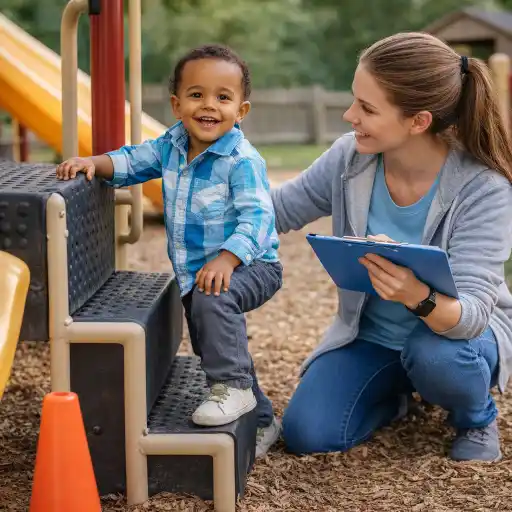
Safe surfacing and age-appropriate equipment cut the number and severity of injuries. The CDC also offers outdoor play safety advice: CDC Outdoor Play and Safety.
- 🪵 Choose the right surface:
- Loose-fill (wood chips, sand, pea gravel) needs regular topping and 9–12 inches in deep areas.
- Unitary surfaces (poured-in-place, rubber tiles) give ADA access and need correct installation and testing.
- ⚖️ Match equipment to age: keep toddler areas low and separate from school-age structures.
- 🌞 Heat checks: test equipment temperature before children play to avoid burns.
- 🧰 Maintain a repair log and tag out broken pieces until fixed.
For surfacing guidance and standards, see ChildCareEd resources and CPSC/ASTM recommendations linked in the ChildCareEd checklists. Good surfacing protects heads and bones during a fall and supports #surfacing that is also #inclusive.
4) What steps do we take after an incident and how can we avoid common mistakes?
Have clear, numbered steps so staff act quickly and families get correct information. ChildCareEd explains incident forms and follow-up in What should be on a checklist.
- 🚨 Immediate care: check breathing, stop severe bleeding, keep the child still for head/neck concern, and call 911 if needed.
- 📞 Notify family with the facts and what care was given.
- 📝 Document: date, time, witnesses, actions, photos of the area, and staff initials. Store records as your policy says.
- 🔧 Tag and repair: close the broken area and schedule fixes quickly.
- 🔁 Review: discuss the incident at staff meeting and add fixes to the daily #checklist.
Common mistakes and how to avoid them:
- ❌ Skipping morning checks — ✅ Make the checklist part of staff sign-in.
- ❌ One adult covering too much ground — ✅ Use smaller zones or a floater staff member.
- ❌ Not recording near-misses — ✅ Log near-misses to prevent bigger incidents.
Conclusion
1) Inspect daily, log results, and tag broken equipment. 2) Supervise actively with zones, counts, and short rules. 3) Use appropriate surfacing and keep a repair schedule. 4) Follow clear steps after an incident and review the cause. For printable checklists and forms, use ChildCareEd resources like the Playground Safety Checklist Buy Now $0.00 and the Ultimate Checklist. Remember: state requirements vary - check your state licensing agency.
Quick FAQ
- Q: How often should we inspect? A: Twice a day—before morning play and before afternoon play—and after heavy weather.
- Q: Who signs the checklist? A: The staff member leading outdoor time should initial and date the form.
- Q: When to call 911? A: If the child is unconscious, not breathing normally, has severe bleeding, or you suspect a serious head/neck injury.
- Q: Where to find forms? A: ChildCareEd free resources and printable checklists: ChildCareEd Resources.
- Creating Safe & Healthy Child Care Environments
- 45 Hour Child Growth and Development
- 45 Hour Preschool Methods and Materials
- Bienvenido! Welcoming All Families
- 1,2,3, Eyes on Me: Classroom Safety
- 45 Hour Infant and Toddler Methods and Materials
- 45 Hour School Age Methods and Materials
- Texas Director Credential
- Family Child Care: Building, Premises, and Outdoor Safety
- How To Prevent Child Injury Using The Course Of 1,2,3 Eyes On Me
- CDA Certification en Español: Recursos y Consejos para Educadores Bilingües
- Recursos en Español sobre el Sueño Seguro del Bebé
- Normas de Licenciamiento de Cuidado Infantil en Virginia para Centros Diurnos Infantiles y Hogares Diurnos Familiares
- Proporciones de Cuidado Infantil y Tamaños de Grupo por Edad en Virginia (Guía Rápida para Centros y Hogares)
- How Can Nevada Child Care Providers Create Safe, Calm, and Well-Organized Learning Spaces?
- How can Washington child care programs keep playgrounds safe from stinging insects, slugs, and harmful plants?
- How can we create safe environments for infants and toddlers?
- How can child care programs keep playgrounds safe every day?
- Celebrando la amistad en el cuidado infantil durante el Día de los Mejores Amigos
- Canciones, juegos y preguntas de círculo para niños
- How can child care programs keep playgrounds safe every day?
- How can child care programs keep playgrounds safe every day?
- How can child care programs keep playgrounds safe every day?
- How can child care programs prevent seasonal safety hazards like heat, cold, allergies, holiday risks, and outdoor play dangers?
- Active Supervision in Early Childhood: Simple Strategies That Work
- California Preschool Ratios: How Many Children Can One Teacher Supervise?
- How Can Child Care Programs Build Strong Allergy Awareness and Response Systems?
- What Are the Most Common Child Care Safety Mistakes—and How Can Providers Prevent Them?
- How Can Child Care Providers Teach Children to Recognize Safe and Unsafe Summer Choices?
