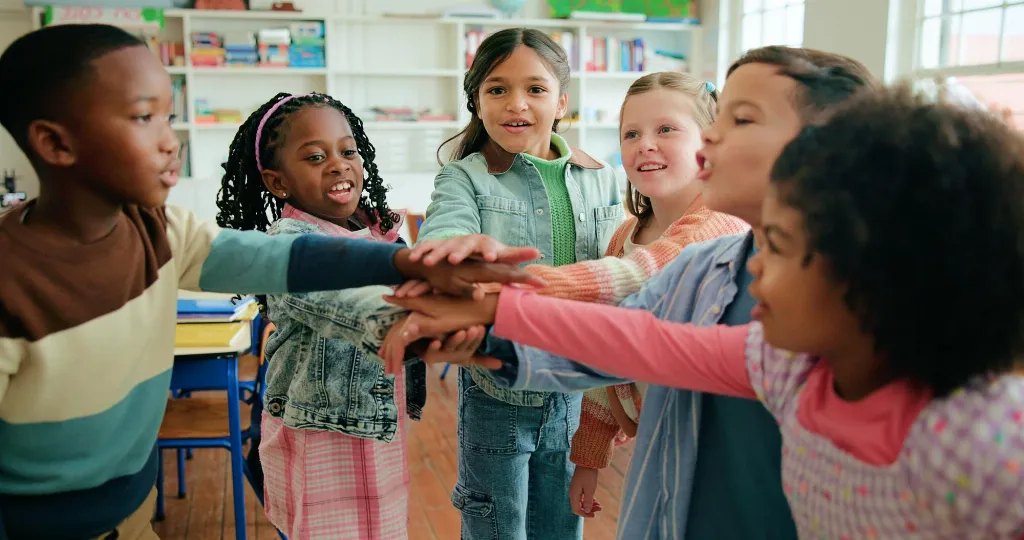
 Call-and-response attention getters (also called callbacks) are short teacher lines followed by a student reply. They help children stop, listen, and move on. Use them with toddlers, preschoolers, and young school-age kids to save your voice and time. When you teach them clearly and practice, children will respond fast.
What is call-and-response and how do I introduce it?
1. Explain the idea in one short sentence: "When I say the first part, you say the second part and then stop and look at me." Keep language simple.
2. Model and practice: show the phrase, say it slowly, and have children echo it back. Repeat 3–5 times. Use playful tone so children want to join in. This teaching step is important — many blogs recommend modeling and practicing until responses are quick, see Mrs. O Knows.
3. Give clear post-response directions. After the response, tell children what to do (e.g., "voices off, eyes here, hands in lap"). Consistency helps them know the exact behavior you want.
4. Start small: introduce 1–3 callbacks at first. Add more later to keep things fresh. For research-based tips on introducing and rotating callbacks, see Primarily Speaking and Herding Kats.
Which call-and-response routines work best for young children?
Try short, rhyming, or musical callbacks. Here are easy ones teachers use often:
- 🎵 Teacher: "Hocus Pocus" — Students: "Everybody focus!" (Sing Play Create list)
- 👀 Teacher: "1-2-3, eyes on me" — Students: "1-2, eyes on you"
- 👐 Teacher: "Hands on top" — Students: "That means stop" (students put hands on head)
- 🦈 Teacher: "Alligator" — Students: "Chomp, chomp" (freeze and clap)
- 🔔 Use a sound: bell, chime, or soft drum. Hold it up first, play once, and wait silently for attention (nonverbal options).
Why these work: short phrases are easy to remember. Rhymes and rhythms are fun and help children respond with their bodies (hands, eyes, freeze). For many more sample lines and songs see the long lists at Sing Play Create and practical cheer-style claps at Teach with Tenacity.
How do I teach, keep, and rotate callbacks so they stay fresh?
1. Teach: practice when children are calm. Model teacher line, student reply, and the exact action after reply (eyes, hands, quiet).
2. Praise quick responders. Use brief, specific praise: "Great job — eyes on me!" Rewards can be small and class-wide (points or a short extra activity).
3. Rotate often: novelty keeps callbacks working. Use 2–3 each week or change them after breaks. Herding Kats recommends rotating to keep responses lively: children notice novelty and will listen.
4. Use visuals and instruments. Post the current callback on the board. Use a chime, bell, or doorbell for variety (wireless doorbell idea).
5. Practice with a goal. Try a short game: set a timer and see how many times the class can answer quickly. This makes learning a callback fun and measurable. For ways to practice and when to slow down check Herding Kats.
How do I use callbacks during transitions and with challenging behaviors?
1. Pair callbacks with simple actions: hands in lap, eyes on teacher, or freeze. If a child struggles, provide proximity or a quiet helper seat rather than public correction (behavior tips).
2. Add nonverbal signals like a chime, waterfall fingers, or a doorbell for noisy moments. Non-verbal cues protect your voice and work well when children have sensory overload (no-talk attention getters).
3. Use positive routines: rehearse lining up songs, countdowns, or a short call-and-response before you leave the room. For line-up song ideas, see Easy to Teach Line Up Songs.
Common mistakes & how to avoid them:
- 🔁 Mistake: Using the same callback forever. Fix: Rotate and teach new ones often (novelty matters).
- 🔇 Mistake: Relying only on "shh" or louder voice. Fix: Use signals, instruments, and clear steps after the response.
- 👀 Mistake: Not waiting for full quiet. Fix: Wait 3–5 seconds after the reply before speaking — silence helps reinforce it.
Conclusion and quick FAQ
Summary: Call-and-response attention getters are simple, fast tools for busy classrooms. Teach them clearly, practice often, rotate for novelty, and pair callbacks with actions and visuals. These steps save time and protect your voice. For more sample phrases and songs see Sing Play Create and management ideas at Primarily Speaking.
FAQ:
- Q: How many callbacks should I teach at once? A: Start with 1–3. Add more when the first ones are fluent.
- Q: What if a child refuses to join? A: Use calm proximity, practice privately, and offer a simple role until they join.
- Q: Can substitutes use callbacks? A: Yes — post the current callbacks and train substitutes or share an attention-getter card.
- Q: Are nonverbal signals okay for toddlers? A: Yes — chimes, simple poses, and puppets work well for very young children (no-talk strategies).
Try one new callback this week. Teach it, practice it, and notice how much smoother your next transition goes. Your colleagues and your voice will thank you!
- Positive Attention: Interactions & Supervision of Infants & Toddlers
- Financial Assistance for Child Care
- Positive Attention: Interactions and Supervision of Infants and Toddlers: For Workforce Solutions
- Using AI Language Models for Trainers
- Health and Nutrition
- Emergent Learning & Development
- Positive Attention: Interactions & Supervision for Infants & Toddlers
- CDA Certification en Español: Recursos y Consejos para Educadores Bilingües
- 🔍 ¿Qué ves cuando observas a un niño aprender?
- 🤯 ¿Por qué este niño está teniendo un comportamiento difícil de repente?
- 🚌 ¿Qué Significan las Regulaciones de Transporte de Illinois para las Excursiones Infantiles? 🚦
- Cómo Abrir Una Quardería En Casa Sin Dinero?
- Apoyo en Español para Capacitaciones Grupales Presenciales y por Zoom en Cursos Selectos
- ¿Qué Calificaciones Necesitas para Trabajar en Cuidado Infantil?
- ¿Cómo puedo usar escenarios de juego de roles de primeros auxilios en mi aula?
- Cómo Celebrar el Día Nacional del Kindergarten
- Lista para Guardería en Casa en Illinois: Cómo Iniciar una Guardería en el Hogar
- Cómo Ayudar a Niños con Retraso del Habla en el Cuidado Infantil
- Apoyo en Preescolar para Retrasos del Habla: Estrategias Simples que Ayudan
- Consejos de Supervisión Activa para Salones de Preescolar y el Juego al Aire Libre
- Canciones, juegos y preguntas de círculo para niños
- Call-and-Response Attention Getters for Young Children
- One, Two, Eyes on You: Classroom Attention Getter for Preschool
- Reglas y regulaciones de guarderías en Minnesota 2026: Requisitos actuales y próximos cambios
- 1 2 3 Eyes on Me: What to Do When This Attention Getter Stops Working
- Proporciones para guarderías en casa bajo el Título 22: Cómo la mezcla de edades cambia su capacidad en California
