Latest Blog & News in English

Can AI Save Child Care Teachers Time Without Reducing the Quality of Lesson Planning?
11/16/2026When planning time is squeezed between caregiving, documentation, and family communication, AI can help you move past the blank page—but only your professional judgment can make a plan fit the children in your room. Explore Lesson Planning for Preschoolers to strengthen your understanding of p... Can AI Save Child Care Teachers Time Without Reducing the Quality of Lesson Planning?

How Can Directors Create Clear AI Guidelines for Their Child Care Programs?
11/16/2026AI tools may help with routine planning and communication, but unclear rules can expose children’s information and leave staff guessing. A practical policy gives your team shared boundaries while keeping professional judgment and family trust at the center; Privacy Matters: Documentation and O... How Can Directors Create Clear AI Guidelines for Their Child Care Programs?

How Can Child Care Programs Support Children Who Are Not Yet Ready for Large-Group Learning?
11/16/2026A child who hangs back during circle time may still be learning—watching, listening, and deciding how to join. Child care providers can support participation without forcing it by adjusting group size, routines, and ways to contribute; Inclusive Lessons for Preschoolers offers practical guidan... How Can Child Care Programs Support Children Who Are Not Yet Ready for Large-Group Learning?

What Should Teachers Know Before Using AI to Create Worksheets and Classroom Resources?
11/16/2026AI can turn a blank page into a worksheet draft in seconds, but quick content is not automatically accurate, inclusive, or appropriate for young children. Build practical skills for evaluating AI-created materials with Lesson Planning for Preschoolers, which covers lesson-plan components and develop... What Should Teachers Know Before Using AI to Create Worksheets and Classroom Resources?

What Can Preschool Teachers Do to Build Stronger Executive Function Skills?
11/16/2026When a child forgets a direction, grabs a toy, or finds a transition difficult, the moment can become a chance to practice—not a test of character. Preschool teachers can nurture executive function through responsive relationships, predictable routines, and playful challenges; From Tantrums to... What Can Preschool Teachers Do to Build Stronger Executive Function Skills?
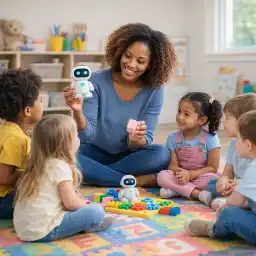
How Can Early Childhood Educators Prepare Children for an AI-Driven World Without Putting Them on Screens?
11/16/2026Children can build the thinking habits they will need in an AI-shaped world without spending more time in front of a device. With playful, hands-on experiences, educators can nurture curiosity, problem-solving, and thoughtful questions while keeping relationships at the center; Technology as a Class... How Can Early Childhood Educators Prepare Children for an AI-Driven World Without Putting Them on Screens?
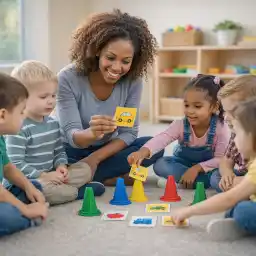
How Can Teachers Strengthen Children’s Attention Skills Through Play?
11/16/2026When a child’s focus wanders, the answer is not always a longer lesson or another reminder—it may be a more engaging kind of play. Thoughtful choices, responsive adult support, and playful challenges can help children practice attention in developmentally meaningful ways; The Best Promot... How Can Teachers Strengthen Children’s Attention Skills Through Play?

Why Do Fine-Motor Skills Still Matter in an Increasingly Digital Childhood?
11/16/2026Children may swipe a screen with ease, but the small, purposeful movements involved in turning pages, using utensils, building, drawing, and fastening clothes still matter every day. Child care providers can balance digital experiences with practical, engaging opportunities for children to use their... Why Do Fine-Motor Skills Still Matter in an Increasingly Digital Childhood?

How Can Early Childhood Programs Better Prepare Children for Classroom Transitions?
11/16/2026A difficult transition can turn a joyful classroom moment into a stressful one—but predictable, responsive routines help children move with greater confidence and give educators more time for learning. Explore practical strategies below, and consider Moving About the Classroom: Effective Trans... How Can Early Childhood Programs Better Prepare Children for Classroom Transitions?

What Can Teachers Do When Children Enter Preschool With Very Different Skill Levels?
11/16/2026When children arrive with different language, social, motor, and early academic skills, a single lesson can feel too easy for some and overwhelming for others. Tailoring Instruction to Children’s Needs offers practical strategies for differentiation and scaffolding, while Planning for Every Ch... What Can Teachers Do When Children Enter Preschool With Very Different Skill Levels?
