A child may know how to put on a coat yet get stuck when it is time to leave the playground; the challenge may be a hidden step, not a lack of ability. Breaking routines into manageable actions helps educators pinpoint what children can already do and where a bit of practice or support can make a difference. For practical strategies to balance expectations with individualized support, explore Student Success: Expectations & Independence  Buy Now $16.00; it can strengthen your classroom approach while you continue reading about the “independence ladder.”
Why can a familiar task still feel difficult?
Knowing how to do a task in one moment does not mean a child can complete every part of it independently, in every context. A preschooler may perform a routine successfully when calm, unrushed, and supported by a familiar adult, but struggle when the room is noisy, the group is waiting, or the next activity is unclear. Readiness is not a single switch; it reflects the interaction of developing motor, language, attention, memory, emotional, and planning skills.
Daily routines ask children to coordinate several abilities at once. Getting ready to go outside, for example, can involve stopping play, remembering the sequence, finding belongings, managing clothing fasteners, and coping with a transition. A child who pauses may be working through one of these demands—not refusing to cooperate. Predictable routines can make expectations clearer, while individual observation helps educators see how each child approaches them. NAEYC notes that routines and transitions are important parts of a supportive classroom environment (Daily Routines and Classroom Transitions).
This perspective matters because adult assumptions can obscure the teachable moment. Instead of asking, “Why won’t this child do it?” consider, “Which part is easy, and where does the task become difficult?” That question shifts the focus from blame to useful information and helps protect the child’s sense of #confidence as new skills develop.
How does an independence ladder reveal the next step?
An independence ladder is a way to view a routine as a sequence of small, observable actions. The aim is not to create a rigid checklist for every child, but to make a broad task specific enough that educators can notice progress and offer the right level of support. Research describing task analysis recommends identifying the component steps, observing which steps a child can complete independently, and then teaching the steps that remain challenging (Snodgrass et al., “One Step at a Time: Using Task Analyses to Teach Skills”).
Consider handwashing. “Wash your hands” may include walking to the sink, turning on the water, wetting hands, using soap, rubbing, rinsing, turning off the tap, and drying. A child might do most of the sequence but need help remembering soap or reaching the faucet. When educators see the smaller actions, they can support the specific gap rather than taking over the entire routine.
- Choose one routine that matters in the child’s everyday classroom participation.
- Write down the steps in the order they typically happen, using concrete action words.
- Observe without assuming the child has mastered a step because they managed it once.
- Record whether each step is independent, completed with a cue, or needs modeling or hands-on help.
These observations turn the ladder into a practical planning tool. A child may be at different points in different routines; that is expected. The goal is to identify the next reachable action and build from it, rather than demand the full routine all at once.
How can educators identify where support is needed?
Observe the child during ordinary routines across several days and settings. Note what happens just before the difficulty, the step where the child pauses, the support offered, and what helps the child continue. Use neutral descriptions such as, “After the cleanup song, Leo put blocks in the bin when the teacher pointed to the photo,” rather than labels such as “unmotivated.” Specific notes help staff discuss a skill without turning a moment of difficulty into a judgment about the child.
Also consider the routine’s demands. Is there too much waiting? Are supplies within reach? Does the child understand the directions in the language being used? Are the materials hard to manipulate, or is the transition abrupt? The same child may complete a step more easily with a picture cue, extra time, a peer model, or a change to the environment. Individualizing routines means noticing strengths and contexts as well as areas that require practice. NAEYC’s guidance on planning for individuality emphasizes observation and family relationships as ways to understand children’s abilities, interests, and contexts (Planning for Individuality in Preschool Spaces).
Use an observation and assessment course Buy Now $24.00 to deepen your knowledge of objective documentation and individualized planning, if useful. Keep notes concise and tied to real activities. Over time, look for patterns: Which steps are consistently independent? Which prompts help? Does the challenge show up at a particular time of day? Patterns guide practical next steps far better than a single difficult episode.
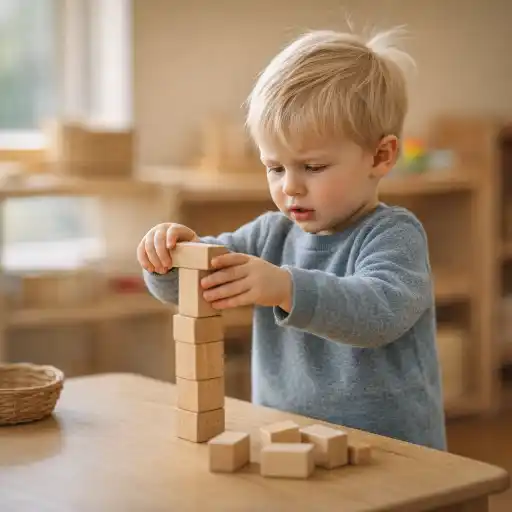
How can providers teach a routine one manageable step at a time?
Once you know where a child gets stuck, teach that step within the routine rather than waiting for a separate lesson. Model the action, use a short verbal or visual cue, and allow enough time for the child to respond. If the child is learning to put away a backpack, for instance, the adult might first point to the labeled hook, then gradually reduce the cue as the child begins to find the place independently.
Helpful supports include:
- Visuals: Post a few clear photos or drawings at the child’s eye level to show the sequence.
- Accessible materials: Use reachable hooks, labeled bins, and tools sized for children where appropriate.
- Brief prompts: Give one direction at a time, then pause so the child can process and act.
- Specific encouragement: Name the effort or action—“You found your cubby and put your bag away.”
- Prompt fading: As the child becomes more confident, reduce reminders and assistance gradually.
For example, a cleanup routine might progress from “Put everything away” to “First, blocks in this bin,” followed by a picture cue. Once the child manages that part, add the next step. The goal is meaningful participation, not perfect performance on the first try. Support should be enough to help a child succeed, but not so much that the adult completes the task for them. The Illinois Early Learning Project likewise describes teaching self-care through demonstration, assistance, and opportunities to practice (Building Independent Skills in Young Children).
When a routine includes a transition, predictable cues can help children anticipate what comes next. For more professional learning about age-appropriate expectations and transitions, explore Moving About the Classroom: Effective Transitions for Everyday Buy Now $35.00. State requirements vary - check your state licensing agency.
What common pitfalls can educators avoid?
Even caring adults can unintentionally make independence harder when a room is busy or the schedule is tight. These common pitfalls are worth checking during team reflection:
- Doing the whole task too quickly. When safety and timing allow, pause and let the child attempt a manageable step.
- Giving several instructions at once. Break directions into short actions, paired with a gesture or visual if helpful.
- Practicing only when everyone is rushed. Teach and rehearse a new step during a calmer part of the day first.
- Expecting the same pace from every child. Adjust time, materials, and cues to fit the child and the task.
- Interpreting an unfinished routine as defiance. Consider comprehension, communication, motor demands, sensory factors, and emotional state.
Family partnership helps educators understand what a child already does at home and how independence is approached within the family’s routines and culture. Share observations as questions, not conclusions: “We noticed the coat zipper is tricky at departure. What helps at home?” This can uncover successful strategies while honoring different family practices. If concerns persist despite consistent, thoughtful supports, discuss observations with the family and program leadership and follow appropriate referral procedures. Avoid diagnosing from classroom observations alone; a provider’s role is to document, adapt, collaborate, and seek guidance through established channels.
Support is not a reward for failure; it is a bridge to participation. An inclusive approach may mean changing the setup, offering a different communication cue, or teaching a child to ask for help. These adjustments allow children to take part while preserving dignity and agency.
Conclusion: What should providers remember?
Why do some preschoolers struggle with tasks they seem ready to do independently? Because a routine is often a chain of demands, and a child may have mastered some links while still needing practice, time, or an adjustment for others. Breaking routines into observable steps helps educators locate the point of difficulty, recognize what is already working, and choose support that matches the child’s current abilities.
Begin with one routine, observe it across ordinary days, and teach the next manageable step with clear cues and patient wait time. Make small environmental changes where they reduce unnecessary barriers, celebrate effort specifically, and fade prompts as skills grow. Partner with families and colleagues to understand the child in context, and revisit the plan when progress stalls.
With a thoughtful independence ladder, everyday routines become opportunities to practice rather than tests children must pass. The strongest measure of progress is not whether every child completes every task in the same way, but whether each child is gaining meaningful participation and appropriate independence—one step at a time.
- CDA Certification en Español: Recursos y Consejos para Educadores Bilingües
- 👧 ¿Cómo iniciar y abrir una guardería en Texas? Lo que necesitas saber
- Qué capacitación se requiere para ser director de cuidado infantil en Texas?
- Recursos en Español sobre el Sueño Seguro del Bebé
- ¿Cuánto tiempo se tarda en obtener una certificación CDA?
- ¿Cómo puedo usar escenarios de juego de roles de primeros auxilios en mi aula?
- Capacitación en Salud y Seguridad Preventiva en Línea para Proveedores de Cuidado Infantil
- ¿Qué preguntas aparecen en el examen CDA para preescolar?
- Cómo Celebrar el Día Nacional del Kindergarten
- Lista para Guardería en Casa en Illinois: Cómo Iniciar una Guardería en el Hogar
- Lista para Guardería en Casa en Texas: Cómo Iniciar una Guardería en el Hogar
- Temas y Actividades para el Día Nacional del Kindergarten para Proveedores
- Consejos de Supervisión Activa para Salones de Preescolar y el Juego al Aire Libre
- Cómo Ser Maestra de Preescolar en Dakota del Norte
- Capacitación Previa al Servicio para Proveedores de Cuidado Infantil en Dakota del Norte
- Celebrando la amistad en el cuidado infantil durante el Día de los Mejores Amigos
- Cómo simplificar la capacitación para sus empleados de daycare
- Preschool Classroom Rules: How to Teach Expectations Without Constant Reminders
- How Can You Increase Maze Difficulty Without Frustrating Young Learners?
- Why Do Some Preschoolers Struggle With Tasks They Seem Ready to Do Independently?
