Starting work in child care can feel big and exciting. This short guide helps new providers and directors know the first trainings to take, how to plan learning, where to find low-cost classes, and how to avoid common mistakes. Why it matters: good training keeps children safe, helps staff feel confident, and makes families trust your program. Learn why training makes a difference and get simple steps you can use today. Remember: state requirements vary - check your state licensing agency.
Why it matters:
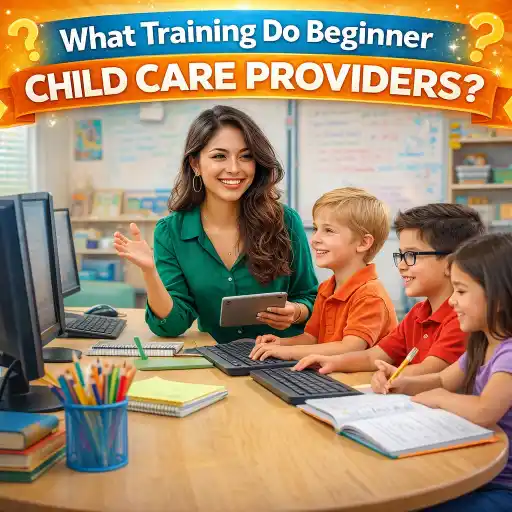
1. Well-trained staff prevent accidents and illnesses. 2. Training builds teamwork and calm classrooms. 3. Training helps new staff stay longer and feel proud of their work.
What basic trainings should beginners take first?
Start with these five basics. Each one helps you care for children safely and kindly.
- 🩺 First: Health & safety orientation. This covers handwashing, illness rules, diapering, and safe sleep. See a typical list in the Child Care Orientation guide from ChildCareEd. These basics protect children and staff and count toward many licensing rules.
- 🚑 CPR and First Aid. Get certified in pediatric CPR and first aid so you can act fast in an emergency. ChildCareEd offers in-person options like the Pediatric First Aid & CPR Buy Now $95.00 course.
- 📣 Mandated reporter and child protection training. Learn how to spot and report abuse. This training is often required by state law and by licensing.
- 🧪 Infectious disease and safe sleep training. These keep infants and children healthy. ChildCareEd lists infection prevention and safe sleep courses on its training pages like Online Childcare Trainings.
- 📚 Child development and behavior basics. Short courses on child growth and guidance help you plan play and routines. Many providers start with a 45-hour or 90-hour class if they want to be lead teachers; see ChildCareEd’s 90-Hour Preschool Training.
These five topics build a strong start. Add more topics later like nutrition, special needs, and curriculum once you feel steady. Use the hashtag links to find quick ideas: in your #training plan think about #safety, #skills, #orientation and #CPR.
How do I plan a simple 30-60-90 learning plan for new staff?
A 30-60-90 plan breaks learning into small steps so new staff do not feel overwhelmed. Use a clear plan and a buddy mentor. ChildCareEd and other guides recommend this stepwise approach in their orientation resources (see How do I run an effective Child Care Employee Orientation?).
- First 0–7 days:
- 📋 Paperwork (background check, health forms).
- 👀 Short safety tour and a 1-page Week 1 schedule.
- 🖥️ Start the Health & Safety Orientation course online from ChildCareEd.
- Days 8–30:
- 👥 Shadow their buddy each day.
- ✅ Practice routines like circle time, nap, and snack.
- 📝 Short check-ins twice a week to answer questions.
- Days 31–60:
- 🔍 Observe and give gentle feedback.
- 📚 Add a 3–10 hour course on guidance, curriculum, or health topics.
- Days 61–90:
- 🏁 Final check-in and set a 6-month learning goal.
- 🎉 Celebrate progress and add the next certificate target.
Tips:
- Use a simple one-page tracker (name, course, date, hours, expiry).
- Pair short online lessons with hands-on practice. ChildCareEd has short courses and free resources to help (see Free Online Childcare Training).
- Note: state requirements vary - check your state licensing agency before finalizing timelines.
Where can beginners find affordable or free training and certificates?
Good options exist for every budget. Try these trusted places first:
- 🔹 ChildCareEd: Many online courses, free resources, and certificates. See their full catalog at Online Childcare Trainings and free trainings at Free Online Childcare Training.
- 🔹 State programs: Some states offer reimbursements and scholarships. For example, Maryland has a training reimbursement program that can cover up to $400 — learn more at Get Free Child Care Training in Maryland. For providers in Maryland who want clear steps to qualify for higher-level roles and explore course and certification options, see Promote Yourself!.
- 🔹 CDC and federal resources: The CDC’s Watch Me! training is free and helps with milestone checks and referrals.
- 🔹 Red Cross: Offers online and blended CPR/first aid courses. See the Adult & Pediatric First Aid/CPR course.
- 🔹 Local community colleges and nonprofits: Check for scholarships like Georgia’s DECAL Scholars or local workforce programs (see Free Online Childcare Training In Georgia).
Quick action steps:
- Find one free course today (try ChildCareEd free page).
- Save receipts and certificates right away.
- Ask your director about state or local scholarships.
What common mistakes should beginners avoid and how do I track training?
New providers and directors often make the same simple errors. Here’s how to avoid them and keep good records.
- ❌ Mistake: Taking courses the state will not accept.
✅ Fix: Always confirm state approval before you pay. Use trusted providers like ChildCareEd and check your state system. - ❌ Mistake: Losing certificates.
✅ Fix: Scan and save each certificate in two places: a staff file and a cloud folder. Set calendar reminders for expirations (CPR often renews every 2 years). - ❌ Mistake: Overloading new staff on Day 1.
✅ Fix: Use a 30–60–90 plan. Spread learning and give a buddy mentor. See orientation tips at ChildCareEd orientation. - ❌ Mistake: Forgetting instructor-led requirements.
✅ Fix: Some states (for example Texas) require instructor-led hours—use approved Zoom or in-person classes like those listed by ChildCareEd.
How to track training (simple system):
- 📁 Keep a paper staff file with original certificates.
- 💾 Save a scanned copy in a secure cloud folder labeled "Training".
- 🗓️ Use a one-page tracker: staff name, course, date, hours, expiration, state approval (yes/no).
- 🔔 Set reminders 60 days before any expiry.
FAQ — Quick answers:
- Q: How soon should new staff finish health & safety? A: Many centers want it started within the first week. Check your state rules.
- Q: Can online CPR count? A: Some states need in-person skills. Use blended or in-person courses like ChildCareEd’s or Red Cross options.
- Q: How many hours do I need a year? A: Some states require 10–12 hours; others differ. Remember: state requirements vary - check your state licensing agency.
- Q: Who pays for training? A: Programs often pay, or staff use state reimbursements or scholarships (see Maryland example on ChildCareEd).
Conclusion
1. Start with health & safety, CPR, mandated reporter, infection prevention, and child development. 2. Use a 30–60–90 plan with a buddy mentor and short lessons. 3. Look for free or low-cost courses from ChildCareEd, state programs, the CDC, and the Red Cross. 4. Track training with simple files and reminders to avoid missing renewals.
You are doing important work. Take one course now, save the certificate, and add one more within 30 days. Need a quick place to start? See the ChildCareEd course list at Online Childcare Trainings. Keep learning simple, kind, and steady. Your children and families will thank you.
- 45 Hour Child Growth and Development
- 45 Hour Preschool Methods and Materials
- Pediatric RSV First Aid & CPR/AED
- 45 Hour School Age Methods and Materials
- CDA Bridge Bundle: Family Child Care without Portfolio Review
- CDA Bridge Bundle: Infant/Toddler without Portfolio Review
- CDA Bridge Bundle: Preschool without Portfolio Review
- Texas Director Credential
- Anxiety: Signs & Strategies
- Promote Yourself!
- Capacitación en Salud y Seguridad Preventiva en Línea para Proveedores de Cuidado Infantil
- Capacitación Previa al Servicio para Proveedores de Cuidado Infantil en Dakota del Norte
- The Beginner’s Guide to Buying a Child Care Business
- Your Next Step in Child Care Business Ownership Starts With One Form
- What Kind of Property Works for a Child Care Center?
- Opening a Daycare Is a Business Decision, Not Just a Dream
- When Should a Child Care Owner Hire a Business Consultant?
- Where can new providers find free childcare training courses with certificates?
- How do I open a day care in Texas as a beginner early educator?
- What Training Do Beginner Child Care Providers Need?
- How to Become a Pre-K Teacher Without Experience
- Daycare Business Broker: Help Buying or Selling a Child Care Center
- Childcare Broker vs. Business Broker: What’s the Difference?
- How can childcare providers support fine motor development with simple activities?
- How can child care providers support fine motor development through simple activities?
- No Daycare Experience? What Do Directors Notice Before They Decide to Hire You?
- How Can Child Care Providers Teach Scissor Skills Safely and Developmentally?
