A child who stays at the edge of circle time may be communicating uncertainty, discomfort, or a need for a different way to participate—not simply refusing to learn. For practical strategies that help you design welcoming, adaptable activities, explore ChildCareEd’s Inclusive Lessons for Preschoolers  Buy Now $16.00; it offers tools for making learning experiences accessible to children with varied abilities and participation styles. The guidance below can help you respond in the moment while strengthening a classroom culture where each child can belong.
Why should teachers look beyond the refusal?
Group participation asks young children to manage several demands at once: shifting attention, moving away from play, coping with noise or crowding, understanding directions, communicating in front of peers, and waiting for a turn. A child’s reluctance may reflect temperament, fatigue, unfamiliarity, language processing, sensory discomfort, anxiety, a mismatch between the activity and the child’s interests, or a developmental skill that is still emerging. One moment of opting out does not establish the reason.
Begin with curiosity rather than judgment. A calm, respectful response protects the child’s sense of safety and gives you more useful information than a public correction. NAEYC’s discussion of individuality and inclusive practices emphasizes responding to each child’s strengths, needs, family, and context. Similarly, the physical-social-temporal environment can be adjusted to increase meaningful engagement.
Participation is not all-or-nothing. A child may watch closely, sit nearby, point to a picture, hold a prop, move with the song, or join for only part of the activity. Treat these as possible entry points. The aim is not to secure visible compliance; it is to make group experiences safe, meaningful, and accessible while supporting gradual growth.
What can a teacher do in the moment?
Stay warm and matter-of-fact. Avoid turning the moment into a public contest, insisting on eye contact, or asking repeatedly why the child will not join. Acknowledge the child’s choice and keep the invitation open: “You can watch from this spot. The puppet will be here if you want a turn.” Then continue leading the group so the child is not made the center of attention.
Offer a few genuine, manageable options. Choices preserve a sense of agency while keeping the group routine predictable. For example, a child might choose to sit beside a trusted adult or a familiar peer, hold a song card, stand at the edge, or observe quietly. If the child declines, accept the response without withdrawing warmth.
- Use a low-pressure invitation: “Would you like to carry the picture cards, or watch first?”
- Give a brief preview of what will happen next and how long the activity may last.
- Offer a quiet observer role or a meaningful job, such as page-turner or materials helper.
- Use a nearby calm space when appropriate while maintaining supervision and connection.
- Notice effort specifically: “You came over and watched the story with us.”
When a child is distressed, prioritize connection and regulation before coaching participation. A steady voice and simple words can help: “This feels hard. I’m here. You can stay with me while we listen.” Positive teacher-child relationships—built through calm communication, listening, and responsive attention—support trust and engagement, as described in the CSEFEL brief on building positive teacher-child relationships.
How can group activities become easier to enter?
Prevention often begins before the group gathers. Use a consistent cue, such as a familiar song or visual signal, and give advance notice before ending play. Show a simple picture schedule or explain the activity in a few concrete steps. Predictability can reduce uncertainty, particularly when the activity or routine is new. Prepare materials in advance, keep the gathering area clear, and avoid making children wait while adults set up.
Plan for active, varied participation rather than expecting all children to sit still and respond verbally. Keep the purpose focused and the activity appropriately brief; adjust the length to the children’s age, interest, and cues. Incorporate movement, real objects, puppets, rhythm, or hands-on materials. A child who finds whole-group time overwhelming may do better with a brief partner experience or a small group of two or three before trying the larger gathering.
- Provide flexible seating: a chair, cushion, standing space, or spot beside the educator.
- Pair spoken directions with gestures, pictures, demonstrations, or familiar objects.
- Allow different response modes: speaking, pointing, signing, choosing a picture, moving, or passing.
- Reduce avoidable crowding, noise, and visual distractions where possible.
- Connect the experience to children’s interests, play themes, languages, and family knowledge.
These adjustments benefit the whole group, not just the child who currently opts out. For more structured professional learning, Creating Engaging and Meaningful Learning Experiences Buy Now $55.00 explores planning, adapting, and assessing purposeful activities. You can also review ChildCareEd’s practical article on making circle time more inclusive.
How can teachers invite participation without pressure?
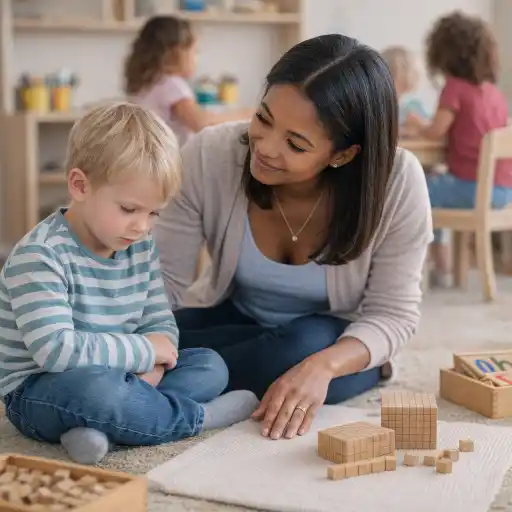
Use gradual invitations rather than a demand to join all at once. A child might first watch, then sit near the group, handle a related object, take a helper role, participate alongside one peer, and eventually contribute in a way that feels comfortable. This sequence is flexible; children may move forward, pause, or return to observing. Avoid describing the process as a test or comparing a child’s participation with classmates’.
Peer relationships can offer a gentle bridge. Invite a welcoming peer to build, sing, or explore materials alongside the child, without making that peer responsible for “fixing” the situation. Cooperative tasks with shared materials give children a reason to be together without demanding a performance. The Hanen Centre’s guidance on supporting peer interaction describes ways educators can arrange play spaces, model simple social language, and use meaningful roles to encourage connection.
Make sure the child can decline a particular turn without losing access or connection. Do not force physical placement in the group, demand public speaking, or use a reward or threat to override distress. Instead, keep the opportunity available and acknowledge manageable steps. ChildCareEd’s article on supporting shy or quiet children in group settings offers related ideas for building confidence without trying to change a child’s temperament.
- 🧸 Offer an optional role: puppet holder, song chooser, prop passer, or picture pointer.
- Invite a response privately or with a gesture when speaking aloud feels difficult.
- Let children join for one part of the activity and leave calmly if needed.
- Use specific, low-key encouragement rather than spotlighting the child.
How should providers identify patterns and partner with families?
If opting out happens often, observe across settings and times rather than relying on a single impression. Record what occurred before the activity, the environment, the child’s communication and behavior, the supports offered, and what seemed to help. Note strengths and interests as well as challenges. Consider whether the pattern appears during all groups or only during noisy, lengthy, unfamiliar, or language-heavy experiences. Objective observations can guide thoughtful adjustments without assigning a label or making a diagnosis.
Share observations with families respectfully and collaboratively. Begin with something the child enjoys or does well, then describe what staff have noticed and ask what helps at home or in other group settings. Families may offer insight about routines, language, sensory preferences, recent changes, or strategies the child already uses. Research has found an association between family-teacher relationship practices and children’s positive engagement, while noting that such an association alone does not establish causation (Lewis et al., 2023).
When persistent distress or withdrawal interferes with daily participation, communication, play, or relationships, follow program procedures for consulting the director and family and considering appropriate developmental or specialist support. Share factual observations, maintain confidentiality, and avoid diagnostic conclusions. State requirements vary - check your state licensing agency.
- Agree on one or two practical supports to try consistently.
- Set a time to review what is helping and adjust the plan together.
- Consult relevant specialists or existing support plans in coordination with the family.
How can teachers tell whether their approach is helping?
Measure progress by access, comfort, and meaningful engagement—not by whether every child sits in the same place or speaks during every activity. Look for small changes: the child moves closer, stays for another minute, accepts a prop, responds with a gesture, returns after a break, or joins a related activity later. These are useful signs that the environment or invitation may be becoming more accessible.
Choose one observable goal that fits the child and activity. If the aim is to take part in a song, progress might mean choosing a song card or moving to the rhythm. If the aim is peer connection, it might mean sharing materials beside a peer or responding to a peer’s invitation. Record brief notes, then reflect with colleagues: Was the group too long? Were directions clear? Did the child have a comfortable way to participate? Could a smaller group or different timing help?
Common mistakes include interpreting every refusal as defiance, insisting on identical participation, using public pressure, and changing several strategies at once without observing their effects. Keep the invitation warm, adjust one or two features, and give the child repeated opportunities. A responsive approach supports classroom belonging while helping teachers refine practice over time.
Conclusion: What should teachers do when a child refuses to join?
When a child declines a group activity, respond with calm curiosity: consider what the child may be communicating, make participation flexible, and keep the relationship secure. Predictable routines, short and engaging experiences, meaningful roles, multiple communication options, thoughtful environmental adjustments, and gradual invitations can help children approach group life without pressure.
Observe patterns, partner with families, and recognize progress in small steps. The central goal is not to make every child participate in exactly the same way; it is to create a community where each child can belong and access learning. Explore these relevant ChildCareEd courses for further professional learning:
- Inclusive Lessons for Preschoolers Buy Now $16.00 — tools for adapting activities and supporting varied learners.
- Anxiety: Signs & Strategies Buy Now $16.00 — classroom approaches for recognizing and supporting anxious behaviors.
- Staying Positive: Guidance for Preschoolers Buy Now $24.00 — positive guidance strategies that support social-emotional development.
- Planning for Every Child: Responsive Strategies in Action Buy Now $55.00 — individualized, observation-informed planning for inclusive learning.
- Creating Engaging and Meaningful Learning Experiences Buy Now $55.00 — practical approaches to designing, adapting, and assessing learning experiences.
- 45 Hour Child Growth and Development
- Bienvenido! Welcoming All Families
- Moving About the Classroom: Effective Transitions for Everyday
- Birth to Five CDA Credential with Portfolio Review
- Pediatric RSV First Aid & CPR/AED
- CDA Bridge Bundle: Family Child Care without Portfolio Review
- CDA Bridge Bundle: Infant/Toddler without Portfolio Review
- CDA Bridge Bundle: Preschool without Portfolio Review
- Texas Director Credential
- Recursos en Español sobre el Sueño Seguro del Bebé
- Que es Título 22 en California?
- Capacitación en Salud y Seguridad Preventiva en Línea para Proveedores de Cuidado Infantil
- Cómo Celebrar el Día Nacional del Kindergarten
- Lista para Guardería en Casa en California: Cómo Iniciar una Guardería en el Hogar
- Lista para Guardería en Casa en Texas: Cómo Iniciar una Guardería en el Hogar
- Retraso del Habla en la Guardería: Cómo Pueden Ayudar los Proveedores
- Cómo Trabajar en el Cuidado Infantil en California: Requisitos y Pasos
- Capacitación Previa al Servicio para Proveedores de Cuidado Infantil en Dakota del Norte
- What Should You Do When a Child Refuses to Participate in North Dakota Childcare?
- Cómo simplificar la capacitación para sus empleados de daycare
- How Can Simple Cooking Activities Teach Skills in North Dakota Child Care Programs?
- Feelings Activities for Toddlers: Building Social and Emotional Skills
- Getting to Know You Activities for Preschoolers When a New Child Joins the Class
- How Can a Five-Minute Classroom Reset Help Children Regroup Between Activities?
- When a Child Refuses to Follow Directions, What Should Teachers Do?
- How Can Child Care Providers Teach Preschoolers to Manage Big Emotions?
- What Should Teachers Do When Children Don’t Want to Play Outside?
- How Can Child Care Providers Support Kindergarten Emotions on the First Day of School?
- What Should Teachers Do When a Child Refuses to Join Group Activities?
