A child’s tears or anger after losing can turn a lively game into a challenging moment for the whole group—but it can also become a powerful chance to teach coping skills. The From Tantrums to Triumphs: Equipping Preschoolers with Self-Regulation Skills Buy Now $25.00 course offers practical approaches for supporting children through strong feelings and building classroom-ready strategies. Read on for a simple, developmentally responsive plan you can use before, during, and after competitive play.
Why can competitive games feel so difficult for young children?
Competitive games ask children to manage several demands at once: remember rules, wait for a turn, tolerate uncertainty, notice what other players are doing, and accept an outcome they did not choose. These capacities are still developing. A child may understand that someone wins and someone loses, yet feel overwhelmed when the result arrives—especially when tired, excited, or playing in front of peers.
The game itself can also contribute. Unclear rules may spark fairness disputes; a long round can make the outcome feel unusually important; and repeated losses may lead a child to avoid playing. Observe patterns without labeling the child a “sore loser.” Consider the game, group size, timing, and expectations, along with the child’s communication and sensory needs.
Support matters because children learn regulation through relationships. A calm adult can recognize the feeling while holding a clear boundary around unsafe behavior. The goal is not to remove disappointment or make every child enjoy losing. It is to help children discover that disappointment can be felt safely, that a score does not define their worth, and that they can recover and reconnect with peers. These experiences nurture #resilience and positive relationships.
What should you do in the moment when a child becomes upset?
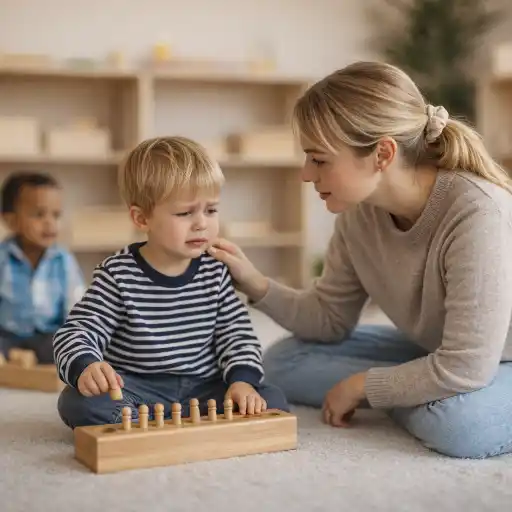
When a child is highly distressed, a long explanation about fairness or sportsmanship is unlikely to help. First protect safety, then offer connection and space to settle. Use a steady voice, stay close enough to supervise, and avoid crowding the child. If needed, move loose game pieces or other children away.
- Set a clear, kind limit: “You’re angry. I won’t let you throw the pieces.”
- Acknowledge the feeling without arguing about the result: “You really wanted to win. Losing feels disappointing.”
- Offer one or two familiar options: “Would you like to sit beside me or take a short break nearby?”
- Reduce questions and directions while the child is overwhelmed; allow time to recover while maintaining supervision.
- Wait until the child is calmer before revisiting rules, consequences, or what to try next.
Validation does not mean agreeing that the game was unfair or allowing harmful behavior. It shows the child that an adult understands the feeling and will help them through it. Some children welcome a reassuring presence; others need space with a trusted adult nearby. Follow the child’s cues and never force touch or a calming strategy. This calm, connected response supports #selfregulation over time.
How can providers prepare children before a competitive game?
Preparation makes the experience more predictable and gives children a chance to practice expectations while calm. Explain how the game works, how it ends, and what players can do whether they win or lose. Demonstrate the rules or play a short practice round, and keep rules consistent. When expectations are unclear, children may experience a genuine disagreement—not simply difficulty accepting an outcome.
Choose games that fit children’s current skills. Short, low-stakes rounds create frequent opportunities to practice starting, stopping, taking turns, and trying again. Cooperative games can be a useful starting point for children who find competition stressful; competitive play can be introduced gradually as their confidence and coping skills grow.
- Agree on a shared goal beyond winning, such as taking turns or trying a new strategy.
- Use a visual reminder of the rules or turn order when helpful.
- Model honest, respectful sportsmanship. For example: “I’m disappointed I lost, and I can still say, ‘Good game.’”
- Praise observable effort and behavior: “You waited for your turn,” or “You helped put the game away.”
These practices make games a place to learn #sportsmanship rather than a test of character. Avoid promising a particular child a win. Instead, communicate that playing, learning, connecting, and practicing fair rules are worthwhile outcomes too.
How can play and reflection help children practice coping?
Children benefit from practicing coping strategies when the emotional stakes are low. Puppets, stories, drawings, and role-play let them explore a difficult moment without being put on the spot about a recent game. A puppet might say, “I feel mad because I wanted to win,” then try taking a breath, asking for help, or saying, “Can I have a break?” Rehearsal helps children find useful words and actions before frustration takes over.
Keep the strategy set small and realistic. Pair a phrase with an action, such as slow breathing, getting water, sitting in a quiet supervised space, or asking a trusted adult for help. Practice these options during calm parts of the day; expecting a child to learn a new skill while overwhelmed is a lot to ask.
- 🎭 Use a puppet to act out losing and brainstorm a respectful next step.
- Read a story and ask what the character might feel or do after a setback.
- Invite children to draw what disappointment feels like and what helps them feel ready to try again.
- Practice simple phrases such as “I’m disappointed,” “Good game,” and “Let’s play again.”
After the child has recovered, keep reflection brief and curious: “What part was fun?” “What felt hard?” or “What could help next time?” Avoid an interrogation or immediate critique. Notice one step toward recovery—such as using words, accepting a break, or returning to the group. Repeated, encouraging practice builds #copingskills.
Which common responses should providers avoid?
It is understandable to want to prevent a child’s distress, particularly when peers are watching. Still, automatically changing the result, letting one child win every time, or ending all games at the first sign of disappointment can reduce opportunities for supported practice. On the other hand, forcing a child to continue while highly distressed or correcting them publicly can intensify pressure. Adjust the challenge, stay available, and give the child a dignified way to pause or rejoin.
- Avoid dismissive comments such as “It’s only a game” or “Stop being a baby.” Name the feeling instead.
- Do not demand an apology or a cheerful “good game” while the child is still escalated. Teach the words ahead of time and invite them when the child is ready.
- Do not ignore unsafe behavior. Set a firm limit, protect everyone, and offer support.
- Avoid comparisons with peers or siblings; they can create shame rather than skill.
- Do not assume one strategy works for every child. Adapt for temperament, language, sensory needs, and developmental differences.
If a peer was affected, support an appropriate repair after the child has settled, such as helping restore the materials or checking whether the other child is okay. If intense or unsafe reactions happen frequently, document the context and what helps, then collaborate with the family and program team. State requirements vary—check your state licensing agency for applicable program procedures or training expectations.
How can a classroom build a healthy culture around winning and losing?
A supportive game culture values enjoyment, learning, fairness, and connection—not simply who finishes first. Establish a few shared expectations with children: we use safe hands, follow the agreed rules, encourage one another, and may feel disappointed while treating others respectfully. Use simple words or pictures to make the expectations visible, and help staff respond consistently.
Offer different ways to experience success. Rotate leadership roles, include cooperative challenges, and recognize persistence, patience, fair play, and teamwork. A child who struggles with one game today may succeed next week with a familiar partner, shorter round, or visual prompt. Avoid assigning an identity based on one difficult moment.
Directors can support staff through brief team reflection. Discuss what tends to happen before a child becomes upset, which adult responses helped, and how the child returned to play. Share observations with families respectfully and invite their insight. A steady, shared approach helps children experience competitive play as a safe place to practice #growth and connection.
Conclusion: What should providers do when a child gets upset during a game?
When a child becomes upset during a competitive game, protect safety, acknowledge the feeling, and offer calm support before teaching or problem-solving. Prepare children with clear rules and manageable games, practice coping skills during calm moments, and revisit the experience briefly once the child is ready. Avoid shame, forced participation, and changing the outcome just to stop distress.
The central goal is not to eliminate disappointment or insist that children always respond perfectly. It is to help them experience strong feelings safely, learn respectful ways to respond, and gradually return to play and relationships. With consistent, compassionate guidance, a difficult game can become a meaningful opportunity to practice recovery and fair play.
For additional professional learning, explore Social Foundations and Responsive Classrooms Buy Now $24.00, which addresses supportive relationships, self-regulation, positive guidance, and conflict resolution.
Sources and further reading
- How Can Teachers Support Children Who Become Upset When They Lose a Game?
- Manitoba: Best Practices for Guiding Children’s Behaviour
- CSEFEL: Practical Strategies for Teachers/Caregivers
- Co-Regulation in the Classroom and Playground: A Guide for Teachers
- The Importance of Teaching Children Good Sportsmanship—Win or Lose
- 45 Hour Child Growth and Development
- From Tantrums to Triumphs: Equipping Preschoolers with Self-Regulation Skills
- Birth to Five CDA Credential with Portfolio Review
- Pediatric RSV First Aid & CPR/AED
- 45 Hour School Age Methods and Materials
- CDA Bridge Bundle: Family Child Care
- Texas Director Credential
- From Tantrums to Triumphs: Equipping Preschoolers with Self-Regulation Skills
- Every Moment Matters: Schedules and Transitions
- 👧 ¿Cómo iniciar y abrir una guardería en Texas? Lo que necesitas saber
- Requisitos Para Ser Maestra Principal En Un Daycare: Lo Que Necesitas Para Empezar
- Recursos en Español sobre el Sueño Seguro del Bebé
- ¿Cómo pueden los equipos de cuidado infantil practicar habilidades rápidas de primeros auxilios en situaciones reales?
- Capacitación en Salud y Seguridad Preventiva en Línea para Proveedores de Cuidado Infantil
- Regulaciones de Licenciamiento de Cuidado Infantil en California para Centros y Hogares de Cuidado Infantil Familiar
- Normas de Licenciamiento de Cuidado Infantil en Virginia para Centros Diurnos Infantiles y Hogares Diurnos Familiares
- Proporciones de Cuidado Infantil y Tamaños de Grupo por Edad en Maryland (Guía Rápida para Centros y Hogares)
- Lista para Abrir una Guardería en Casa en Virginia: Cómo Empezar
- Lista para Guardería en Casa en California: Cómo Iniciar una Guardería en el Hogar
- Lista para Guardería en Casa en Texas: Cómo Iniciar una Guardería en el Hogar
- Retraso del Habla en la Guardería: Cómo Pueden Ayudar los Proveedores
- Capacitación Previa al Servicio para Proveedores de Cuidado Infantil en Dakota del Norte
- How can positive guidance help manage big feelings during indoor play in Oklahoma classrooms?
- Get to Know You Activities for Preschool: 12 Easy First-Week Ideas
- Fall Challenge Accepted! Hands-On Learning Games for Pre-K
- How Can Child Care Providers Support Children Who Always Want to Be First?
- How Can You Teach Sight Words Through Games, Movement, and Play?
- How Can Teachers Support Children Who Become Upset When They Lose a Game?
- What Should Child Care Providers Do When a Child Becomes Upset During Competitive Games?
