A thoughtful preschool progress report does more than list skills—it helps families see their child’s growth and gives educators a clearer path for what comes next. Build a stronger, more useful process with Preschool Assessments & Observations  Buy Now $24.00, a course that develops practical skills in objective observation and developmentally appropriate assessment. As you read, you’ll find a clear framework for reporting progress in ways that recognize each child and support meaningful family partnership.
Why do preschool progress reports matter?
Preschool progress reports make learning visible over time. A child’s emerging skills may appear in a block-building challenge, a conversation with a peer, or the confidence to try a new classroom routine. Recording such examples helps educators notice growth that a single activity or checklist may miss. The National Association for the Education of Young Children emphasizes that ongoing, purposeful observation and assessment should inform curriculum, interactions, and communication with families (developmentally appropriate assessment practices).
Reports also help connect classroom planning with children’s experiences at home. When families understand what a child is practicing and what is going well, they can share useful context and contribute ideas. Educators, in turn, can use observations to adjust materials, routines, and teaching strategies rather than relying on assumptions.
Think of the report as a collaborative snapshot—not a ranking or verdict. Preschoolers develop at different rates and may demonstrate a skill in one setting but not another. A respectful report celebrates strengths, describes current learning, and identifies practical next steps without comparing children or labeling them.
Which developmental areas should a report cover?
A well-rounded report describes the whole child, not just early academic skills. Organize observations into development areas that match your program’s curriculum and relevant early learning framework. Common domains include:
- Social-emotional development: expressing feelings, building relationships, joining play, managing transitions, and beginning to solve conflicts.
- Language and literacy: communicating ideas, listening, asking questions, engaging with books, telling stories, and exploring print or writing.
- Cognitive development: curiosity, memory, sorting, counting, problem-solving, reasoning, and experimenting during play.
- Physical development: gross-motor movement, balance, coordination, fine-motor control, and growing independence in self-help routines.
- Approaches to learning: persistence, attention, initiative, flexibility, and willingness to explore.
Include attendance or participation context when it helps explain the observation period, and note the child’s interests or preferred ways of learning. Avoid treating domains as isolated boxes: a child negotiating roles in pretend play may be using language, social reasoning, and imagination at once. A preschool developmental milestones checklist Buy Now $0.00 can help organize observations, but it should support—not replace—professional judgment and knowledge of the individual child.
What essential information belongs in each report?
Use a consistent structure so that families and staff can locate key information and compare reports over time. At minimum, include:
- Child’s name, age or classroom, reporting period, and date prepared.
- Brief, evidence-based observations across developmental domains.
- Strengths, interests, accomplishments, and skills that are emerging.
- One or two achievable next-step goals, with strategies educators will use.
- Relevant family input, questions, or ideas for supporting learning at home.
- Optional work samples, photos, or portfolio examples, shared with appropriate permission.
Keep the language specific and observable. Rather than “Maya is great at sharing,” write, “During center time on Tuesday, Maya offered the blue truck to a peer after they both reached for it.” Concrete details help families understand what the child did and let educators revisit meaningful evidence later.
For goals, describe a skill and a support strategy, not a fixed expectation. For example: “We will offer daily opportunities for Leo to practice asking a peer to join his play, with adult modeling as needed.” This communicates a practical plan rather than a judgment.
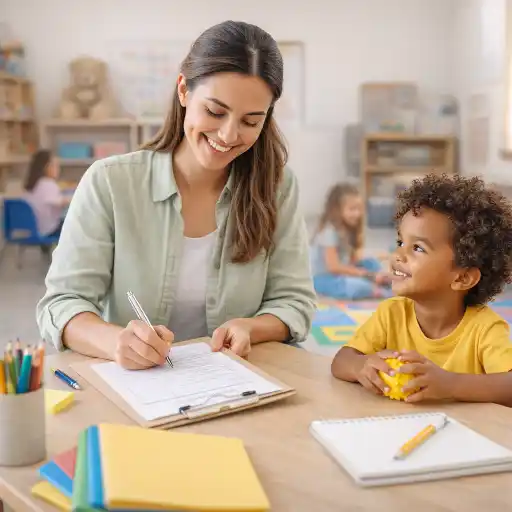
How can educators gather fair, useful evidence?
Strong reports grow from ongoing observation, not last-minute recall. Capture short notes during routines, play, conversations, and group experiences, then review them across the reporting period. Include varied contexts so a single difficult moment or unusually successful activity does not stand in for the child’s broader pattern. Head Start describes ongoing assessment as a process that informs teaching, curriculum planning, and individual support.
Record what you actually see and hear. Use dates, settings, actions, and brief direct quotes where relevant. For instance, “At the water table, Noor filled two cups and said, ‘This one has more,’” is more informative than “Noor understands measurement.” When evidence is limited, say so plainly and gather additional observations before drawing conclusions.
Assessment should be responsive to children’s languages, cultures, experiences, and ways of demonstrating knowledge. Consider whether a child has had a fair opportunity to show a skill, and reflect on how expectations or observer bias may shape interpretation. Checklists can provide structure, while narratives, work samples, family perspectives, and observations in play add context. Screening is not diagnosis; when a concern persists, follow program procedures and consult the director or appropriate specialist. State requirements vary - check your state licensing agency.
How should reports communicate with families?
Use a warm, plain-language tone that respects families as partners and acknowledges that they know their child in ways educators do not. Begin with authentic strengths and examples, then explain areas still developing without alarmist language. Invite families to share what they notice at home, including the languages, routines, interests, and experiences that may shape how a child participates in the classroom.
Make the report useful beyond the page. Offer one or two simple ideas families may choose to try at home, while avoiding the implication that they must provide formal instruction. For example, if a child is exploring counting, families might count fruit together during snack preparation. Ask for family input rather than assuming home circumstances or priorities.
When reports raise a developmental concern, share objective observations and arrange an appropriate conversation rather than relying on a rushed pickup exchange. Listen carefully, acknowledge feelings, and agree on next steps, such as continued observation, a follow-up meeting, or discussing screening resources. The CDC’s training on talking with families about a child’s development underscores the value of listening, cultural awareness, and specific examples. Protect confidentiality, use interpreters or translated materials when needed, and follow program policy for referrals and documentation.
What common reporting mistakes should teams avoid?
Even experienced educators can find report writing challenging, especially when schedules are busy. A shared format and brief documentation habits can make the work more consistent and less dependent on memory. Watch for these pitfalls:
- ❗ Using vague judgments: Replace labels such as “shy,” “behind,” or “good” with observable actions and context.
- Focusing only on concerns: Include strengths, interests, and progress alongside next-step areas.
- Comparing children: Describe the child’s growth over time instead of measuring them against classmates.
- Overloading families with jargon: Explain terms in everyday language and keep the report scannable.
- Making conclusions from one moment: Gather evidence across activities, days, and settings before summarizing a pattern.
- Setting broad or unrealistic goals: Choose a small, observable next step and name the support adults will provide.
Directors can strengthen consistency by reviewing report templates with staff, agreeing on shared terms, and setting regular observation and reporting dates. A secure digital system or organized portfolio can help teams store dated evidence, but technology does not replace thoughtful interpretation or privacy safeguards. If a report includes photos or work samples, follow program consent and confidentiality practices.
Conclusion: What should a preschool progress report include?
A useful preschool progress report includes child and reporting-period information, objective observations across developmental domains, strengths and interests, emerging skills, practical goals, and appropriate family input. It is grounded in ongoing evidence and written in respectful, accessible language—not grades, comparisons, or labels. Reports work best when educators use them to adjust classroom support and invite families into a genuine two-way conversation.
Keep the purpose in view: describe where the child is now and how the adults around them can support what comes next. Consistency, curiosity, and specific examples make reporting more manageable and more meaningful for everyone involved.
Explore relevant ChildCareEd training:
- CDA Preschool Credential
- CDA Preschool Credential with Portfolio Review
- 45 Hour Preschool Methods and Materials
- 1-Hour Abuse and Neglect Training
- Birth to Five CDA Credential with Portfolio Review
- CDA Bridge Bundle: Preschool
- CDA Bridge Bundle: Family Child Care
- CDA Bridge Bundle: Family Child Care without Portfolio Review
- CDA Bridge Bundle: Infant/Toddler without Portfolio Review
- CDA Bridge Bundle: Preschool without Portfolio Review
- Preschool Curriculum
- CDA Certification en Español: Recursos y Consejos para Educadores Bilingües
- 🔍 ¿Qué ves cuando observas a un niño aprender?
- 😫🧸 ¿Qué hacer cuando un bebé no quiere dormir la siesta en el aula?
- 🚨 Reporte Obligatorio en Nevada
- Recursos en Español sobre el Sueño Seguro del Bebé
- Lista para Guardería en Casa en California: Cómo Iniciar una Guardería en el Hogar
- Lista para Guardería en Casa en Texas: Cómo Iniciar una Guardería en el Hogar
- Cómo Ser Maestra de Preescolar en Dakota del Norte
- Cómo Ser Maestra de Preescolar en Illinois
- Cómo Ser Maestra de Preescolar en Wisconsin
- Capacitación Previa al Servicio para Proveedores de Cuidado Infantil en Dakota del Norte
- How can Florida preschool staff assess children during everyday activities?
- Celebrando la amistad en el cuidado infantil durante el Día de los Mejores Amigos
- Does Georgia CAPS Use Gross Income, and How Does Family Size Affect the Limit?
- What Should a CDA Portfolio PDF Look Like Before You Upload It?
- Who Needs Child Abuse and Neglect Training—and How Often Do You Have to Take It?
- How Can Child Care Providers Share Child Development Progress With Families?
- What Should Be Included in a Preschool Progress Report?
- What Should Be Included in a Child Care Incident Report?
